Brooklyn and Queens need better transit, but activists say this waterfront "luxury trolley" is not the way to get it.


Though New York City has one of the more comprehensive and relied-upon public transportation systems in the U.S., parts of the outer boroughs have never been well-served by transit.
Given that, and given that streetcars have been a popular cause of the grassroots in a number of cities in the last decade, it may seem unlikely that community groups in Brooklyn and Queens are actively opposing a proposed streetcar line along the waterfront.
But New York City is different, and the BQX has never belonged to the grass roots. In a city with a demonstrated capacity for lots of subway and bus routes, the streetcar reads, to some, as sort of a stunt—a charming, unique mode of transportation serving quickly gentrifying areas. As Tyler Woods writes at Technical.ly Brooklyn, “it if the point of the project is really to upgrade transportation to those neighborhoods needing it most, that could be done more easily and less expensively in other ways.”
It does not help that the board of the organization pushing the streetcar, the innocuously named Friends of the BQX, is populated largely by representatives of some of the largest real estate companies in the city.
Woods quotes Tabitha Woods of TransitCenter:
"'The BQX corridor’s ridership doesn’t even come close to warranting a major capacity increase,' Decker explained in an email. 'The very features that will be required to ensure a streetcar is faster than a bus, namely true dedicated lanes, could be used to make the buses that currently run on that route faster and more reliable.'"
Considering the state of the subway system, the outer-borough streetcar may be losing popularity in general. "It’s unclear how the flashy and expensive BQX project would be affected by such a sentiment, if it lingers," Woods writes, "but…probably not helpful."
FULL STORY: Why some surprising people are really not into the BQX

More Details of Brooklyn-to-Queens Streetcar Proposal Emerge
One interesting detail to note: the BQX streetcar proposal, as its currently known, originated not from the de Blasio Administration but from a Brooklyn-based real estate company.
Concerns Raised About the Brooklyn-to-Queens Streetcar Proposal
We've gathered a sample of the responses to Mayor Bill de Blasio's proposal for a $2.2 billion streetcar to connect Brooklyn to Queens.
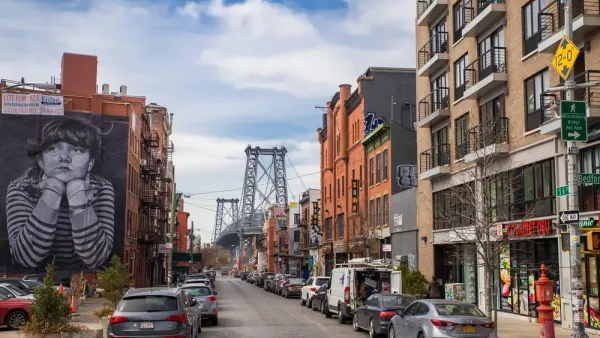
Opinion: Wealthy Residents Are Opposing Brooklyn Development to Protect Their Own Interests
Residents are arguing that a Williamsburg development would negatively affect the neighborhood. But it’s a grassroots effort to protect the status quo in a neighborhood where gentrification benefited them.

The state-sanctioned urbicide of Austin
People don’t kill cities. Freeways do.

US to reduce Colorado River water deliveries to Mexico
A new Colorado Treaty amendment reduces Mexico’s Colorado River water allocation by 250,000 acre feet.

New Jersey’s second-largest city bans standalone data centers
Jersey City will continue to allow co-location facilities, such as those meant for research institutions that store their own data.

Amtrak not solely to blame for New Jersey commuter rail's unreliability, report finds
A new study from the Garden State Initiative found that NJ Transit’s budget grew 20% across a 4 year period, but reliability declined significantly over the same period.

EPA erases limits on planet-warming pollution from power plants
Under Monday’s plan, power plants would still have some limits on how much mercury, arsenic and other contaminants they can emit.

Phoenix announces new on-demand transit service, more frequent RAPID buses
Both new services will launch in October, and are part of Phoenix's Project Effective Access Solutions for Easing Congestion.

FREE Course: Walkable City 1: Why Walkability?
After describing his path towards focusing on walkability as the essence of good planning, Jeff Speck marches through his five principal reasons for making more walkable places.
Reinventing Malls: Planning Alchemy—Turning Gray Fields Into Gold
The course focuses on the opportunities and imperatives that shape reinvention of mall sites.

Eagle County Government
Harvard University Graduate School of Design
Nashville Planning Department
The Architects Foundation
University of Cincinnati Online
The Pocatello Development Authority
The Urban Renewal Agency of the City of Pocatello
Journal of the American Planning Association