America's urban streetcar renaissance looks to be on track with eight more projects planning to break ground by 2020. The list includes some of the nation's largest metros as well as plenty of medium-sized cities.


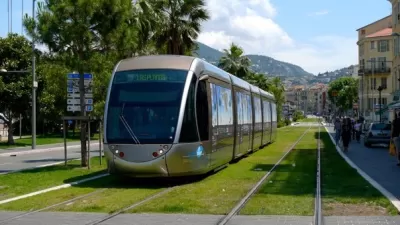
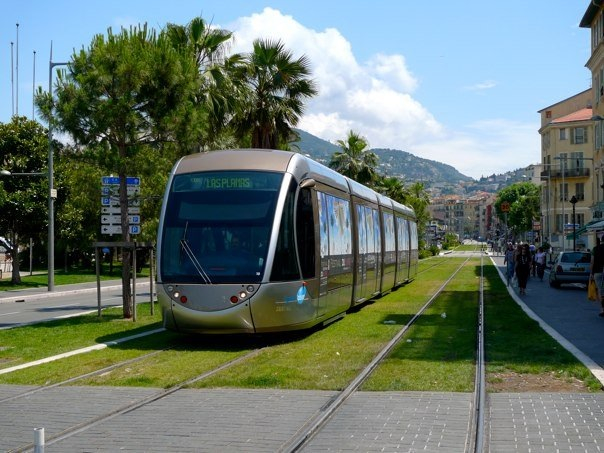
After a hiatus of many decades, streetcars are experiencing a resurgence, and not just in the Pacific Northwest. Jon Banister writes, "Streetcars, often slow-moving trollies that share lanes with traffic, are more about spurring development in new parts of the city than providing the fastest transportation option."
Eight more cities are aiming to break ground by 2020, with some lines set for completion well before then:
- Oklahoma City, projected completion in late 2018
- Milwaukee, projected completion in 2018
- Fort Lauderdale, projected completion in 2020
- Tempe, projected completion in 2020
- Orange County (CA), projected completion in 2020
- Sacramento, projected completion in 2021
- New York City, projected completion in 2024
- Washington D.C. extension, construction may begin in 2020
Read the full story: These 8 U.S. Streetcar Projects Could Break Ground By 2020

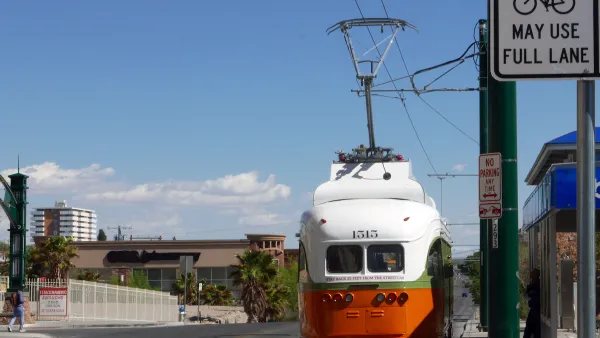
El Paso Streetcar Marries History, Mobility, and Economic Development
The city’s streetcar line, defunct since 1974, is moving thousands of riders through a newly revitalized downtown.
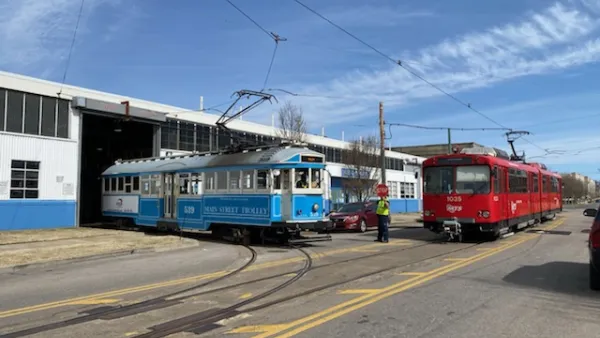
Memphis Testing Vintage Siemens U2 Trolley Cars—With Service Expected to Open Later This Year
Originally designed for use in Frankfurt, Germany, the Siemens–Duewag U2 was used in Canada and San Diego before now coming to Memphis.
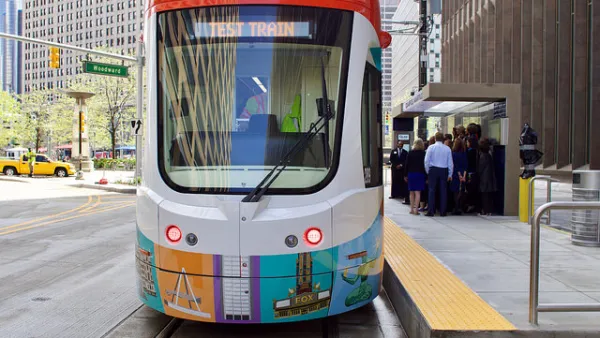
Op-Ed: Detroit's QLINE Is 'At Times an Embarrassment'
Randy Essex details why it is that "rely" isn't a word that comes to mind for many Detroiters when they think about downtown's QLINE streetcar system.

Planetizen Federal Action Tracker
A weekly monitor of how Trump’s orders and actions are impacting planners and planning in America.

Amtrak, CN end decades-long dispute with eight-year agreement
The new operating agreement establishes an updated framework for the companies to work together, including processes to resolve disputes.

Judges permit Denver to divert 77,000 acre feet from the Colorado River for reservoir expansion
Overuse and climate change have caused the Colorado River’s water levels to plummet.

NYC DOT wants faster, more permanent street upgrades
The city is examining ways to build more concrete infrastructure without getting entangled in 'decades-long' projects.

'Something we’ve never seen before:' rising utility rates could strain city finances nationwide
Data centers, climate change and other factors have caused utility rates in the United States to increase by 38% since 2020.

Trump to overrule local leaders, lease millions of acres of America’s Pacific Island territories’ seafloors to mining companies
International law says that the Indigenous people of America’s territories have a right to prior and informed consent regarding projects that impact their countries.

FREE Course: Walkable City 1: Why Walkability?
After describing his path towards focusing on walkability as the essence of good planning, Jeff Speck marches through his five principal reasons for making more walkable places.
Reinventing Malls: Planning Alchemy—Turning Gray Fields Into Gold
The course focuses on the opportunities and imperatives that shape reinvention of mall sites.

Harvard University Graduate School of Design
KFH Group Inc.
Greater Baltimore Committee
The Architects Foundation
University of Cincinnati Online
The Pocatello Development Authority
The Urban Renewal Agency of the City of Pocatello