Electric vehicles (EVs) have a bright future in the world's most populous nation and largest auto market, unlike those powered by oil. That was a ministry chief's message at an auto forum on Saturday.


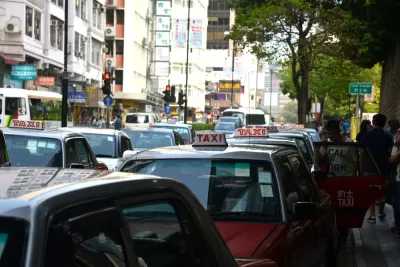
China has yet to set a date for the ban, but it wanted to send a message to auto manufacturers that there's no future in sticking with petroleum-powered motor vehicles. China's plan would also ban the domestic production of oil-fueled vehicles.
"Xin Guobin, the vice minister of industry and information technology, said the government is working with other regulators on a timetable to end production and sales," reports Bloomberg News. "The move will have a profound impact on the environment and growth of China's auto industry, Xin said at an auto forum in Tianjin on [Sept. 9]."
A ban on combustion-engine vehicles will help push both local and global automakers to shift toward electric vehicles, a carrot-and-stick approach that could boost sales of energy-efficient cars and trucks and reduce air pollution while serving the strategic goal of cutting oil imports.
Cap-and-trade
Currently, China "offers generous subsidies to makers of new-energy vehicles. It also plans to require automakers to earn enough credits or buy them from competitors with a surplus under a new cap-and-trade program for fuel economy and emissions."
A report for Reuters indicates that the Chinese government is "studying" the ban, which would correspond with bans in several other countries (see below). China has already "set goals for electric and plug-in hybrid cars to make up at least a fifth of Chinese auto sales by 2025," write Tony Munroe and Yawen Chen.
Oil consumption increasing
In addition to reducing air pollution and carbon emissions, which China promised to cap by 2030 according to the Paris climate accord, the ban intends to curb rising oil consumption.
Last month, state oil major China National Petroleum Corp said China's energy demand will peak by 2040, later than the previous forecast of 2035, as transportation fuel consumption rises through the middle of the century.
International movement to ban ICEs
The international movement away from vehicles with international combustion engines has already been set in motion by Great Britain, France, India, Norway, Netherlands, and auto manufacturer Volvo, which was acquired in 2010 by Geely Holding Group, a Chinese multinational auto manufacturing company.
China is not only the world's largest auto market. It also accounts for 40 percent of global demand for electric and hybrid vehicles, according to Joe McDonald in a report on the proposed ban. In 2016, EV sales in China totaled 336,000, compared to 159,620 in the U.S.
Related in Planetizen:
- Are Reports Predicting a Future of Electric Vehicles Exaggerated? August 3, 2017
-
The Era of the Electric Vehicle is Approaching, July 17, 2017
Hat tip to Mark Boshnack.
FULL STORY: China to Ban Sale of Fossil Fuel Cars in Electric Vehicle Push

Climate Concerns Largely Absent in Auto Showrooms
A consumer survey found that less than a third of respondents considered carbon emissions or the environment when they last purchased a motor vehicle, yet three-quarters of Americans consider climate change a major problem or crisis.

The Beginning of the End of the Internal Combustion Engine Vehicle?
The California Air Resources Board voted unanimously on August 25 to begin a phased ban on the sale of passenger vehicles powered by gasoline or diesel beginning in 2026 when over a third of new vehicles sold in California must be zero-emissions.
California Lawmaker Wants to Triple Electric Vehicle Rebates
Assemblyman Phil Ting seeks to dramatically increase the state electric vehicle sales rebate of $2,500, motivated in part by the phasing-out of the federal EV tax credit of $7,500. The bill rules out significant revenue sources.

The state-sanctioned urbicide of Austin
People don’t kill cities. Freeways do.

US to reduce Colorado River water deliveries to Mexico
A new Colorado Treaty amendment reduces Mexico’s Colorado River water allocation by 250,000 acre feet.

New Jersey’s second-largest city bans standalone data centers
Jersey City will continue to allow co-location facilities, such as those meant for research institutions that store their own data.

Amtrak not solely to blame for New Jersey commuter rail's unreliability, report finds
A new study from the Garden State Initiative found that NJ Transit’s budget grew 20% across a 4 year period, but reliability declined significantly over the same period.

EPA erases limits on planet-warming pollution from power plants
Under Monday’s plan, power plants would still have some limits on how much mercury, arsenic and other contaminants they can emit.

Phoenix announces new on-demand transit service, more frequent RAPID buses
Both new services will launch in October, and are part of Phoenix's Project Effective Access Solutions for Easing Congestion.

FREE Course: Walkable City 1: Why Walkability?
After describing his path towards focusing on walkability as the essence of good planning, Jeff Speck marches through his five principal reasons for making more walkable places.
Reinventing Malls: Planning Alchemy—Turning Gray Fields Into Gold
The course focuses on the opportunities and imperatives that shape reinvention of mall sites.

Eagle County Government
Harvard University Graduate School of Design
Nashville Planning Department
The Architects Foundation
University of Cincinnati Online
The Pocatello Development Authority
The Urban Renewal Agency of the City of Pocatello
Journal of the American Planning Association