Latino and black communities are more likely to cite racial profiling or crime as a deterrent to cycling, according to a recent study.


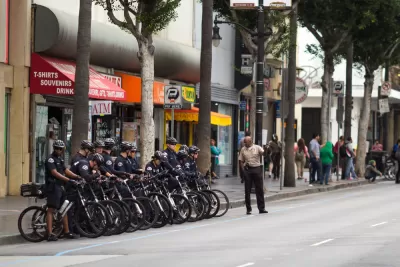
"In a groundbreaking survey, [Charles] Brown and James Sinclair asked New Jerseyans about their attitudes toward biking and broke down the responses by race," reports Angie Schmitt.
The question at the heart of the story, according to Schmitt: "If your local police force has a reputation for harassing people who look like you, and your neighborhood gets a new bike lane, would that infrastructure be enough to make you feel comfortable riding?"
According to the findings of the study, social and cultural issues do matter when it comes to bike adoption in minority communities: "In the survey, black and Latino respondents were more likely than white respondents to cite fear of racial profiling or crime as a deterrent to cycling."
"The infrastructure piece gets too much attention and the social and cultural pieces are missing," Brown told Schmitt in his own words.
The article includes more insight into the research, including Brown's recommendations for how to improve the planning process with these findings in mind.
Read the full story: What Bike Planners Are Missing When They Design Projects in Black and Latino Neighborhoods
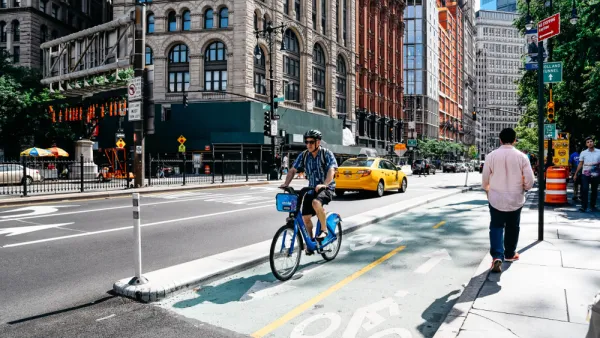
Bikes Are More Popular Than Ever in New York City, City Officials Say
Build safe infrastructure and people on bikes will come, according to New York City officials.
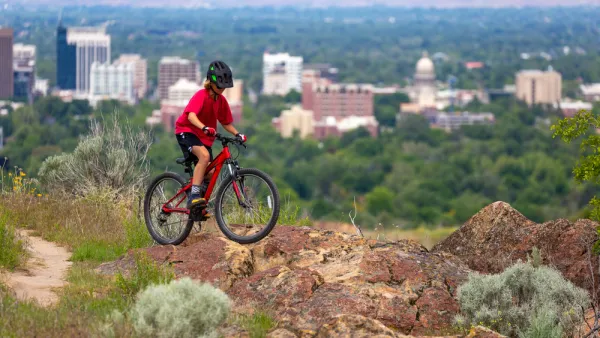
Bikelash in Boise
Parents don’t want bike lanes to interfere with the pick up and drop off zone near two churches and schools in Boise.
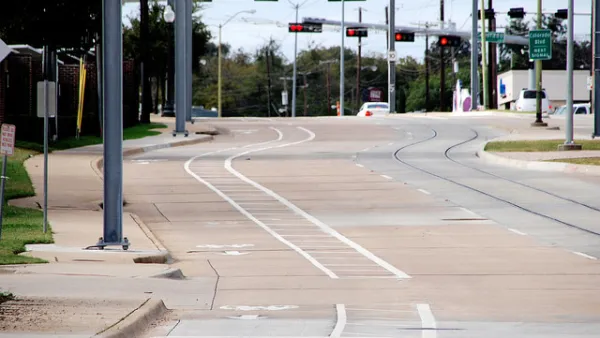
Dallas Makes First-Ever Annual Commitment to its Bike Lane Program
Dallas is making new commitments to alternative transportation options—the latest example is found in a budget expenditure for several bike lane projects.

Planetizen Federal Action Tracker
A weekly monitor of how Trump’s orders and actions are impacting planners and planning in America.

California plans to bury El Niño’s downpour
If the state plays its cards right, it may be able to store a billion acre-feet of El Niño’s water in aquifers.

Desperate measures: Advocates weigh draining Lake Powell to fill Colorado River
Draining the reservoir could reduce evaporation losses by a couple hundred thousand acre-feet.

Chicago voters approve permanent festival grounds, penalty for vacant property owners
Currently, major summer and fall festivals take over public parks for weeks at a time, drawing criticism from nearby residents

NYC votes to cut outdoor dining red tape, speed up permitting
New York City also voted to allow the Department of Transportation to begin work on urgent projects before notifying elected officials.

California appears to reject Prop. 45
The proposition would have expanded the projects that qualify for a streamlined environmental review, effectively paring down the California Environmental Quality Act.

FREE Course: Walkable City 1: Why Walkability?
After describing his path towards focusing on walkability as the essence of good planning, Jeff Speck marches through his five principal reasons for making more walkable places.
Reinventing Malls: Planning Alchemy—Turning Gray Fields Into Gold
The course focuses on the opportunities and imperatives that shape reinvention of mall sites.

City of Rosemead
Rutgers University, Edward J. Bloustein School of Planning and Public Policy
One Hundred Miles
Hunter College, City University of New York (CUNY)
The Architects Foundation
University of Cincinnati Online
City of Cambridge
Montrose County
The Pocatello Development Authority