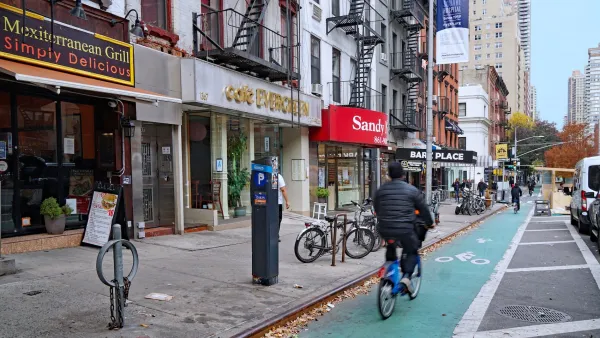
Build safe infrastructure and people on bikes will come, according to New York City officials.


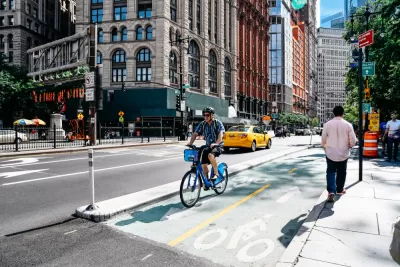
The number of people on bikes has never been higher in New York City, according to an announcement by the city’s department of transportation on April 24.
New York City Mayor Eric Adams said in a statement that New York’s rising bike mode share is a sign of “true progress” for the city. Mayor Adams and other city officials are taking credit for helping spur the bike renaissance with ongoing investments in bike infrastructure improvements.
“The proof is in the data: more safe cycling infrastructure means more cyclists on our streets. As we’ve built more and more bike lanes, we’ve seen bicycle ridership reach historic levels,” said NYC DOT Commissioner Ydanis Rodriguez in an April 24 press release. “We will be installing a record number of high-quality, protected bike lanes this year to save lives and continue encouraging this growth. We're focusing on thoughtfully expanding our existing bike network with new lanes in underserved communities; new connections across bridges; and comprehensive neighborhood networks—all while developing innovative new bike boulevard designs that reduce vehicle volumes and prioritize cycling safety.”
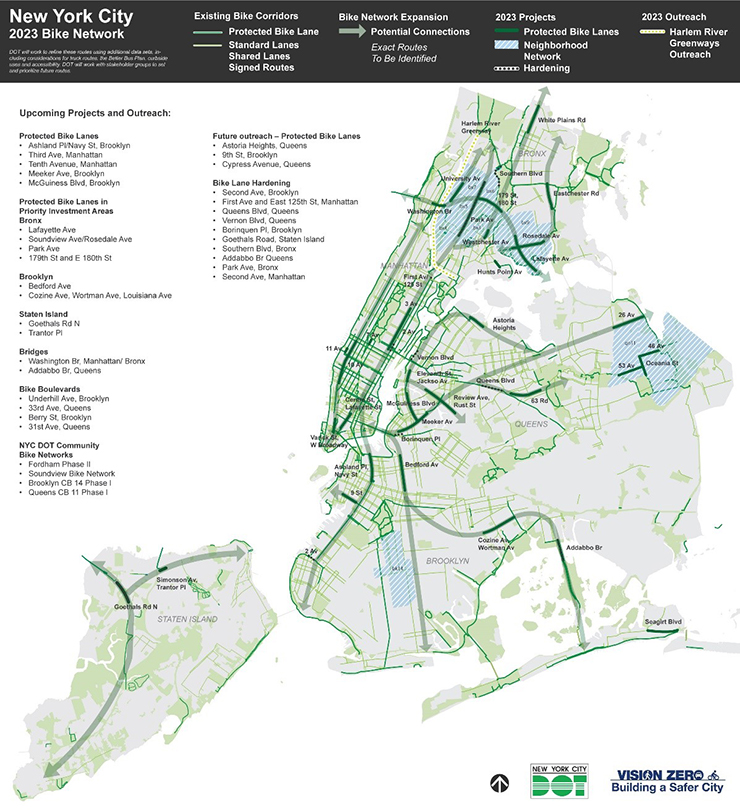
More specifically, “NYC DOT is on track to install a record number of protected bike lanes in 2023, to harden more than 10 miles of existing bike lanes, and to use sturdier materials in new bike lanes,” according to the press release,” according to the press release.
The press release, linked below, includes the full schedule of bike infrastructure projects planned for this year.
While the exact figures on bike ridership are still unavailable, the press release promises to share the data on the NYC DOT website as soon it’s available. Rodriguez also penned an opinion piece for the New York Daily News touting the administration’s accomplishments in bike ridership and infrastructure that offers one teaser of data: “Last year, on our East River Bridges alone, we saw 24,000 daily trips on weekdays during peak riding season.”

NYC Streets Plan Remains Largely on Paper
For the second year in a row, the city failed to meet legally required targets for building protected bike lanes and bus lanes.
New Bike Lanes Planned for Two New York City Bridges
The de Blasio administration is offering a parting gift to the city's cyclists.
Study: Protected bike lanes increase Citi Bike rides by nearly 400 rides a month
An analysis of millions of NYC bike share rides reveals that only protected bike lanes have a 'statistically significant' increase in ridership.

Planetizen Federal Action Tracker
A weekly monitor of how Trump’s orders and actions are impacting planners and planning in America.

The state-sanctioned urbicide of Austin
People don’t kill cities. Freeways do.

US to reduce Colorado River water deliveries to Mexico
A new Colorado Treaty amendment reduces Mexico’s Colorado River water allocation by 250,000 acre feet.

Baltimore to break ground on $50 million Transit Priority Project
The project will bring faster bus trips, safer streets and better bike connections to Baltimore.

Airbnb launches $250 million 'last-dollar financing' housing accelerator, makes first investment in Austin
The company will put $6.4 million towards affordable housing development in Texas’ capital.

Guerilla urbanists are building DIY bus stop benches in Chicago
A before-and-after of one of the bus stops with a new bench. The new benches are not officially sanctioned or permitted, but the residents who placed them hope they will be the start of a network of DIY benches across the city.

FREE Course: Walkable City 1: Why Walkability?
After describing his path towards focusing on walkability as the essence of good planning, Jeff Speck marches through his five principal reasons for making more walkable places.
Reinventing Malls: Planning Alchemy—Turning Gray Fields Into Gold
The course focuses on the opportunities and imperatives that shape reinvention of mall sites.

Eagle County Government
Harvard University Graduate School of Design
Nashville Planning Department
The Architects Foundation
University of Cincinnati Online
The Pocatello Development Authority
The Urban Renewal Agency of the City of Pocatello
Journal of the American Planning Association