A new report provides a stark reminder of the stakes for businesses (setting aside the public right of way of other public interests) in the race to be the first to go self-driving.


"The race to field the first autonomous car will be a Darwinian exercise, with more than 50 major competitors reduced to a handful of winners over the next decade," according to Keith Naughton's description of the findings of a new report from AlixPartners LLP.
"Traditional automakers face a daunting task taking on tech giants such as Alphabet Inc. and Apple Inc., who have deeper pockets and generate much more cash to fund the development of driverless cars," adds Naughton. "The companies are all racing to be first so they can set the standard for autonomous automobiles much like Tesla Inc. has established itself as the premier name in electric cars."
Losing the race won't necessarily be a death knell for companies, according to the report, but many companies will quickly be playing a game of catch up. Also, according to the headline and the kicker of the article, companies are going to burn upwards and tens and hundreds of millions of dollars in investments in the attempt of being the first to deliver self-driving cars.
Read the full story: Billions Will Be Blown in Race to Field First Self-Driving Cars
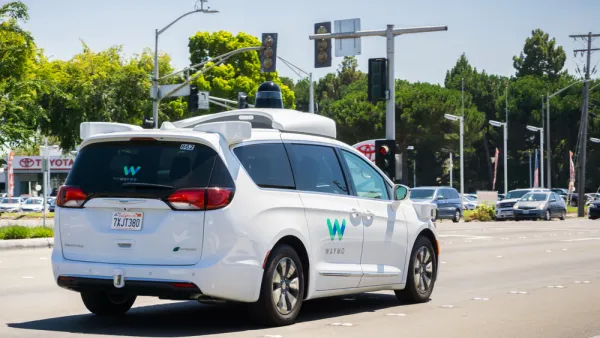
Handicapping the Self-Driving Horse Race
There are a lot of players in the autonomous vehicle game. It can be hard to keep track of which company is fighting for which share of the market, and which companies are out in front in the race to dominate the emerging industry.
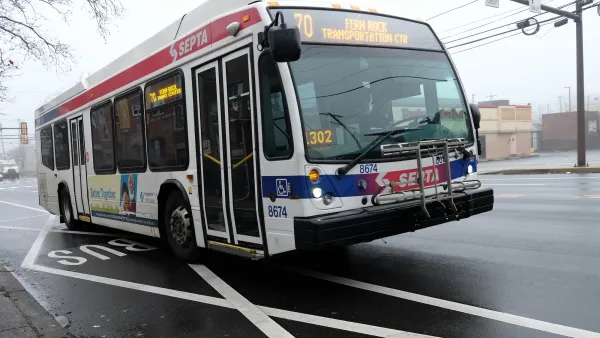
Pennsylvania lawmaker wants to ban fully self-driving buses
State Rep. Ben Waxman's proposed bill would require autonomous buses to have a licensed driver on board.
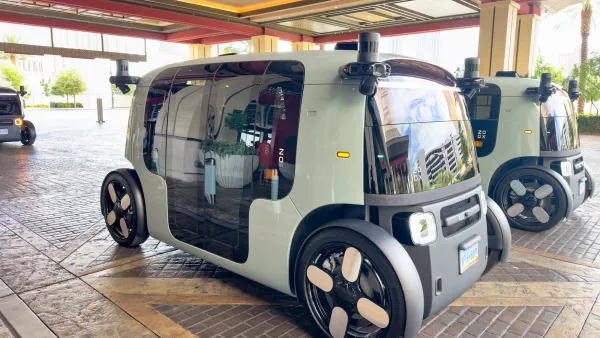
Amazon's steering wheel- and brake pedal-less Zoox robotaxis receive nation's first go-ahead for paid public rides
The NHTSA is giving a temporary permit to some autonomous cars that don't meet current safety standards as it develops a new framework for self-driving vehicles.

Planetizen Federal Action Tracker
A weekly monitor of how Trump’s orders and actions are impacting planners and planning in America.

Washington state to charge fee to drivers with fuel-efficient cars
Revenue from the fee will go towards supporting the state’s highways.

Illinois considers spending $1 billion in taxpayer money on data center
A quantum computing campus and data center are currently under construction in Chicago.

Did data centers change how voters cast their ballots?
Texas, Ohio, and Georgia all flipped party control. But in rural counties, the effect of local data centers was mixed.

Amtrak invests in eight new Airo trainsets
The new trainsets will begin serving passengers in 2031.

HUD to end aid for mixed-immigration-status households
The new rule is projected to impact 80,000 people, nearly half of whom are children.

FREE Course: Walkable City 1: Why Walkability?
After describing his path towards focusing on walkability as the essence of good planning, Jeff Speck marches through his five principal reasons for making more walkable places.
Reinventing Malls: Planning Alchemy—Turning Gray Fields Into Gold
The course focuses on the opportunities and imperatives that shape reinvention of mall sites.

City of Charlotte
City of Rosemead
Rutgers University, Edward J. Bloustein School of Planning and Public Policy
University of Michigan School for Environment and Sustainability (SEAS)
Hunter College, City University of New York (CUNY)
The Architects Foundation
University District Partnership