Seattle is faced with an affordable housing crisis that has led the new Planning & Community Development Director Sam Assefa to look globally for solutions.


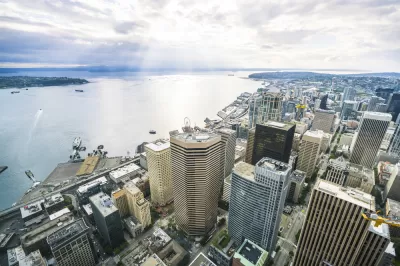
When Samuel Assefa was nominated to lead Seattle's newly consolidated Office of Planning & Community Development in 2016, Mayor Ed Murray touted his experience implementing holistic planning in cities around the United States and the world. In an exclusive interview with Assefa, The Planning Report investigates the global lessons he is applying to the tumultuous situation in Seattle.
Seattle is currently actively trying to address equity and mitigate displacement of existing residents as the communities bear the burden of increased population and diminished housing production. Assefa, who previously oversaw neighborhood redevelopment in San Francisco, shares what he's learned from other cities—and what other cities can learn from Seattle—on producing affordable housing, accommodating future growth, and revitalizing city centers for the next generation. Communication of why new housing needs to occur in many parts of the city, he says, is critical for residents to understand the overall challenge and opportunity of planning.
As part of Seattle's Housing Affordability and Livability Agenda, the city released a report that laid out two scenarios regarding upzoning and modeling potential displacement. In one, neighborhoods across the city are evenly upzoned for greater density. As Jen Kenney of Next City lays out: "In the other, neighborhoods with high displacement risk and low opportunity are upzoned to a lesser degree. The report, a draft environmental impact statement for the city's new inclusionary zoning policy, gets to the heart of an ideological battle playing out in many cities."
Assefa helped establish a Capital Cabinet with the heads of all the departments that manage capital projects, such as City Light (the city's electric utility), Public Utilities, Parks, Transportation, Housing, Economic Development, and a few others. The cabinet helps better coordinate and integrate the city's investments.
Using the holistic model of local government he learned from Mayor Richard Daley in Chicago, Assefa has embedded the 'team-first' mentality that believes that each of the services the city provides should not be viewed as the work of individual departments and rather be viewed as services of "the city."
Now, Assefa is charged with envisioning the future of the Seattle Center, which is one of Mayor Murray's key initiatives. Utilizing his experience of championing Millennium Park in Chicago, Assefa is thinking about how the Seattle Center can remain relevant to future generations, and what version of the Millennium Park story could take place in Seattle.
Read more in The Planning Report.
Read the full story: Seattle's Management of an Integrated, Equitable Budget & Planning Process Has a Leader

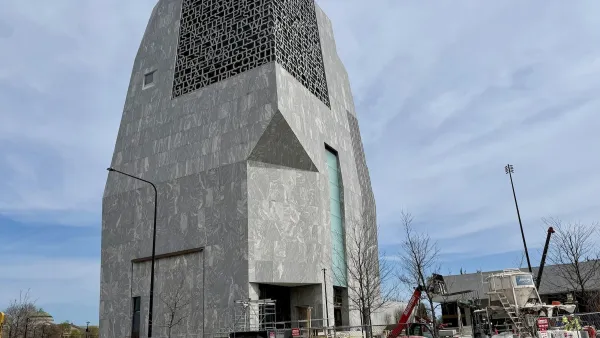
Short-term rental licenses grew by 46% near Obama Center as affordable homes disappear
The Chicago ward where the Obama library is located is one of the only parts of the city to see an increase in STR licenses.
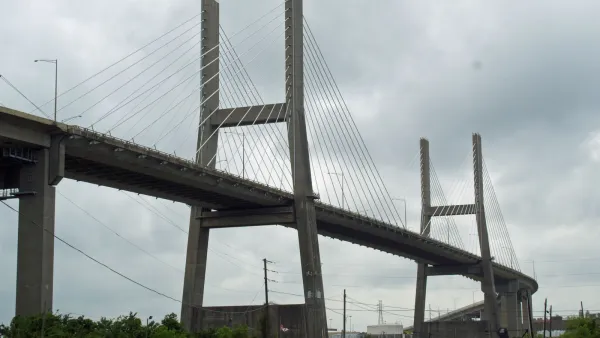
Historic Black Alabama Community Fights Displacement for Concrete Plant
Residents of Mobile’s Africatown neighborhood say building a concrete plant near homes and a historic site is “a step backwards.”
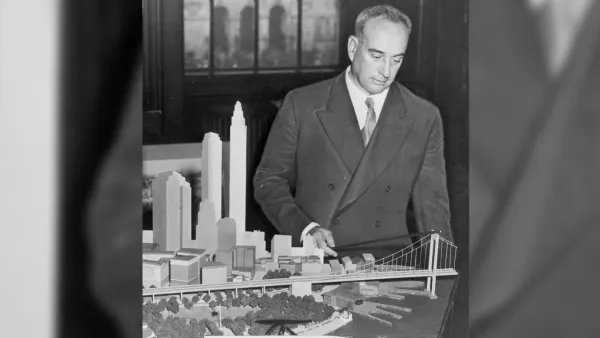
We are Perfectly Poised for Another Robert Moses
When “America is Building Again” while decentering equity, the ghost of Robert Moses haunts us.

Planetizen Federal Action Tracker
A weekly monitor of how Trump’s orders and actions are impacting planners and planning in America.

Amtrak, CN end decades-long dispute with eight-year agreement
The new operating agreement establishes an updated framework for the companies to work together, including processes to resolve disputes.

Nation's most wind-powered state turns to coal as data centers increase energy demand
For the first time in decades, Iowa has increased its generation of coal power.

Alabama scores up to $2.5 billion federal loan for largest infrastructure project in state’s history
The Mobile River Bridge and Bayway Project aims to ease congestion at Alabama’s worst bottleneck.

Trump is considering data centers on 6 states' public land — some state officials say they had no idea
If the administration approves the proposed projects, data center and data center-related developments will cover 17,600 acres of public land.

Despite court ruling, Trump is keeping nearly all wind projects in the US on hold
At least 110 wind energy projects have not heard from the government since a federal judge ruled that the Trump administration's freeze on wind turbine clearances was likely illegal.

FREE Course: Walkable City 1: Why Walkability?
After describing his path towards focusing on walkability as the essence of good planning, Jeff Speck marches through his five principal reasons for making more walkable places.
Reinventing Malls: Planning Alchemy—Turning Gray Fields Into Gold
The course focuses on the opportunities and imperatives that shape reinvention of mall sites.

KFH Group Inc.
Greater Baltimore Committee
Eagle County Government
The Architects Foundation
University of Cincinnati Online
The Pocatello Development Authority
The Urban Renewal Agency of the City of Pocatello