The decision means the U.S. will join Syria and Nicaragua as the only nations not to subscribe to the global agreement to reduce greenhouse gases. Trump attempted to leave the door ajar by stating that he would attempt to negotiate "a better deal."


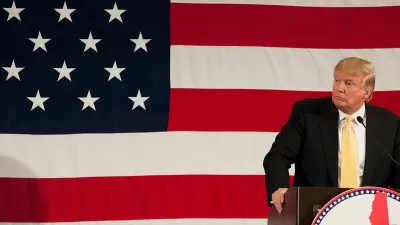
President Trump made the announcement at a much-anticipated speech in the White House Rose Garden. He defended the move because of what he stated was the cost to the economy of reducing emissions. He felt the that the 'deal' punished the United States.
"But he will stick to the process laid out in the Paris agreement, which President Barack Obama joined and most of the world has already ratified," reports Michael D. Shear for The New York Times. "That could take four years to complete, meaning a final decision would be up to the American voters in the next presidential election."
He interspersed his speech with the announcement of openings of new coal mines in the United States: "unheard of," he stated. And he pointed out that China and India can continue production of new coal plants.
"The agreement is a massive redistribution of U.S. wealth to other countries," he stated.
The decision is in line with his campaign promise to cancel the agreement, so it should not come entirely as a surprise. It is also consistent with a wave of regulation rollbacks he has either initiated as executive orders or signed as Congressional Review Acts.
"The president’s decision was a victory for Stephen K. Bannon, his chief strategist, and Scott Pruitt, his Environmental Protection Agency administrator, both of whom had argued forcefully to abandon the global agreement in favor of a clean break that would clear the way for a new environmental approach," adds Shear. On the losing end were his daughter, Ivanka; son-in-law, Jared Kushner; Secretary of State Rex Tillerson, and Gary D. Cohn, the director of the National Economic Council.
The decision was quickly rebuked by the environmental community.
“This is disgraceful,” said Annie Leonard, Greenpeace USA’s executive director. “By withdrawing from the Paris climate agreement, the Trump administration has turned America from a global climate leader into a global climate deadbeat.”
Read the full story: Trump Will Start Years-Long Process to Withdraw From Paris Climate Agreement

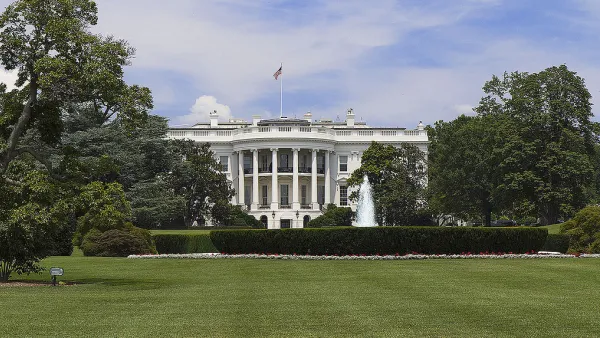
Next White House Struggle: Whether to Exit the Paris Climate Agreement
Ending Obama's so-called "war on coal" may go international with the exit from the December 2015 Paris Climate Agreement if EPA Administrator Scott Pruitt has his way, but he may encounter formidable opposition from Trump's administration and family.
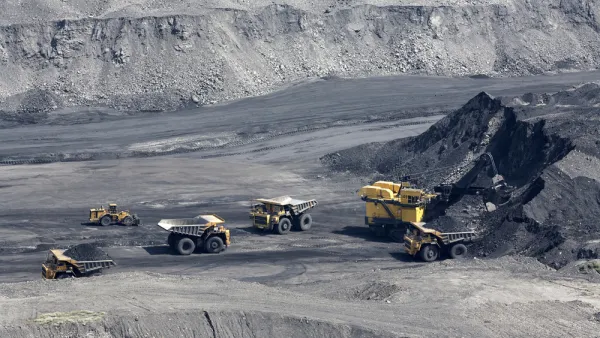
Coal Miners Are Going Back to Work, Proclaims Trump Upon Signing Executive Order
Flanked by coal miners, President Trump signed an executive order on Tuesday that begins the roll back of his predecessor's signature environmental rule, the Clean Power Plan, and other environmental regulations to facilitate energy production.
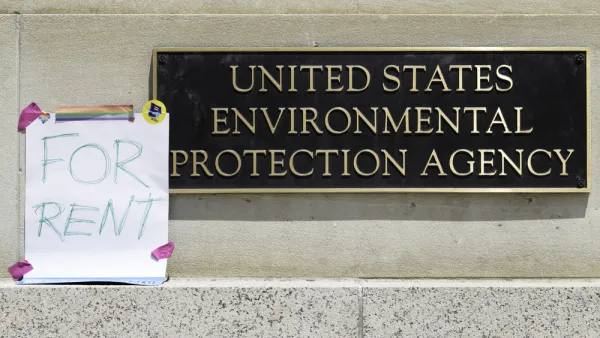
U.S. Officially Withdraws From the Paris Climate Accord
An even set in motion years ago by the Trump administration came to fruition on November 4 while most Americans were paying attention to the election.

Planetizen Federal Action Tracker
A weekly monitor of how Trump’s orders and actions are impacting planners and planning in America.

Data reveals that NYC’s bet on congestion pricing has paid off
After almost two years of the program, reports show positive impacts on traffic and air quality and no disruptions to parking.

HUD modernizes 50-year-old manufactured housing framework
The Next Generation Manufactured Housing Action Plan establishes new energy-efficiency standards for manufactured homes, and new guidelines for anchoring them.

Florida could lose billions in funding for infrastructure, parks
If Amendment 3 passes, Miami-Dade would lose about $445 million annually by fiscal year 2028-29.

New Mexico spent millions drafting climate goals. Data centers are unraveling them
Three data centers in New Mexico and El Paso will release more emissions yearly than 2 million cars in the same timeframe.

This Ohio town is using AI to speed up transit analysis
The Greater Dayton Regional Transit Authority’s new AI tool correctly determined riders’ preferred ways to reach key commuter routes.

FREE Course: Walkable City 1: Why Walkability?
After describing his path towards focusing on walkability as the essence of good planning, Jeff Speck marches through his five principal reasons for making more walkable places.
Reinventing Malls: Planning Alchemy—Turning Gray Fields Into Gold
The course focuses on the opportunities and imperatives that shape reinvention of mall sites.

Rutgers University, Edward J. Bloustein School of Planning and Public Policy
One Hundred Miles
County of Mendocino
The Architects Foundation
University of Cincinnati Online
Montrose County
Northern Illinois Transit Authority (NITA)
The Pocatello Development Authority