Transportation ballot measures are popular this November: over 70 populate ballots across the country. In California and elsewhere, they supplement declining federal and state funds for local infrastructure.


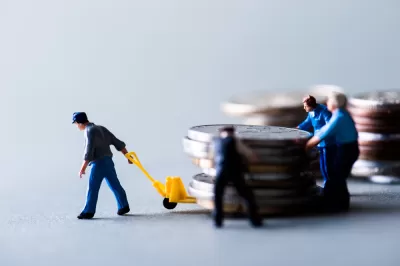
Local transportation tax increases are generally quite popular (as tax increases go), and not just among Democrats. This November, Steve Scauzillo writes, "Nearly one-third of California's 58 counties will ask voters to approve transportation taxes, part of a record-setting number of measures appearing on ballots across the nation."
Local transit tax measures have long been on the rise. According to Jason Jordan at the Center for Transportation Excellence, if every such tax increase in the United States passes this year, they will raise $175 billion for transportation infrastructure.
On the local level, that's impressive, and necessary. Federal and state funding, which localities have come to rely on, is getting harder and harder to obtain. "In California during the last fiscal year, local funding equaled $14 billion, twice the amount of federal and state funds. The state has a $57 billion, 10-year shortfall in maintaining freeways and state highways." Part of the problem lies with the federal gas tax, which hasn't been raised for 22 years, allowing the Highway Trust Fund to deplete.
Additionally, getting federal grants in the first place often involves fronting some part of the money. "Several smaller counties, such as Placer and Humboldt, need to bank transportation dollars from local residents in order to pry even the smallest federal grant from Washington to widen a freeway or fix the potholes."
But voters appear willing to pay higher taxes to fund specific local projects. Businesses and residents can align behind the economic benefits of good local infrastructure. And, the article notes, nobody can take it away.
Read the full story: Why everyone wants to join the transportation tax bandwagon across California, US
Biden Proposes Gas Tax Holiday to Reduce Gas Prices
President Biden asked Congress on June 22 to suspend federal fuel taxes, unchanged since 1993, for three months to provide motorists 'relief' at the pump. Additionally, he asked states to follow suit and for oil companies to increase refining.
Time for a Federal Gas Tax Holiday?
Senate Democrats introduced legislation to lower gas prices by suspending the federal gas tax through the end of the year. General funds would be directed to the Highway Trust Fund to replace gas tax revenue.
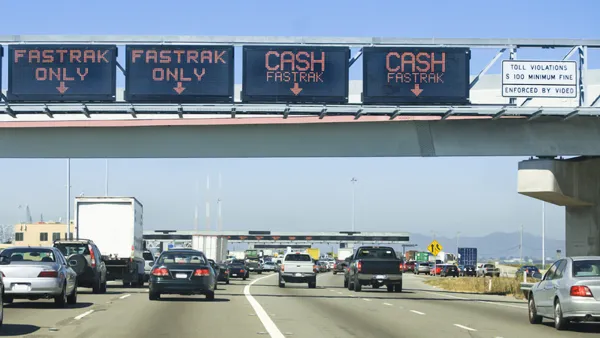
Funding Biden's Infrastructure Plan: Should Users or Corporations Pay?
After determining the size and scope of President Biden's infrastructure package, the next biggest challenge is determining how to pay for it. The partisan divide is steep, but Roll Call exposes division within the Democrats' ranks.

Desperate measures: Advocates weigh draining Lake Powell to fill Colorado River
Draining the reservoir could reduce evaporation losses by a couple hundred thousand acre-feet.

Eastern Nebraska is running out of electricity
Data centers and electrification are straining eastern Nebraska’s grid, throttling economic development.

Malls are becoming the midtowns of the future
Mall and office park redevelopments are a generational opportunity to create new nodes of urbanity.

NYC breaks ground on anti-flooding infrastructure project
New York City's new system will reduce stormwater flows to local sewers by 90%.

One Kentucky town’s secret to affordable housing
The Smoketown Community Land Trust has already built seven affordable homes for community members.

Houston gains petal-shaped cooling infrastructure to make streets more ‘delightful’
The city has installed the pavilions along 15 blocks in Houston.

FREE Course: Walkable City 1: Why Walkability?
After describing his path towards focusing on walkability as the essence of good planning, Jeff Speck marches through his five principal reasons for making more walkable places.
Reinventing Malls: Planning Alchemy—Turning Gray Fields Into Gold
The course focuses on the opportunities and imperatives that shape reinvention of mall sites.

City of Rosemead
Rutgers University, Edward J. Bloustein School of Planning and Public Policy
One Hundred Miles
University of Michigan School for Environment and Sustainability (SEAS)
Hunter College, City University of New York (CUNY)
The Architects Foundation
City of Cambridge
Montrose County
The Pocatello Development Authority