If the Metro Board passes the proposed $40 billion expenditure plan, millions of Los Angeles residents will still not have access to good public transit for decades.


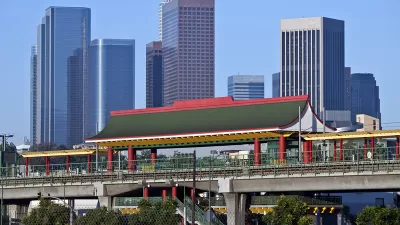
On June 23rd, the full Los Angeles County Metropolitan Transportation Authority (Metro) board will consider placing a new ballot measure, commonly referred to as "Measure R2" on the November 2016 ballot. Metro CEO Phil Washington recently announced that Measure R2 would be a permanent, non-expiring sales tax extension and increase. By becoming a permanent fixture, Measure R2 will govern transportation infrastructure development for the County for at least 50 years, and will raise at least $120 billion.
The expenditure plan proposed by Metro is robust and atones for many of Los Angeles’ previous public transportation sins, such as putting transportation through the Sepulveda Pass, one of the worst stretches of congestion in the country.
However, the expenditure plan does not include bringing new projects to areas in critical need of a public transportation hub, such as California State University, Northridge (CSUN). CSUN is the second largest public university in Los Angeles, with over 40,000 students and 10,000 faculty and staff, who require over 200,000 weekly trips to campus. Currently, there is no plan to bring a direct rapid transit system to CSUN.
Leaders in the San Fernando Valley, including State Senator Robert Hertzberg, have organized "It’s Our Turn" to ensure that the one million Valley residents get a fair share of promised infrastructure investment in transit. As Sen. Hertzberg elaborates:
“Last time, with Measure R, lots of things that were promised to the Valley didn’t end up happening—with the justifications that Metro ran out of money or had to change the order of projects. We wanted to make sure that there was no possibility of that kind of bait-and-switch in Measure R2.”
Read more about the upcoming Metro board hearing and hear more perspectives from other State Senators Tony Mendoza and Jim Beall, as well as San Fernando Valley leader Richard Close.
Read the full story: Will Metro’s New Measure "R2" Shortchange the San Fernando Valley Again?
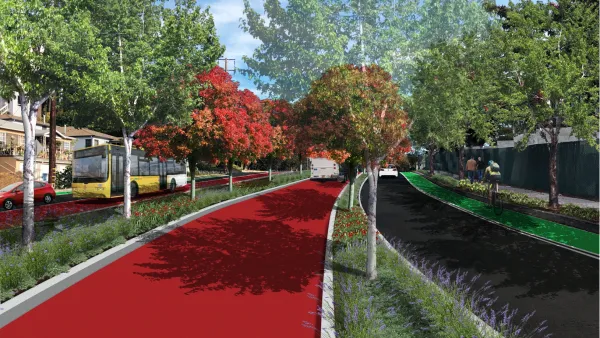
Controversial BRT Plans Revised in Los Angeles
The proposed changes to plans for a bus rapid transit route on Colorado Boulevard are an attempt to compromise between competing community concerns.
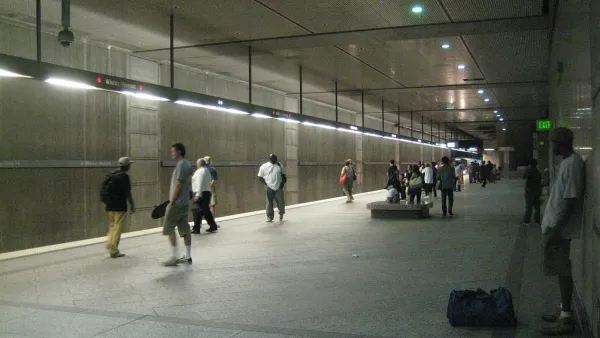
Op-Ed: Los Angeles Needs a Vermont Avenue Subway
As the second busiest bus corridor in the area, Vermont Avenue is currently a candidate for bus rapid transit. But would rail be a better choice?
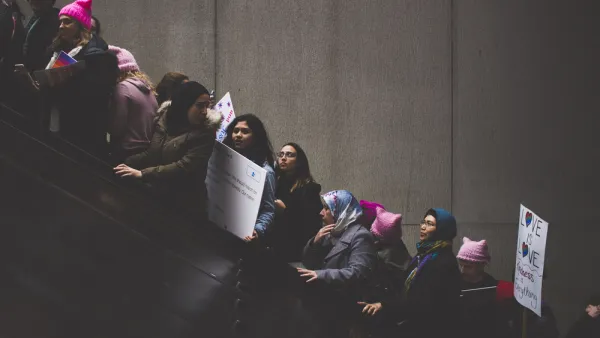
L.A. Metro CEO Challenges Trump on Infrastructure Funding
President Trump’s most recent transportation budget is projected to cut transportation spending by 13 percent, potentially undercutting many of Los Angeles' ambitious projects to continue the build-out of a full public transportation system.

Planetizen Federal Action Tracker
A weekly monitor of how Trump’s orders and actions are impacting planners and planning in America.

California plans to bury El Niño’s downpour
If the state plays its cards right, it may be able to store a billion acre-feet of El Niño’s water in aquifers.

Desperate measures: Advocates weigh draining Lake Powell to fill Colorado River
Draining the reservoir could reduce evaporation losses by a couple hundred thousand acre-feet.

In Texas, data centers are swallowing promised parkland
Residents who moved to Taylor, Texas for a rural community now have to contend with three data centers in their backyard.

How a Chicago-sized wind farm beat the odds and powered on
The project spanned five presidential administrations and a standoff with a U.S. military base.

MTA gives itself 30 days to transform pit into basketball court
The site has been under construction since 2022; the city originally estimated it would finish the court in 2024.

FREE Course: Walkable City 1: Why Walkability?
After describing his path towards focusing on walkability as the essence of good planning, Jeff Speck marches through his five principal reasons for making more walkable places.
Reinventing Malls: Planning Alchemy—Turning Gray Fields Into Gold
The course focuses on the opportunities and imperatives that shape reinvention of mall sites.

City of Rosemead
Rutgers University, Edward J. Bloustein School of Planning and Public Policy
One Hundred Miles
Hunter College, City University of New York (CUNY)
The Architects Foundation
University of Cincinnati Online
City of Cambridge
Montrose County
The Pocatello Development Authority