While it will certainly comes as a relief to some commuters living in the San Gabriel Valley, the Metro Gold Line extension that opened earlier this month was more the result of politics than planning.


The opening of a Los Angeles Times editorial by Ethan Elkind begins innocuously enough: "The opening this month of the Gold Line extension from Pasadena to Azusa is an example of how voter-approved tax dollars are now delivering real transit projects for Los Angeles." Then comes the kicker: "It is also an example of how politics often dictate how and where Metro builds."
In the case of the widely celebrated Gold Line extension, Elkind says that planners, not politicians, could have come up with a better route for the train:
Better mass transit is necessary across the region. But not every part of the county has the population to support rail. In the case of the Gold Line, we've brought expensive train technology to a generally low-density area that could be more economically served by bus rapid transit or commuter buses running in the right-of-way.
After detailing the political bedfellows that brought the Gold Line extension into existence, Elkind looks forward, and recommends that Metro "be more willing to reject inefficient rail proposals in favor of more cost-effective options." Elkind also offers some specific ideas about what those projects might be.
Read the full story: How politics built L.A.'s Gold Line at the expense of a smarter system
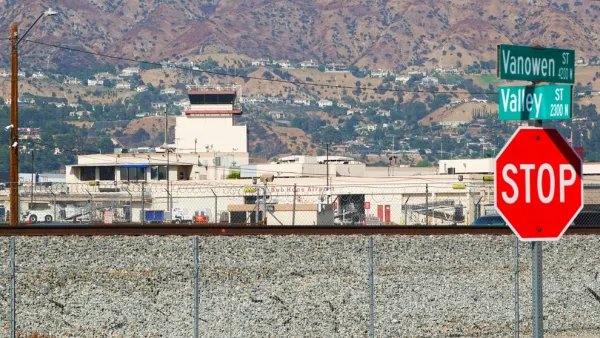
Feasibility Study Approved for Pasadena, Burbank Airport Light Rail Extension
$1 million in new state funding will study the feasibility of connecting the Gold Line light rail in Pasadena to the Hollywood Burbank Airport in Southern California.
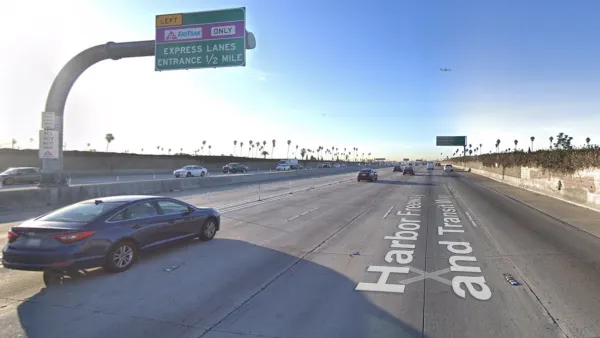
Los Angeles Express Lane Revenue to Fund Electric Double-Decker Buses
Solo drivers who paid a variable toll to use the 10 and 110 freeways in Los Angeles provided $1.4 million to assist in the purchase of the nation's first electric double-decker buses, to be operated by Foothill Transit
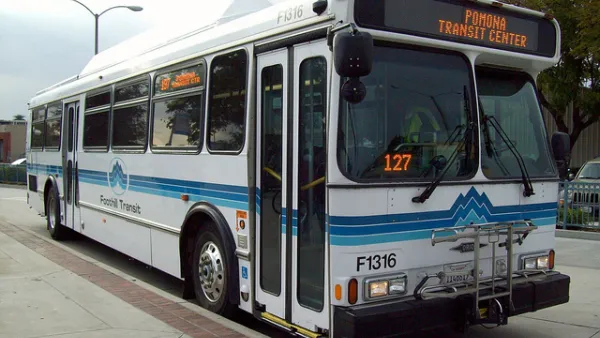
Southern California Bus System Cuts Costs to Compete with L.A. Metro Light Rail
Bus riders can expect two rounds of fare increases, plus service cuts along the light rail route.

Planetizen Federal Action Tracker
A weekly monitor of how Trump’s orders and actions are impacting planners and planning in America.

Eastern Nebraska is running out of electricity
Data centers and electrification are straining eastern Nebraska’s grid, throttling economic development.

Study reveals best places in the U.S. for cycling, walking
New research from Streetlight Data examines bicycle and pedestrian miles per capita in the 100 largest U.S. cities by population.

San Antonio is using environmental review to stall ICE detention center
San Antonio sued last month to pause work on the new detention center until the federal government studied its effect on the surrounding area.

Austin plans light rail extension — before breaking ground on light rail
The planned extension is three miles long and will take riders straight to Austin-Bergstrom International Airport.

Chicago cuts ribbon on $300,000, self-cleaning public toilet
The public toilet is the city’s first, and may pave the way for a rollout of similar facilities.

FREE Course: Walkable City 1: Why Walkability?
After describing his path towards focusing on walkability as the essence of good planning, Jeff Speck marches through his five principal reasons for making more walkable places.
Reinventing Malls: Planning Alchemy—Turning Gray Fields Into Gold
The course focuses on the opportunities and imperatives that shape reinvention of mall sites.

City of Charlotte
City of Rosemead
Rutgers University, Edward J. Bloustein School of Planning and Public Policy
University of Michigan School for Environment and Sustainability (SEAS)
Hunter College, City University of New York (CUNY)
The Architects Foundation
City of Cambridge
The Pocatello Development Authority
The Urban Renewal Agency of the City of Pocatello