As the nation's third largest oil producer, California has a long history with the oil industry, yet it's also the birthplace of the American environmental movement. Lisa Margonelli makes the case for the Golden State reducing its oil addiction.


"The history and idea of California are so tied up with oil—from the oil fields of Bakersfield and Signal Hill to millionaires like J. Paul Getty and Armand Hammer to the state’s famous car-and-freeway culture—that it is hard to imagine the state without oil," writes Lisa Margonelli, an energy policy expert, author, and former Atlantic writer. "But that is exactly what many Californians are imagining."
The comprehensive piece on Zócalo Public Square is focused somewhat on Santa Barbara, beginning with the May oil pipeline spill and the devastating 1969 offshore oil spill.
After the Exxon Valdez oil spill in 1989, national environmental groups focused their energy on reducing oil drilling in the U.S. while oil consumption and imports grew. But Santa Barbara’s independent environmental groups remained committed to “Getting Oil Out”—entirely, not just reducing oil drilling.
Interestingly, not much has changed, as noted by the recent federal legislation, "Keep it in the Ground Act." And some might question whether Santa Barbara's opposition is confined to oil or to anything harming the coast—which includes what some consider the modern day equivalent to oil derricks, offshore wind farms.
Fast forward to the passage of landmark renewable energy and energy efficiency legislation that initially included reducing oil consumption by 50 percent in 15 years. "SB 350’s radical prescription on oil use was defeated politically, without a vote, in part by the Western States Petroleum Association (WSPA)" which ran a successful campaign to convince so-called "moderate Democrats" to drop the oil reduction provision under the guise it would increase oil prices.
But outside of Sacramento, Californians just aren’t that into oil anymore: Between 2008 and 2014, the country’s highest gas prices led drivers to decrease their gas consumption by a billion gallons a year.
The trend has not continued, sadly. Even a year before gas prices plummeted in July, 2014, gas consumption began to increase.
Perhaps California's dual role as a major oil producer and environmental leader is best illustrated with none other than the driving force behind California's climate legislation, Gov. Jerry Brown. While striving to reduce oil consumption, as noted in his January inaugural speech, it was revealed by the San Francisco Chronicle on Nov. 12 that "last year (he) asked the head of California’s oil regulating agency to study the history of oil and natural gas drilling near his family’s land in Colusa County."
Hat tip: Fred Huette, Sierra Club International Climate and Energy Committee
Read the full story: Imagining California Without Oil Refineries
Keep it in the Ground – 2018
As climate hawks gather in San Francisco for the Global Climate Action Summit that convenes Wednesday, Gov. Jerry Brown, host of the summit, is dogged by critics who can't distinguish between oil production and consumption.
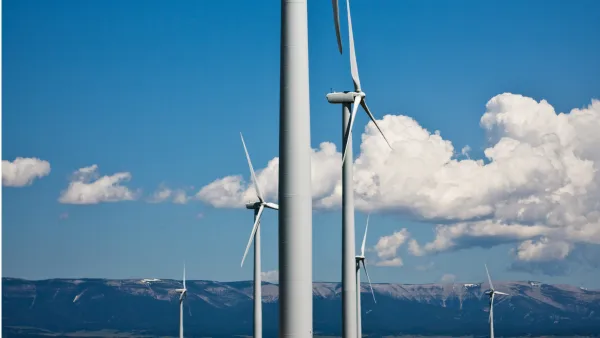
Five Key Energy Bills the California Legislature May Decide this Week
Energy stakeholders in California are watching five important bills to see which go forward with three weeks remaining in the legislative season. One would require the state to generate all electricity from renewable sources by 2045.
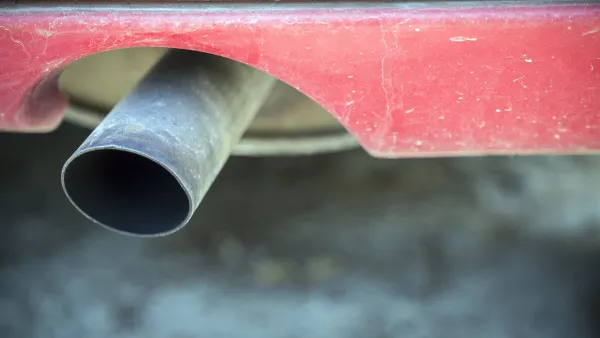
California Mulls Banning Sales of Cars with Internal Combustion Engines
Eying European and Asian countries that have set, or are considering timelines to ban sales of cars that emit greenhouse gases, the California governor asked his chief air regulator to see why California couldn't follow suit.

Planetizen Federal Action Tracker
A weekly monitor of how Trump’s orders and actions are impacting planners and planning in America.

California plans to bury El Niño’s downpour
If the state plays its cards right, it may be able to store a billion acre-feet of El Niño’s water in aquifers.

Desperate measures: Advocates weigh draining Lake Powell to fill Colorado River
Draining the reservoir could reduce evaporation losses by a couple hundred thousand acre-feet.

Chicago voters approve permanent festival grounds, penalty for vacant property owners
Currently, major summer and fall festivals take over public parks for weeks at a time, drawing criticism from nearby residents

NYC votes to cut outdoor dining red tape, speed up permitting
New York City also voted to allow the Department of Transportation to begin work on urgent projects before notifying elected officials.

California appears to reject Prop. 45
The proposition would have expanded the projects that qualify for a streamlined environmental review, effectively paring down the California Environmental Quality Act.

FREE Course: Walkable City 1: Why Walkability?
After describing his path towards focusing on walkability as the essence of good planning, Jeff Speck marches through his five principal reasons for making more walkable places.
Reinventing Malls: Planning Alchemy—Turning Gray Fields Into Gold
The course focuses on the opportunities and imperatives that shape reinvention of mall sites.

City of Rosemead
Rutgers University, Edward J. Bloustein School of Planning and Public Policy
One Hundred Miles
Hunter College, City University of New York (CUNY)
The Architects Foundation
University of Cincinnati Online
City of Cambridge
Montrose County
The Pocatello Development Authority