The California governor began an unprecedented fourth term by laying out goals to reduce carbon emissions and oil consumption, address road and bridge maintenance, build high speed rail, and construct two huge water tunnels under the Sacramento Delta


"The 76-year-old Democrat, who held office from 1975 to 1983 before term limits and returned for a third term in 2011, delivered a joint inauguration and state of the state address in the Assembly chamber at the state Capitol" on Jan. 5, writes Melody Gutierrez of the San Francisco Chronicle.
Gutierrez lists his three energy-environmental goals to be attained by 2030:
• Increase from 33 percent to 50 percent the amount of electricity derived from renewable sources, (known as the Renewable Portfolio Standard, or RPS).
• Reduce oil consumption by 50 percent — largely by increasing use of electric vehicles.
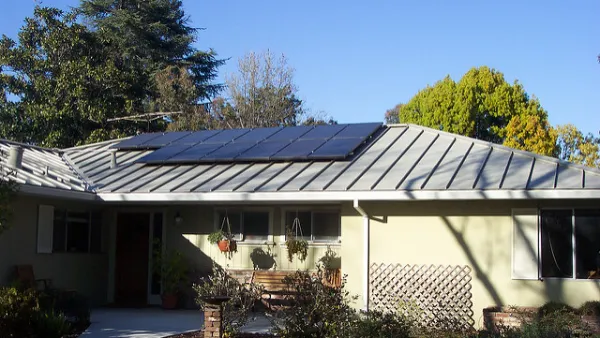
• Raise building energy efficiency, partially by increasing use of rooftop solar panels.
Gutierrez describes Brown's three infrastructure goals he feels are critical to the states' future:
- Tackling the enormous $59 billion problem of deferred highway and bridge maintenance.
- Constructing two enormous tunnels to carry water south around the Sacramento-San Joaquin River Delta
- Building the nation's first (or second, depending on progress by the Texas Central Railway) high speed rail system.
The following day, Brown appeared at the high speed rail groundbreaking in Fresno.
According to David R. Baker, the Chronicle's business reporter who covers clean tech and energy, increasing the RPS to 50 percent by 2030 (from 33 percent by 2020) will be a huge boon for solar power industry.
Their business within California has been driven by government mandates. (The current) requirement triggered a wave of solar plant construction in the Southern California desert, which peaked in the last two years.
However, those large solar projects may be viewed as controversial, depending upon their location, by the environmental community.
As for oil reduction, that goal may prove more elusive, particularly with the lowest oil prices in five years, notwithstanding the new wholesale carbon charge expected to add 10-cents per gallon. We noted last month that "(f)or the first time since 2006, gasoline consumption in California increased from the prior fiscal year, though Baker points out that consumption "remain(s) about 8 percent below the (2005) peak, according to the California Board of Equalization, which tracks fuel sales through tax receipts."
Read the full story: Gov. Jerry Brown lays out vision at historic 4th inauguration

Details of the Golden State's Residential Solar Requirement
San Francisco Chronicle energy reporter David R. Baker sheds some light on the nation's first state building code requiring that solar panels be included in new home construction, adopted by the California Energy Commission on May 9.
Will Electric Utilities Disrupt the Oil Industry in California?
A key bill had language allowing public utilities to enter into the electric vehicle charging industry—overlooked by the oil industry and a game-changer for EVs as it tackles one of their most formidable challenges.
California Adopts One of Nation's Highest Renewable Energy Mandates
Gov. Jerry Brown signed stripped-down legislation that sets a target for the state of generating 50 percent of electricity from renewable sources by 2030 and doubling energy efficiency standards in buildings by the same year.

Planetizen Federal Action Tracker
A weekly monitor of how Trump’s orders and actions are impacting planners and planning in America.

Amtrak, CN end decades-long dispute with eight-year agreement
The new operating agreement establishes an updated framework for the companies to work together, including processes to resolve disputes.

Judges permit Denver to divert 77,000 acre feet from the Colorado River for reservoir expansion
Overuse and climate change have caused the Colorado River’s water levels to plummet.

NYC DOT wants faster, more permanent street upgrades
The city is examining ways to build more concrete infrastructure without getting entangled in 'decades-long' projects.

'Something we’ve never seen before:' rising utility rates could strain city finances nationwide
Data centers, climate change and other factors have caused utility rates in the United States to increase by 38% since 2020.

Trump to overrule local leaders, lease millions of acres of America’s Pacific Island territories’ seafloors to mining companies
International law says that the Indigenous people of America’s territories have a right to prior and informed consent regarding projects that impact their countries.

FREE Course: Walkable City 1: Why Walkability?
After describing his path towards focusing on walkability as the essence of good planning, Jeff Speck marches through his five principal reasons for making more walkable places.
Reinventing Malls: Planning Alchemy—Turning Gray Fields Into Gold
The course focuses on the opportunities and imperatives that shape reinvention of mall sites.

Harvard University Graduate School of Design
KFH Group Inc.
Greater Baltimore Committee
The Architects Foundation
University of Cincinnati Online
The Pocatello Development Authority
The Urban Renewal Agency of the City of Pocatello