New research examines the role of public investments in gentrification.


Richard Florida shares insights into a comprehensive review of gentrification research out of the University of California Berkeley and UCLA, published by the Federal Reserve of San Francisco, which "helps us better understand the real underlying drivers of gentrification."
Adding a new layer to the usual narrative about the people at the center of gentrification, the study also finds that "large-scale government policies and public investments" also drive the process of gentrification.
As Florida describes, "[t]he largest, most important, and most obvious example is transit—subways, light-rail, buses, and other forms of urban mass transit—which the study dubs 'transit-induced gentrification.'" After reviewing "a large body of research on the effect of rail transit on property values, the San Francisco Fed study does find evidence of a small to modest premium for properties located near rail stations," according to Florida.
Florida goes on to describe the other examples of public works that contribute to the effects of gentrification, including schools, parks, and large-scale redevelopment projects, while tying these themes back to previous studies and real world examples.
Read the full story: The Role of Public Investment in Gentrification
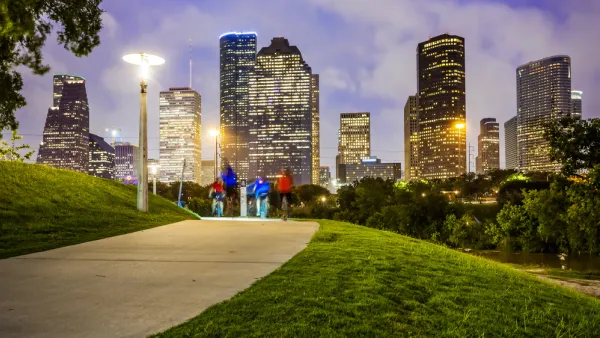
The Gentrification Effect of Urban Parks
New research finds that different types of parks correlate with different gentrification effects, adding to the complexity of urban change.
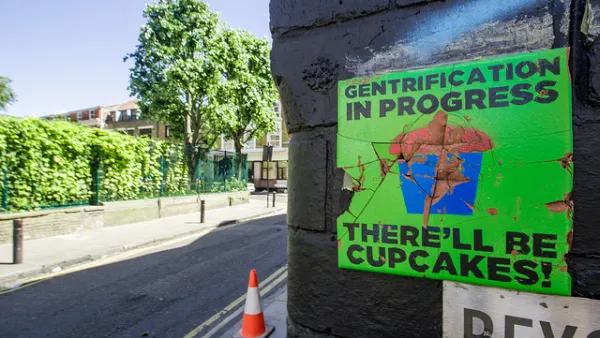
Review: 'The Handbook of Gentrification Studies'
A book by Loretta Lees and Martin Phillips, published in 2018, is reviewed and recommended to "graduates studying anthropology of cities, urbanism, geography, and new urban identities."

'Climate Gentrification' Is Exacerbating Economic Inequality in Miami
A new study shows that over the last several decades the price of real estate has been heavily influenced by the actual and anticipated effects of climate change.

Planetizen Federal Action Tracker
A weekly monitor of how Trump’s orders and actions are impacting planners and planning in America.

Washington state to charge fee to drivers with fuel-efficient cars
Revenue from the fee will go towards supporting the state’s highways.

Study reveals best places in the U.S. for cycling, walking
New research from Streetlight Data examines bicycle and pedestrian miles per capita in the 100 largest U.S. cities by population.

Mamdani unveils his ‘most ambitious bus lane project’ so far
The city has added two new bus lanes, which it expects to speed up tens of thousands of bus riders’ commutes.

New Jersey and New York suggest $10.3 billion budget for transit
Some of the budget is dedicated to replacing Manhattan's Midtown Bus Terminal.

States split over EPA’s proposal to drop greenhouse gas rules for power plants
The proposed rule drew over 165K comments, including from officials, health and environmental groups, and private citizens.

FREE Course: Walkable City 1: Why Walkability?
After describing his path towards focusing on walkability as the essence of good planning, Jeff Speck marches through his five principal reasons for making more walkable places.
Reinventing Malls: Planning Alchemy—Turning Gray Fields Into Gold
The course focuses on the opportunities and imperatives that shape reinvention of mall sites.

City of Charlotte
City of Rosemead
Rutgers University, Edward J. Bloustein School of Planning and Public Policy
University of Michigan School for Environment and Sustainability (SEAS)
Hunter College, City University of New York (CUNY)
The Architects Foundation
University District Partnership
City of Cambridge
The Pocatello Development Authority