Los Angeles home prices have long since skyrocketed above median income. A report by the Legislative Analyst's Office shows how difficult it would be to build L.A. out of its predicament.



Bianca Barragan discusses the findings of an LAO paper, among them the sobering fact that, "In order to keep housing prices in check, California overall would have had to build more (70,000 to 110,000 additional units each year), build denser, and build especially in the coastal areas (including Los Angeles) and central cities (as opposed to building mostly inland and in areas way outside of cities as has been done in the past)."
According to Barragan, rampant NIMBYism among existing residents compounds the problem. "The report notes that, while it is important that local residents have input on new housing, their resistance to new development is 'heightened' especially in coastal California, and it's slowing down the ability of developers to build more housing to alleviate the stress on the limited housing supply."
"New housing projects are also slowed by the length of time it takes for approvals. The average coastal California metro takes seven months to approve a project; in LA, it takes about eight months. The average for major US metros was just four and a half months." On top of lengthy approvals, the California Environmental Quality Act (CEQA) allows opponents to drag out the development process even further.
Read the full story: How Much Does Los Angeles Have to Build to Get Out of Its Housing Crisis?

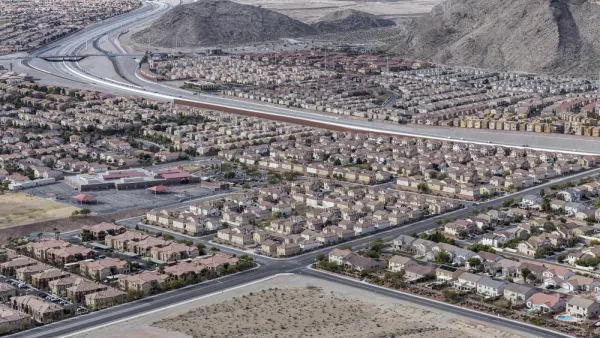
How COVID-19 and Skyrocketing Housing Costs Accelerated Sprawl
In search of space and affordability, American families are increasingly moving to suburbs and exurbs.
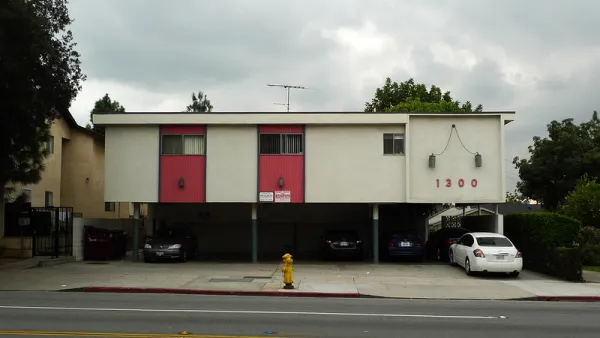
How the Iconic Dingbat Took Over Los Angeles
The low-slung, car-oriented apartment buildings represent a mid-century solution to a housing shortage and offer valuable lessons for new development.
California's New 'By-Right' Housing Law: Will it Make a Difference?
A new law could enable affordable housing projects, if they meet the specified criteria, to bypass the public process that so often blocks their approval.

Planetizen Federal Action Tracker
A weekly monitor of how Trump’s orders and actions are impacting planners and planning in America.

Amtrak, CN end decades-long dispute with eight-year agreement
The new operating agreement establishes an updated framework for the companies to work together, including processes to resolve disputes.

Nation's most wind-powered state turns to coal as data centers increase energy demand
For the first time in decades, Iowa has increased its generation of coal power.

Alabama scores up to $2.5 billion federal loan for largest infrastructure project in state’s history
The Mobile River Bridge and Bayway Project aims to ease congestion at Alabama’s worst bottleneck.

Trump is considering data centers on 6 states' public land — some state officials say they had no idea
If the administration approves the proposed projects, data center and data center-related developments will cover 17,600 acres of public land.

Despite court ruling, Trump is keeping nearly all wind projects in the US on hold
At least 110 wind energy projects have not heard from the government since a federal judge ruled that the Trump administration's freeze on wind turbine clearances was likely illegal.

FREE Course: Walkable City 1: Why Walkability?
After describing his path towards focusing on walkability as the essence of good planning, Jeff Speck marches through his five principal reasons for making more walkable places.
Reinventing Malls: Planning Alchemy—Turning Gray Fields Into Gold
The course focuses on the opportunities and imperatives that shape reinvention of mall sites.

KFH Group Inc.
Greater Baltimore Committee
Eagle County Government
The Architects Foundation
University of Cincinnati Online
The Pocatello Development Authority
The Urban Renewal Agency of the City of Pocatello