CityLab has complied a thorough guide of economic impact studies of bike lanes that provides a clear, visual case for removing parking spaces.



"It's perhaps natural for a shop owner to fear that losing a parking space means losing revenue," according to Eric Jaffe.
But when business interests repeatedly request further study of the economic impact of turning parking spaces over to bike lanes, it is either disingenuous or lazy.
"But here's the thing about the 'studies on possible economic impacts' requested by retailers on Polk Street, or really wherever bike-lane plans emerge—they've been done. And done. And done again. And they all reach a similar conclusion: replacing on-street parking with a bike lane has little to no impact on local business, and in some cases might even increase business. While cyclists tend to spend less per shopping trip than drivers, they also tend to make more trips, pumping more total money into the local economy over time."
Jaffe goes on to provide an "annotated, chart-filled guide" of research that has been conducted in places that have removed parking capacity for the sake of bike infrastructure. Cities like Portland, Oregon; Dublin, Ireland; Los Angeles, California; Toronto, Canada; Melbourne, Australia; and many more.
Read the full story: The Complete Business Case for Converting Street Parking Into Bike Lanes

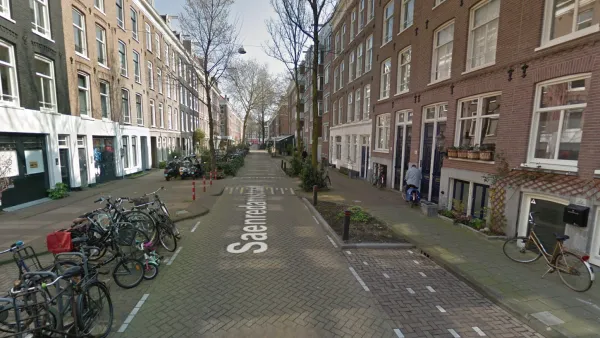
Watch: How to Remove Thousands of Parking Spaces
What the city of Amsterdam will gain by removing cars from on-street parking space.
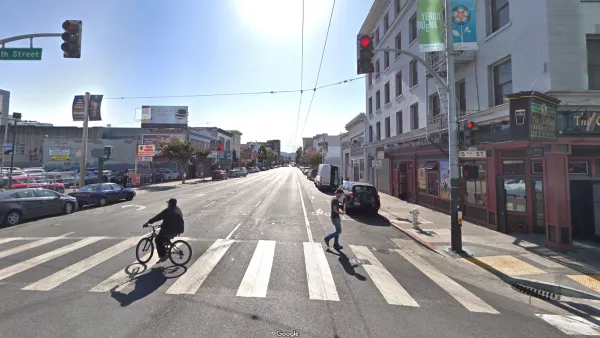
It Takes a Fatality to Remove On-Street Parking
On March 8, 30-year-old Tess Rothstein of Berkeley was riding a rented Ford GoBike in San Francisco's SoMa district when a car door suddenly opened, forcing her outside the narrow white line of the conventional bike lane into the path of a truck.
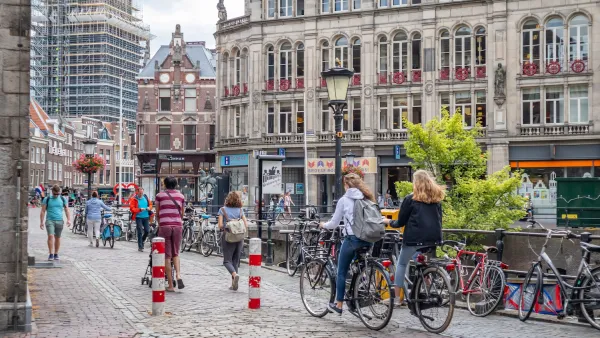
2025's 30 Most Bike-friendly Cities
Copenhagenize has released its list of top cities for cyclists. Spoiler alert: the United States doesn’t make the list.

Planetizen Federal Action Tracker
A weekly monitor of how Trump’s orders and actions are impacting planners and planning in America.

‘Going backwards:’ Baltimore mayor, students rally against state's transit funding plan
Maryland's proposed six-year plan provides no funding for Baltimore’s BMORE bus program and reduces its road maintenance funding.

Detroit to transform waterfront with $2.2 billion investment
Developers will convert about 18 acres of unused parking lot space into civic spaces.

HUD modernizes 50-year-old manufactured housing framework
The Next Generation Manufactured Housing Action Plan establishes new energy-efficiency standards for manufactured homes, and new guidelines for anchoring them.

New CA housing laws tear down development red tape
Recently-signed legislation makes building starter homes and ADUs cheaper and faster in California.

Metrolink finishes first expansion in 20 years
The transit agency is now one of very few in the United States to connect two major airports.

FREE Course: Walkable City 1: Why Walkability?
After describing his path towards focusing on walkability as the essence of good planning, Jeff Speck marches through his five principal reasons for making more walkable places.
Reinventing Malls: Planning Alchemy—Turning Gray Fields Into Gold
The course focuses on the opportunities and imperatives that shape reinvention of mall sites.

One Hundred Miles
County of Mendocino
planning NEXT
The Architects Foundation
University of Cincinnati Online
Montrose County
Northern Illinois Transit Authority (NITA)
The Pocatello Development Authority