A European movement to incentivize people to commute by bicycle is changing travel patterns and making mobility more sustainable.



Incentivizing people to commute by bicycle could be the next step in the transition to a more sustainable transportation system, writes Ron Johnson in Momentum Magazine.
After expounding on the benefits of e-bikes, which have opened up cycling to new demographics, Johnson notes that many European countries are already offering bike-to-work incentives. “In 2022, nearly one in three employers (29%) in Belgium voluntarily provided their workers with a bicycle allowance.”
In North America, incentives for purchasing e-bikes are becoming more common, but most programs are woefully underfunded and vouchers are snapped up almost as soon as the application window opens. Expanding these programs and bike-to-work incentives would bring clear benefits to society as a whole, Johnson argues. “the good thing about bicycles is that there is an economic benefit, but also a slew of other benefits including cleaner air, and lower health care costs.”
Read the full story: Governments Should Start Paying People to Bike to Work

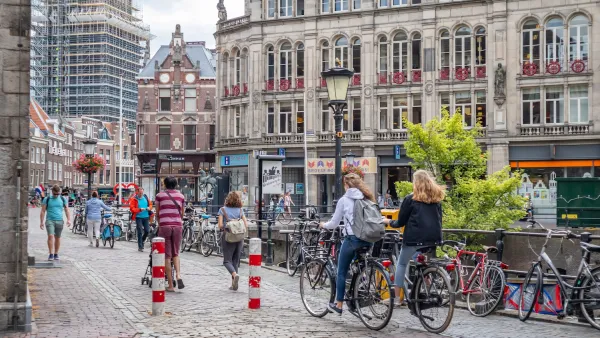
2025's 30 Most Bike-friendly Cities
Copenhagenize has released its list of top cities for cyclists. Spoiler alert: the United States doesn’t make the list.
7 Ways Cyclists are Winning in the AI Revolution
For individual cyclists and transportation planners, AI offers some useful tools for understanding bike riders’ behavior and assessing gaps in a city’s bike infrastructure.
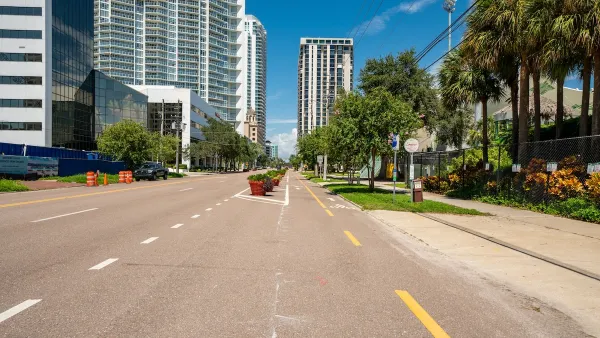
St. Petersburg’s Bike Infrastructure Efforts Pay Off
New bike infrastructure is encouraging more people to take to the streets on two wheels, but advocates say safety challenges remain.

Planetizen Federal Action Tracker
A weekly monitor of how Trump’s orders and actions are impacting planners and planning in America.

California plans to bury El Niño’s downpour
If the state plays its cards right, it may be able to store a billion acre-feet of El Niño’s water in aquifers.

Chicago breaks ground on $3 billion megadevelopment
The new neighborhood, titled Foundry Park, will one day host 3,700 residences.

California High-Speed Rail Authority CEO resigns after $600,000 scandal
Under Ian Choudri, the authority used taxpayer dollars to fund first class flights and trips to nightclubs.

Want to study the Missouri River? Soon, you may need unanimous approval from 10 states
Legislation would require 10 governors’ permission to study or build projects moving water outside the basin.

Desperate measures: Advocates weigh draining Lake Powell to fill Colorado River
Draining the reservoir could reduce evaporation losses by a couple hundred thousand acre-feet.

FREE Course: Walkable City 1: Why Walkability?
After describing his path towards focusing on walkability as the essence of good planning, Jeff Speck marches through his five principal reasons for making more walkable places.
Reinventing Malls: Planning Alchemy—Turning Gray Fields Into Gold
The course focuses on the opportunities and imperatives that shape reinvention of mall sites.

City of Rosemead
Rutgers University, Edward J. Bloustein School of Planning and Public Policy
One Hundred Miles
Hunter College, City University of New York (CUNY)
The Architects Foundation
University of Cincinnati Online
City of Cambridge
Montrose County
The Pocatello Development Authority