In a big victory for safe streets, New York City has released to the public an online database of crash data for the city. Previously, poor and incomplete data made creating safe streets "next to impossible."


"After years of prodding from safe streets advocates, the New York City Council, and the tech community — not to mention reporters — New York City has finally released comprehensive traffic crash data," reports Kate Hinds.
"Previously, the NYPD released crash data on a monthly basis (with big lags) in PDF format."
The data "represents all collisions for which NYPD completed an MV-104 report dating back to July 1, 2012, and can be downloaded in a variety of formats. As of right now, it contains 329,018 separate entries."
According to Hinds's coverage, the data release is a key component in enabling planners and transportation engineers to meet the goals of New York City's Vision Zero traffic safety campaign.
Read the full story: NYC Opens Traffic Crash Data -- Finally
Which Road Safety Interventions Work Best?
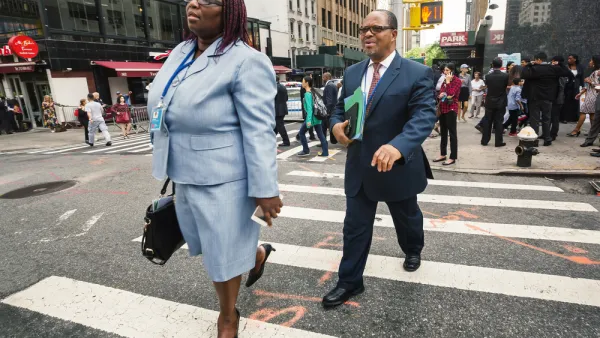
Data from New York City show that traffic safety projects that give pedestrians the most space are the most effective in reducing fatal crashes and injuries.
A Deadly Crash Is an Accident Because it Isn't Terrorism
Cable news networks interrupted broadcasts on Thursday morning with breaking news: a vehicle had just driven three block on the sidewalks in Times Square, New York, resulting in massive casualties. Anchors asked, "Was it terrorism or an accident?"
The Origins of Speed Limits
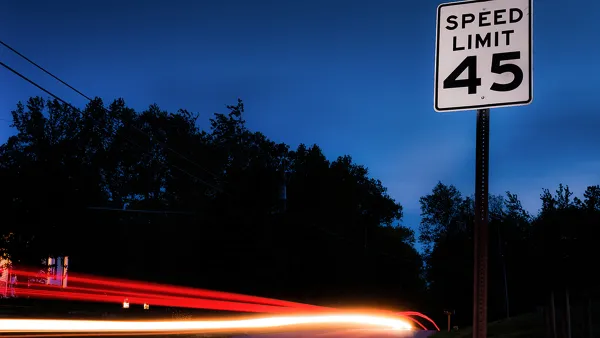
Motor vehicle crashes claim over 30,000 lives per year, with related costs in the hundreds of billions. While we sometimes view that frightening statistic as inevitable, there are reasons to reexamine speed limits and how we set them.

Desperate measures: Advocates weigh draining Lake Powell to fill Colorado River
Draining the reservoir could reduce evaporation losses by a couple hundred thousand acre-feet.

Eastern Nebraska is running out of electricity
Data centers and electrification are straining eastern Nebraska’s grid, throttling economic development.

Malls are becoming the midtowns of the future
Mall and office park redevelopments are a generational opportunity to create new nodes of urbanity.

NYC breaks ground on anti-flooding infrastructure project
New York City's new system will reduce stormwater flows to local sewers by 90%.

One Kentucky town’s secret to affordable housing
The Smoketown Community Land Trust has already built seven affordable homes for community members.

Houston gains petal-shaped cooling infrastructure to make streets more ‘delightful’
The city has installed the pavilions along 15 blocks in Houston.

FREE Course: Walkable City 1: Why Walkability?
After describing his path towards focusing on walkability as the essence of good planning, Jeff Speck marches through his five principal reasons for making more walkable places.
Reinventing Malls: Planning Alchemy—Turning Gray Fields Into Gold
The course focuses on the opportunities and imperatives that shape reinvention of mall sites.

City of Rosemead
Rutgers University, Edward J. Bloustein School of Planning and Public Policy
One Hundred Miles
University of Michigan School for Environment and Sustainability (SEAS)
Hunter College, City University of New York (CUNY)
The Architects Foundation
City of Cambridge
Montrose County
The Pocatello Development Authority