Calling the new transportation budget the GROW AMERICA Act, the Obama Administration's proposed transportation budget arrives as time is running out on MAP-21 and the Highway Trust Fund.


"The Obama administration today sent Congress its proposal for a multi-year transportation bill, which it’s calling the GROW AMERICA Act," reports Tanya Snyder. "The bill includes $206 billion for the highway system and road safety over its four year duration, and transit gets $72 billion. That brings the current 80-20 ration [sic] for highways and transit to something closer to 75-25. Rail — a new addition to the transportation bill – gets $19 billion, including nearly $5 billion annually for high-speed rail. The proposal also sets aside $9 billion for discretionary, competitive funding, including $5 billion for the popular TIGER grant project." Under the Obama Administration's recommendation, the bill would allocate a total of $302 billion over its four-year duration.
The bill mirrors the initial draft released two months ago—relying on corporate tax reform to raise $87 billion to fill the hole in the Highway Trust Fund. Snyder also provides some background on the significance of the gesture by the Obama Administration: "It’s the first time Obama has sent Congress a transportation proposal. He received some criticism for not doing so before the current transportation authorization, MAP-21, passed."
A separate article by Joe Schmitz provides more perspective on how funding levels would change under GROW AMERICA compared to MAP-21: "The legislation calls for a 37 percent overall annual spending increase on transportation programs, including 21 percent for highways and 69 percent for transit. Funding for passenger rail service would be increased 71 percent."
Read the full story: Obama Administration Sends Transportation Bill to Congress
Grow America Transportation Bill Would Open the Door to Tolling on Interstates
Although its unclear just how much influence the Department of Transportation's surface transportation authorization bill, called GROW AMERICA, will have (if any at all), the bill makes apparent a sea change with regard to tolling of the interstates.
A Transportation Redline that Obama is Required to Keep
If Congress can't agree how to fund the Highway Trust Fund shortfall, Transportation Secretary Anthony Foxx warned state DOTs that he will be unable to reimburse them for funds already spent. The redline is the $4 billion mark projected to come July.
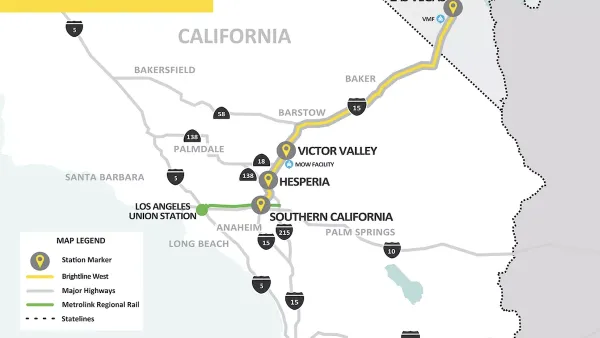
Brightline West’s future may rely on $6 billion federal loan
The company has until Nov. 2 to make a $400 million equity investment into its proposed high-speed rail line.

Planetizen Federal Action Tracker
A weekly monitor of how Trump’s orders and actions are impacting planners and planning in America.

California plans to bury El Niño’s downpour
If the state plays its cards right, it may be able to store a billion acre-feet of El Niño’s water in aquifers.

Desperate measures: Advocates weigh draining Lake Powell to fill Colorado River
Draining the reservoir could reduce evaporation losses by a couple hundred thousand acre-feet.

Chicago voters approve permanent festival grounds, penalty for vacant property owners
Currently, major summer and fall festivals take over public parks for weeks at a time, drawing criticism from nearby residents

NYC votes to cut outdoor dining red tape, speed up permitting
New York City also voted to allow the Department of Transportation to begin work on urgent projects before notifying elected officials.

California appears to reject Prop. 45
The proposition would have expanded the projects that qualify for a streamlined environmental review, effectively paring down the California Environmental Quality Act.

FREE Course: Walkable City 1: Why Walkability?
After describing his path towards focusing on walkability as the essence of good planning, Jeff Speck marches through his five principal reasons for making more walkable places.
Reinventing Malls: Planning Alchemy—Turning Gray Fields Into Gold
The course focuses on the opportunities and imperatives that shape reinvention of mall sites.

City of Rosemead
Rutgers University, Edward J. Bloustein School of Planning and Public Policy
One Hundred Miles
Hunter College, City University of New York (CUNY)
The Architects Foundation
University of Cincinnati Online
City of Cambridge
Montrose County
The Pocatello Development Authority