The Trump administration is specifically targeting bike infrastructure and other road safety projects in its funding cuts.


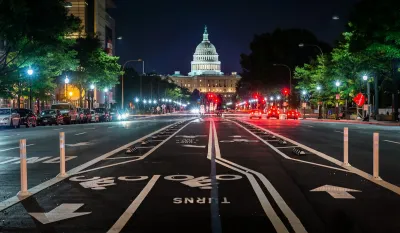
Federal funding cuts for programs that supported safe streets and bike infrastructure will likely contribute to increased pedestrian deaths and halt or delay pedestrian safety projects around the country, reports Lois Parshley in Grist.
“These safety concerns were highlighted in a recent report by the Centers for Disease Control and Prevention, which found Americans were 50 percent more likely to die walking in 2022 than in 2013.” Interventions that prioritize safety over traffic speed would help reverse this trend, but the administration appears intent on ending funding for active transportation and road safety efforts such as the BUILD grant and any “funding to advance climate, equity, and other priorities counter to the Administration’s executive orders.”
According to Parshley, “Other funding likely to be caught up in these restrictions include projects within the Active Transportation Infrastructure Investment Program, which supports multimodal travel; the BUILD program, which is designed to meet local or multi-jurisdictional needs; and the Reconnecting Communities Pilot Program, which helps communities harmed by past transportation decisions.”
According to a DOT project manager who spoke to Grist, “It’s not only making people afraid to carry on with good work that was underway, but has a chilling effect on everything we do going forward.”
FULL STORY: The government aims to cut funding for safer streets. Here’s who would be hurt most.

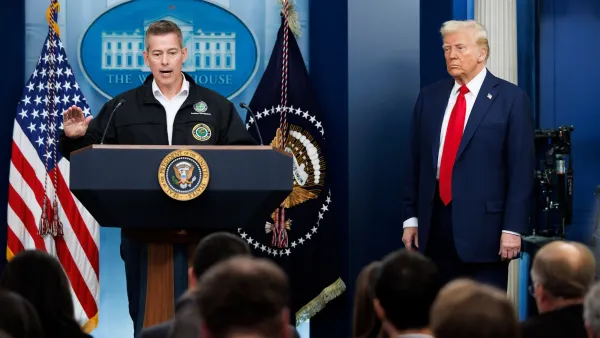
USDOT secretary plans to pull $1.73B from 'DEI bike lanes'
The move jeopardizes dozens of road safety projects around the country.
Safe Streets Grants: What to Know
This year’s round of Safe Streets for All grant criteria come with some changes.
USDOT Blocks Federal Funding for Traffic Cameras
Applicants to the Safe Streets and Roads for All grant program will not be allowed to use funds for automated traffic enforcement.

The state-sanctioned urbicide of Austin
People don’t kill cities. Freeways do.

US to reduce Colorado River water deliveries to Mexico
A new Colorado Treaty amendment reduces Mexico’s Colorado River water allocation by 250,000 acre feet.

New Jersey’s second-largest city bans standalone data centers
Jersey City will continue to allow co-location facilities, such as those meant for research institutions that store their own data.

Amtrak not solely to blame for New Jersey commuter rail's unreliability, report finds
A new study from the Garden State Initiative found that NJ Transit’s budget grew 20% across a 4 year period, but reliability declined significantly over the same period.

EPA erases limits on planet-warming pollution from power plants
Under Monday’s plan, power plants would still have some limits on how much mercury, arsenic and other contaminants they can emit.

Phoenix announces new on-demand transit service, more frequent RAPID buses
Both new services will launch in October, and are part of Phoenix's Project Effective Access Solutions for Easing Congestion.

FREE Course: Walkable City 1: Why Walkability?
After describing his path towards focusing on walkability as the essence of good planning, Jeff Speck marches through his five principal reasons for making more walkable places.
Reinventing Malls: Planning Alchemy—Turning Gray Fields Into Gold
The course focuses on the opportunities and imperatives that shape reinvention of mall sites.

Eagle County Government
Harvard University Graduate School of Design
Nashville Planning Department
The Architects Foundation
University of Cincinnati Online
The Pocatello Development Authority
The Urban Renewal Agency of the City of Pocatello
Journal of the American Planning Association