Experts say the change to the HUD budget would make it more difficult to identify people who are homeless and connect them with services, and to prevent homelessness.


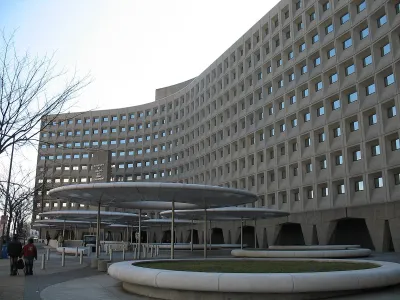
The article explores the far-reaching consequences of President Trump’s proposed FY 2026 budget, which seeks to consolidate three major homeless assistance programs—Continuum of Care grants, Housing Opportunities for Persons With AIDS (HOPWA), and the Emergency Solutions Grant (ESG)—into a single block grant. This move would eliminate specialized housing and services for vulnerable populations like people with HIV/AIDS and those with chronic mental illness.
Experts warn that the restructuring would dismantle the country’s coordinated homeless response system, cut more than $500 million in critical funding, and impose a two-year cap on assistance. Overall, the changes in the budget risk leaving over 275,000 people without housing. Programs like Denver’s Beacon Place and initiatives in Atlanta and Boston, which rely on continuum of care funding, could be severely impacted.
Critics—including leaders from the National Alliance to End Homelessness, Metro Denver Homeless Initiative, and the National Low Income Housing Coalition—say the proposal would ultimately increase homelessness rather than reduce it.
Read the full story: How Trump's HUD Budget Proposal Would Harm Homelessness Response


Fair Housing Act May Cover Renters with Criminal Records
The largest private landlord in the U.S. faces a discrimination suit for refusing to rent to people with criminal records.
Housing and Opportunity
In a new article and accompanying policy brief, Arthur Acolin and Susan Wachter of Penn IUR write about their new research into the relationship between housing access and opportunity.

Planetizen Federal Action Tracker
A weekly monitor of how Trump’s orders and actions are impacting planners and planning in America.

Amtrak, CN end decades-long dispute with eight-year agreement
The new operating agreement establishes an updated framework for the companies to work together, including processes to resolve disputes.

Judges permit Denver to divert 77,000 acre feet from the Colorado River for reservoir expansion
Overuse and climate change have caused the Colorado River’s water levels to plummet.

Boston has spent millions making the Green Line more accessible — and there’s no end in sight
While the city has invested millions into expanding and adding platforms to the Green Line to make it more accessible, new train cars set to arrive next year will be too tall for disabled passengers to board without raising the current platforms.

Idaho may see an 18% drop in federal surface transit funding — the largest estimated cut in the US
Transit systems in rural communities are much more reliant on federal funding to provide their services.

How ‘post-disaster gentrification’ alters neighborhoods after natural calamities
After hurricanes, fires or other calamities, the original residents of a community are often replaced by younger, wealthier residents.

FREE Course: Walkable City 1: Why Walkability?
After describing his path towards focusing on walkability as the essence of good planning, Jeff Speck marches through his five principal reasons for making more walkable places.
Reinventing Malls: Planning Alchemy—Turning Gray Fields Into Gold
The course focuses on the opportunities and imperatives that shape reinvention of mall sites.


City of Wisconsin Rapids
Harvard University Graduate School of Design
KFH Group Inc.
The Architects Foundation
University of Cincinnati Online
The Pocatello Development Authority
The Urban Renewal Agency of the City of Pocatello