A report highlights the lack of enforcement of Caltrans’ Complete Streets policy in projects around the state.


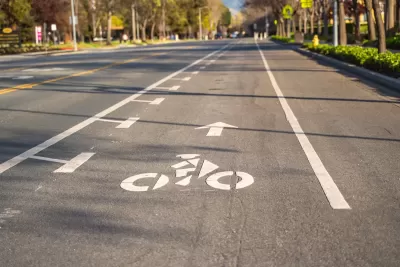
In an excerpt from a CalBike report published in Streetsblog California, the advocacy group reveals that many California districts are ignoring the state’s Complete Streets policy, failing to include walking and biking facilities in new projects as required by Caltrans policy DP-37.
The article documents a project on Beach Boulevard in Orange County, one of the deadliest ‘main streets’ in the state for pedestrians and cyclists. “Over the last decade, there have been 78 vulnerable road users killed on the street, and pedestrians and people biking account for nearly 70 percent of all road user deaths on SR-39.” Yet despite a 2020 study that called for many bike and pedestrian improvements on Beach Boulevard, an 8.5-mile lane rehabilitation project includes no new biking or walking facilities.
Unlike local governments, which may respond to community pressure and fix dangerous infrastructure, especially after someone dies, Caltrans’ response is tepid or in some cases entirely non-responsive to the carnage its streets inflict on the people who use them.
For the authors, “The casual dismissal of well-documented bike and pedestrian needs in the Complete Streets Decision Document for this project emphasizes Caltrans districts’ carelessness about the lives and safety of people biking and walking, and for the agency’s own policies.”
FULL STORY: Incomplete Streets Part 2: District 12 Ignores Caltrans Policy on Bike and Pedestrian Needs

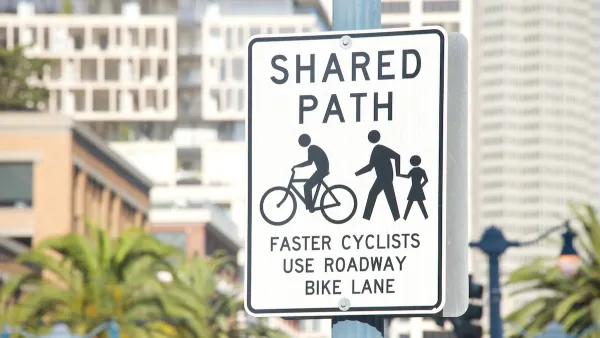
California Adds Complete Streets to Transportation Funding Guidelines
The state transportation commission previously declined to include bike and pedestrian infrastructure in its updated funding guidelines, despite a new state law requiring Complete Streets efforts in all Caltrans projects.

California Governor Signs Complete Streets Bill Into Law
The state’s transportation agency will be required to prioritize multimodal transportation infrastructure and improve transparency.
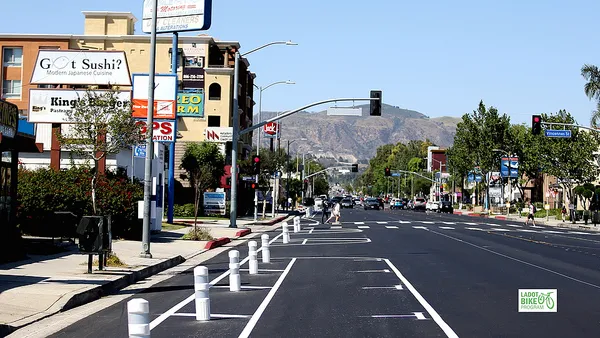
Caltrans Releases Complete Streets Action Plan
The agency’s detailed list of actions highlights the many changes needed to truly implement Complete Streets principles into California road construction and maintenance.

Planetizen Federal Action Tracker
A weekly monitor of how Trump’s orders and actions are impacting planners and planning in America.

The state-sanctioned urbicide of Austin
People don’t kill cities. Freeways do.

US to reduce Colorado River water deliveries to Mexico
A new Colorado Treaty amendment reduces Mexico’s Colorado River water allocation by 250,000 acre feet.

5 New England states march closer to 800 megawatt wind energy project
Securing federal approval for the project may be complicated under the Trump administration, which has historically been hostile towards domestic wind power.

Baltimore to break ground on $50 million Transit Priority Project
The project will bring faster bus trips, safer streets and better bike connections to Baltimore.

Airbnb launches $250 million 'last-dollar financing' housing accelerator, makes first investment in Austin
The company will put $6.4 million towards affordable housing development in Texas’ capital.

FREE Course: Walkable City 1: Why Walkability?
After describing his path towards focusing on walkability as the essence of good planning, Jeff Speck marches through his five principal reasons for making more walkable places.
Reinventing Malls: Planning Alchemy—Turning Gray Fields Into Gold
The course focuses on the opportunities and imperatives that shape reinvention of mall sites.

Eagle County Government
Harvard University Graduate School of Design
Nashville Planning Department
The Architects Foundation
University of Cincinnati Online
The Pocatello Development Authority
The Urban Renewal Agency of the City of Pocatello
Journal of the American Planning Association