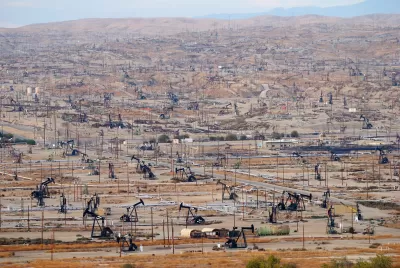
The California Supreme Court on Aug. 3 unanimously overturned a successful 2016 Monterey County ballot measure that banned new oil and gas drilling. According to plaintiff Chevron USA, the justices recognized the ‘necessity of oil and gas drilling.’


Flash back seven years ago to Planetizen's coverage of the 2016 election and campaign, specifically to:
- One of the Most Important Energy Measure on the Ballot on Tuesday, November 6, 2016: While billed as an “anti-fracking initiative,” Measure Z in Monterey County, the 4th-largest oil-producing county in California, does far more. It bans new oil drilling and requires the cleaning of wastewater from current drilling operations.
The citizen-initiated Measure Z, sponsored by the grassroots group, Protect Monterey County, passed with over 56 percent of the vote on Nov. 8, 2016. The next month, Chevron U.S.A. and Aera Energy, both having active oil fields in the county, filed separate suits, claiming “that the county did not have jurisdiction over oil and gas operations and that the measure amounted to an unconstitutional taking of private property without just compensation,” according to Ballotpedia. They were joined by a local school district that relies on the Chevron oil field for nearly 90% of it property tax funding.
“Supporters [of the measure] said it would combat pollution and climate change,” wrote Bob Egelko, courts reporter for the San Francisco Chronicle on August 3 in the source article for this post.
But lower courts said the measure conflicted with longstanding California laws and the state’s high court agreed Thursday. Justice Martin Jenkins said a law passed in 1939 and amended most recently in 1972 requires state officials to supervise production “in a way that serves the dual purpose of ensuring the state has adequate oil and gas resources, while protecting the environment.”
An attorney for Chevron U.S.A. ... said the court rightly found that California law “recognizes the necessity” of oil and gas production. “Chevron is pleased that this decision brings an end to seven years of litigation and appeals,” Jeffrey Dintzer said in a statement.
Preemption
To be sure, it wasn't just the need to supply Californians with oil and gas that swayed the courts. “The trial court entered judgment in favor of plaintiffs on state and federal preemption grounds,” wrote Jenkins in the 24-page ruling, "Chevron U.S.A. Inc. v. County Of Monterey [pdf]. "[Protect Monterey County] appealed, and the Court of Appeal affirmed.”
Next battles
“Thursday’s ruling, however, steered clear of the location issue,” added Egelko, and then described the passage of SB 1137: Health Protection Zones for Frontline Communities [pdf] last year by Sens. Lena Gonzalez and Monique Limón. The law has yet to take effect due to a challenge by the state's oil and gas industry:
- Election 2024: California Oil Drilling Referendum, July 30, 2023: Environmentalists gear up for battle to reject a referendum funded by Big Oil on a law passed last year that would ban oil and gas drilling within 3,200 feet of homes, schools, nursing homes, and hospitals.
Finally, the state supreme court's ruling last week may suggest how they will rule on a somewhat similar oil and gas drilling ban in the city of Los Angeles, though the result of legislation not a citizens' initiative.
- Lawsuit Challenges L.A. Oil Drilling Ban, January 12, 2023: Oil companies with operations in the city of Los Angeles are suing over an ordinance that seeks to phase out drilling within city limits due to public health and environmental concerns.
- Los Angeles To Phase Out Oil Drilling, December 6, 2022: The city has banned new wells and will end all extraction within two decades.
- In Historic Move, L.A. County to Phase Out Oil Wells, September 17, 2021: The long history of oil extraction in the nation's most populous county is entering its final chapter.
Hat tip to Kathy Dervin, Sierra Club California Energy - Climate Committee.
FULL STORY: California Supreme Court rejects Monterey County ban on new oil, gas drilling


Do Environmentalists Confuse Oil Production With Oil Demand?
Samantha Gross, the director of the Energy Security and Climate Initiative at the Brookings Institution, argues that the key to reducing emissions is to do the hard work of reducing oil demand rather than focusing on ending U.S. oil drilling.
Your Not-So-Friendly Neighborhood Oil Well
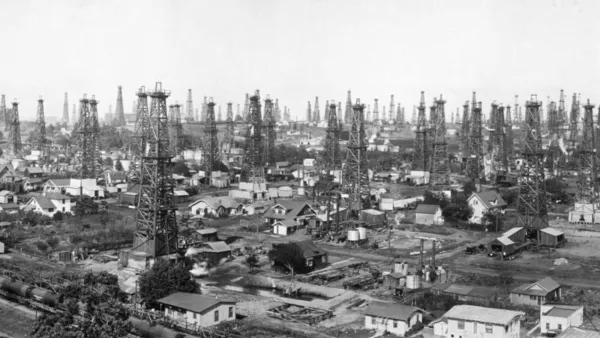
Much of California's oil and gas extraction takes place in residential neighborhoods, posing significant health risks to entire communities.
Greener Gasoline to Come from Solar-Powered Oil Wells in California
Crude oil from Kern County's Belridge field will soon have a much lower life cycle carbon intensity thanks to new solar technology used to extract hard-to-get oil. The renewal of California's carbon cap-and-trade market made it possible.

Planetizen Federal Action Tracker
A weekly monitor of how Trump’s orders and actions are impacting planners and planning in America.

The state-sanctioned urbicide of Austin
People don’t kill cities. Freeways do.

US to reduce Colorado River water deliveries to Mexico
A new Colorado Treaty amendment reduces Mexico’s Colorado River water allocation by 250,000 acre feet.

5 New England states march closer to 800 megawatt wind energy project
Securing federal approval for the project may be complicated under the Trump administration, which has historically been hostile towards domestic wind power.

Baltimore to break ground on $50 million Transit Priority Project
The project will bring faster bus trips, safer streets and better bike connections to Baltimore.

Airbnb launches $250 million 'last-dollar financing' housing accelerator, makes first investment in Austin
The company will put $6.4 million towards affordable housing development in Texas’ capital.

FREE Course: Walkable City 1: Why Walkability?
After describing his path towards focusing on walkability as the essence of good planning, Jeff Speck marches through his five principal reasons for making more walkable places.
Reinventing Malls: Planning Alchemy—Turning Gray Fields Into Gold
The course focuses on the opportunities and imperatives that shape reinvention of mall sites.

Eagle County Government
Harvard University Graduate School of Design
Nashville Planning Department
The Architects Foundation
University of Cincinnati Online
The Pocatello Development Authority
The Urban Renewal Agency of the City of Pocatello
Journal of the American Planning Association