The city has banned new wells and will end all extraction within two decades.


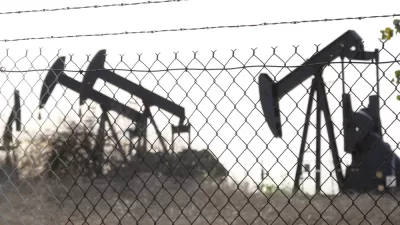
Los Angeles, a city where vast fields of oil wells once dotted the landscape and more than 5,000 active and defunct oil wells still exist in unlikely places, often masked by walls or faux buildings, will ban new wells and phase out drilling altogether, reports Dakota Smith in the Los Angeles Times.
“In a 12-0 vote, the [city] council approved a new ordinance that immediately bans new oil and gas extraction and requires that all existing oil and gas extractions stop production within 20 years.” The move comes after decades of work by environmental justice activists who say the urban drilling operations harmed surrounding communities. “Oil wells are known to emit likely carcinogens including benzene and formaldehyde, and living near wells is linked to health problems including respiratory issues and preterm births, studies have found.”
The law was passed as the L.A. city council remains roiled by controversy, with many community activists pushing the officials to suspend business until councilmembers involved in a recent scandal resign. Stand Together Against Neighborhood Drilling, or STAND-L.A., who led the campaign for the new law, tied the recently surfaced racist audio to the city’s legacy of discriminatory policies, noting that communities of color are disproportionately impacted by pollution. According to STAND-L.A., “Our city and this council must own up to the anti-Blackness that created policies that allowed oil drilling in neighborhoods in the first place and that fostered an environment where such a horrific example of racism and corruption could occur between council members.”
FULL STORY: In historic move, Los Angeles bans new oil wells, phases out existing ones

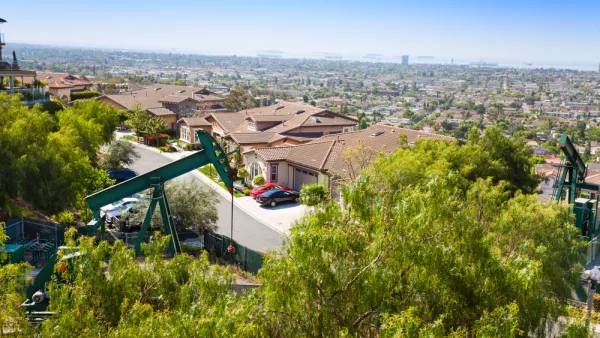
Lawsuit Challenges L.A. Oil Drilling Ban
Oil companies with operations in the city of Los Angeles are suing over an ordinance that seeks to phase out drilling within city limits due to public health and environmental concerns.
California Seals 21 Urban Oil Wells in South LA After Decades of Activism
The permanent closure of a long-troubled South Los Angeles oil site marks a hard-fought victory for residents and underscores the growing urgency of addressing hazardous idle wells in communities nationwide.
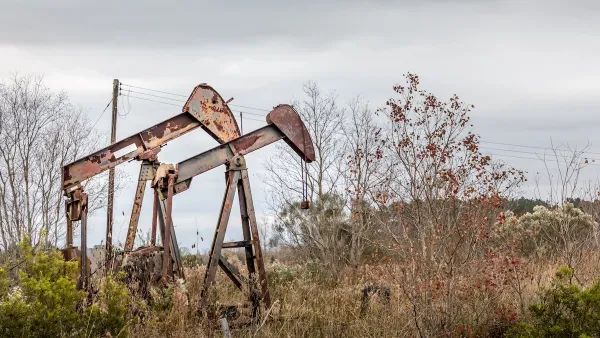
Addressing Orphan Wells for Environmental Justice
Remediating and repurposing some orphan oil and gas wells into parks can turn environmental hazards into community assets, promoting health, environmental justice, and accessible green space for underserved areas.

The state-sanctioned urbicide of Austin
People don’t kill cities. Freeways do.

US to reduce Colorado River water deliveries to Mexico
A new Colorado Treaty amendment reduces Mexico’s Colorado River water allocation by 250,000 acre feet.

New Jersey’s second-largest city bans standalone data centers
Jersey City will continue to allow co-location facilities, such as those meant for research institutions that store their own data.

Amtrak not solely to blame for New Jersey commuter rail's unreliability, report finds
A new study from the Garden State Initiative found that NJ Transit’s budget grew 20% across a 4 year period, but reliability declined significantly over the same period.

EPA erases limits on planet-warming pollution from power plants
Under Monday’s plan, power plants would still have some limits on how much mercury, arsenic and other contaminants they can emit.

Phoenix announces new on-demand transit service, more frequent RAPID buses
Both new services will launch in October, and are part of Phoenix's Project Effective Access Solutions for Easing Congestion.

FREE Course: Walkable City 1: Why Walkability?
After describing his path towards focusing on walkability as the essence of good planning, Jeff Speck marches through his five principal reasons for making more walkable places.
Reinventing Malls: Planning Alchemy—Turning Gray Fields Into Gold
The course focuses on the opportunities and imperatives that shape reinvention of mall sites.

Eagle County Government
Harvard University Graduate School of Design
Nashville Planning Department
The Architects Foundation
University of Cincinnati Online
The Pocatello Development Authority
The Urban Renewal Agency of the City of Pocatello
Journal of the American Planning Association