Houston is an international city, with a diverse population and economy. Its equity indicators, however, are relatively average compared to other U.S. cities.


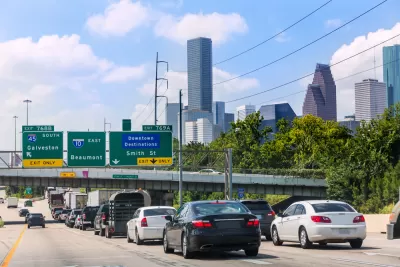
The city of Houston this week published the “One Complete Houston: Understanding Our Equity Challenges and Opportunities” report, the first to emerge from the city’s equity indicator study, launched in 2021.
According to an article by Dylan McGuinness for the Houston Chronicle, the study finds that opportunities depend on zip code, race, and sexual orientation in the city of Houston, placing the city squarely in the middle of the pack when it comes to equity. “Houston scored a 44.1 out of 100, landing in the middle of the pack among seven U.S. cities that have conducted the measure. Pittsburgh (55), New York City (48.52) and St. Louis (45.57) scored higher, while Tulsa (43.63), Dallas (39.8), and Oakland (33.5) scored lower,” reports McGuinness.
The report was created in partnership between the city, the Kinder Institute for Urban Research at Rice University, and Shell USA Inc. The report uses a methodology developed by the City University of New York to measure the varying levels of opportunity in a city. A total of 63 metrics contribute to the overall score. “Houston scored below a 20 out of 100 on 13 of them, and scored a 1 on eight of them, including residents without bank accounts, environmental penalties and mental health transports,” explains McGuinness.
FULL STORY: Houston is more equitable than Dallas but trails NYC, St. Louis, according to city's first ever report

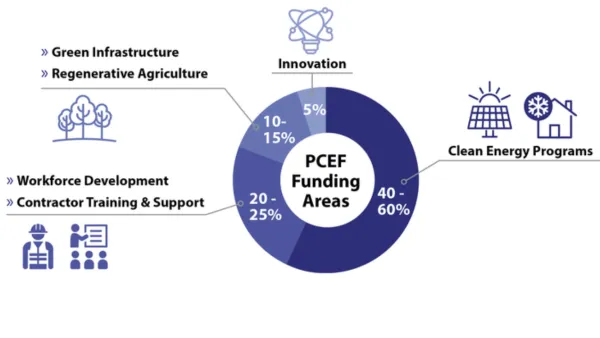
Funding Urban Climate Justice
The Portland Clean Energy Community Benefits Fund stands out as an example of local grassroots climate action—in this case, the kind of action that makes other climate projects and programs possible.

Denver Freeway Widening Plans on Hold
The Colorado Department of Transportation’s plan to widen the Interstate 25 freeway through Denver is one of a few plans to widen urban freeways under consideration in the United States.
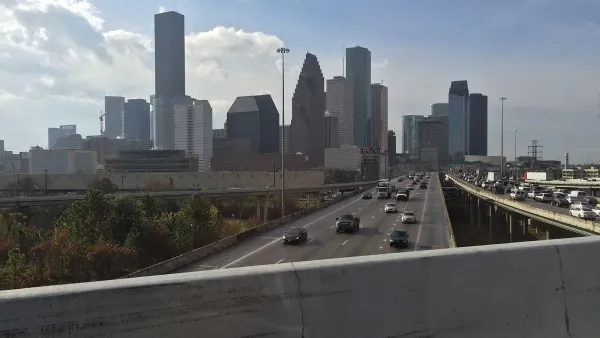
Cost Estimates Go up for Houston Freeway Project
The contentious reconfiguration of Interstate 45 is now estimated to cost $274 million more as the project faces community opposition and a federal investigation.

Planetizen Federal Action Tracker
A weekly monitor of how Trump’s orders and actions are impacting planners and planning in America.

The state-sanctioned urbicide of Austin
People don’t kill cities. Freeways do.

US to reduce Colorado River water deliveries to Mexico
A new Colorado Treaty amendment reduces Mexico’s Colorado River water allocation by 250,000 acre feet.

Mamdani overhauls NYC's Vision Zero plan with 100 new policy goals
The overhaul aims to reduce traffic deaths and make streets safer for pedestrians, cyclists and drivers through lower speed limits, new safety infrastructure and more.

Amtrak not solely to blame for New Jersey commuter rail's unreliability, report finds
A new study from the Garden State Initiative found that NJ Transit’s budget grew 20% across a 4 year period, but reliability declined significantly over the same period.

EPA erases limits on planet-warming pollution from power plants
Under Monday’s plan, power plants would still have some limits on how much mercury, arsenic and other contaminants they can emit.

FREE Course: Walkable City 1: Why Walkability?
After describing his path towards focusing on walkability as the essence of good planning, Jeff Speck marches through his five principal reasons for making more walkable places.
Reinventing Malls: Planning Alchemy—Turning Gray Fields Into Gold
The course focuses on the opportunities and imperatives that shape reinvention of mall sites.

Eagle County Government
Harvard University Graduate School of Design
Nashville Planning Department
The Architects Foundation
University of Cincinnati Online
The Pocatello Development Authority
The Urban Renewal Agency of the City of Pocatello
Journal of the American Planning Association