The proposed fee hike would more accurately reflect the increased risk to pedestrians posed by heavier vehicles.


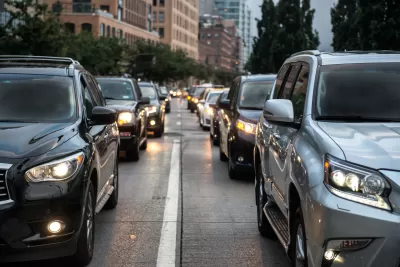
New York drivers could soon pay higher registration fees on heavier vehicles as part of an effort to reduce the pedestrian deaths and the strain on infrastructure caused by larger and heavier SUVs. Alissa Walker describes the proposed bill in Curbed.
According to Walker, “New York State already charges weight-based registration fees, but they’re laughably low. Currently, the owner of a 2,877-pound Honda Civic pays $47 every two years, while the owner of a vehicle twice that weight pays $112.50. These fees don’t reflect, in any way, the potential damage that such an increase in weight presents.”
The new legislation would more accurately reflect the increase in risk, Walker writes, adding that “one study estimates that for every 1,000 pounds of vehicle weight, the chance of fatality increases by 46 percent.” The new fees would be implemented over the next six years. “The new fee would only apply to passenger vehicles — drivers who use large vehicles for work can apply for a commercial registration, and all the SUVs purchased by the NYPD, for example, would be unaffected.”
Walker notes that heavier vehicles can cause damage to roads and buildings, pointing to the collapse of an Ann Street garage earlier this year, a problem that will only be exacerbated by the weight of electric car batteries.Three quarters of revenue raised from the bill would, after fulfilling annual dedications, fund safety improvements for bikes and pedestrians.
FULL STORY: You May Soon Have to Pay More to Drive That SUV in New York

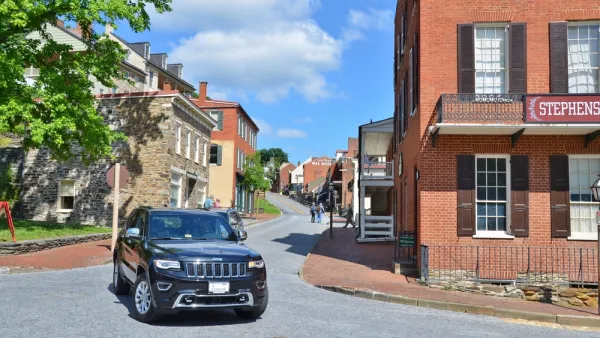
For Transportation Justice, Auto Safety Must Protect People Outside the Car
Light trucks are killing more pedestrians than ever while keeping their drivers and passengers safer. Is it time to reframe safety regulations?
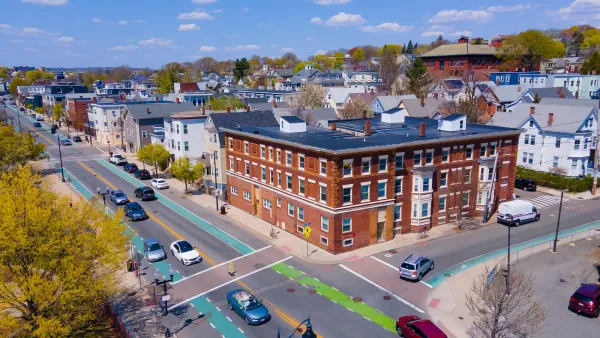
Massachusetts town celebrates 3 years with no traffic deaths
Somerville is following Hoboken's Vision Zero playbook with impressive results.
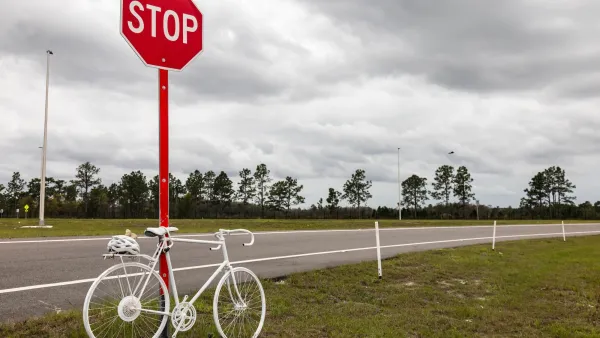
Landscapes of love and loss
As urban planners, every piece of infrastructure we build is a memorial — whether we know it or not.

Planetizen Federal Action Tracker
A weekly monitor of how Trump’s orders and actions are impacting planners and planning in America.

The state-sanctioned urbicide of Austin
People don’t kill cities. Freeways do.

US to reduce Colorado River water deliveries to Mexico
A new Colorado Treaty amendment reduces Mexico’s Colorado River water allocation by 250,000 acre feet.

5 New England states march closer to 800 megawatt wind energy project
Securing federal approval for the project may be complicated under the Trump administration, which has historically been hostile towards domestic wind power.

Baltimore to break ground on $50 million Transit Priority Project
The project will bring faster bus trips, safer streets and better bike connections to Baltimore.

Airbnb launches $250 million 'last-dollar financing' housing accelerator, makes first investment in Austin
The company will put $6.4 million towards affordable housing development in Texas’ capital.

FREE Course: Walkable City 1: Why Walkability?
After describing his path towards focusing on walkability as the essence of good planning, Jeff Speck marches through his five principal reasons for making more walkable places.
Reinventing Malls: Planning Alchemy—Turning Gray Fields Into Gold
The course focuses on the opportunities and imperatives that shape reinvention of mall sites.

Eagle County Government
Harvard University Graduate School of Design
Nashville Planning Department
The Architects Foundation
University of Cincinnati Online
The Pocatello Development Authority
The Urban Renewal Agency of the City of Pocatello
Journal of the American Planning Association