A hot war is being fought by Ukraine against Russia while the European Union is reeling from an energy war waged by Russian President Vladimir Putin in retaliation against economic sanctions placed on his nation for invading Ukraine.


Ukraine's counteroffensive “has succeeded beyond most predictions,” reports The New York Times on September 13. “In less than a week, Ukrainian forces have retaken some three thousand square kilometers from the Russian invaders,” observed The Wall Street Journal Editorial Board two days earlier. “That’s more Ukrainian territory than Russia has seized since April.”
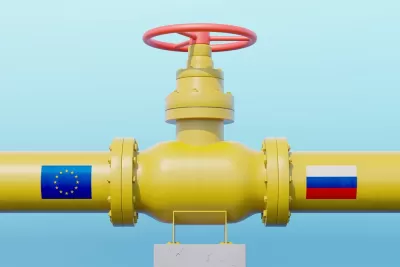
The ‘other war’ in Europe is not going well for the European Union, leaving few businesses in untouched, with some manufacturers that are heavily dependent on Russian natural gas in danger of closing their doors after Russian President Vladimir Putin “turned off the taps to the biggest natural-gas pipeline, Nord Stream, completely this month,” reports The Wall Street Journal on September 11.
The impact has pushed Europe to the brink of recession and threatens to inflict lasting harm on its manufacturing businesses. Unlike the U.S., Europe leaned on manufacturing and heavy industry to keep its economy chugging in recent decades. A bigger chunk of its economy comes from the likes of steelmakers, chemicals producers and car makers.
“Ukrainian President Volodymyr Zelenskyy said enduring 90 days of an energy standoff with Russia over this winter would prove more ‘crucial’ than anything the European Union has faced in its entire history,” reported Christian Oliver for POLITICO Europe on September 11 in the source article.
“There are 90 days ahead, which will be more crucial than 30 years of Ukraine's independence; 90 days that will be more crucial than all the years of the existence of the European Union. Winter will determine our future and the risks,” he said in a speech delivered at the Yalta European Strategy meeting late on Saturday.
Zelenskyy predicted Russia would sever gas supplies entirely, but he told Europeans not to fall for the Russian “illusion” that they could make a trade-off by compromising on their values to secure cheaper energy.
The editorial board of the Financial Times backed Zelenskyy up 100% on September 13.
Vladimir Putin’s calculation is that European countries will prove less able to bear soaring winter energy bills and possible shortages than Russia can withstand western sanctions — and that their unity and resolve will shatter before the spring brings renewed military offensives in Ukraine. With Kyiv’s forces starting to make breakthroughs, the coming energy battle is one that democratic Europe cannot lose.
It will be a hard-fought battle considering that “Russia provides about 40% of Europe’s gas, and despite aggressive weaning, Europe may simply not have enough gas this winter,” writes Rick Newman, a columnist for Yahoo Finance, on September 13. “European gas prices are six times higher than they were at this time last year and 14 times higher than they were two years ago.”
“Europe has held its ground well so far,” concludes the FT editorial. “But the economic war with Putin will finally be won or lost on how well the bloc can stick together.”
Related Russia-Ukraine war posts focused on Russian gas:
- Rationing Energy, August 7, 2022
- Energy War Comes to the European Union, May 3, 2022
- Withholding Energy as a Weapon, April 27, 2022
- Hooked on Russian Gas, April 21, 2022
Hat tip to POLITICO's Power Switch newsletter.
FULL STORY: Zelenskyy: Winter gas standoff will be most ‘crucial’ period in EU history

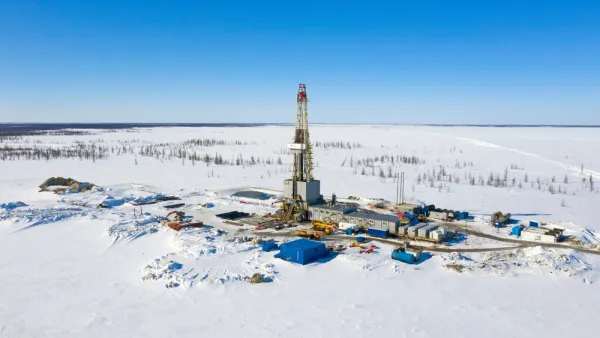
Hooked on Russian Gas
The EU relies on Russia for 45% of its natural gas imports and 27% of its crude oil imports. Germany's dependency is a major reason why it won't ban these imports despite Russia's war in Ukraine. Two natural gas pipelines explain part of the problem.
Sanctioning Russian Energy Exports
European leaders chose not to join the U.S. in an embargo of Russian energy products largely because of dependence on natural gas. Similarly, the world needs the 11% of crude oil that Russia exports. What can the U.S. do to lessen this dependence?
Banning Russian Oil
President Biden announced a ban on the importation of Russian energy on Tuesday in response to Russian President Vladimir Putin's invasion of Ukraine. He warned that gasoline prices will go even higher as a result. Europe will not be joining the ban.

The state-sanctioned urbicide of Austin
People don’t kill cities. Freeways do.

US to reduce Colorado River water deliveries to Mexico
A new Colorado Treaty amendment reduces Mexico’s Colorado River water allocation by 250,000 acre feet.

New Jersey’s second-largest city bans standalone data centers
Jersey City will continue to allow co-location facilities, such as those meant for research institutions that store their own data.

Amtrak not solely to blame for New Jersey commuter rail's unreliability, report finds
A new study from the Garden State Initiative found that NJ Transit’s budget grew 20% across a 4 year period, but reliability declined significantly over the same period.

EPA erases limits on planet-warming pollution from power plants
Under Monday’s plan, power plants would still have some limits on how much mercury, arsenic and other contaminants they can emit.

Phoenix announces new on-demand transit service, more frequent RAPID buses
Both new services will launch in October, and are part of Phoenix's Project Effective Access Solutions for Easing Congestion.

FREE Course: Walkable City 1: Why Walkability?
After describing his path towards focusing on walkability as the essence of good planning, Jeff Speck marches through his five principal reasons for making more walkable places.
Reinventing Malls: Planning Alchemy—Turning Gray Fields Into Gold
The course focuses on the opportunities and imperatives that shape reinvention of mall sites.

Eagle County Government
Harvard University Graduate School of Design
Nashville Planning Department
The Architects Foundation
University of Cincinnati Online
The Pocatello Development Authority
The Urban Renewal Agency of the City of Pocatello
Journal of the American Planning Association