A legal case claiming that COVID-era eviction moratoriums were unconstitutional could spell trouble for tenant protections.


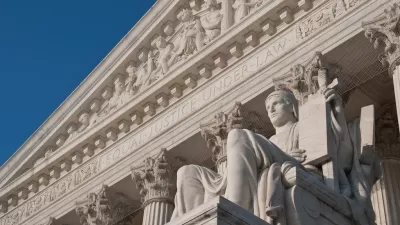
The Supreme Court is considering whether to hear GHP Management v. City of Los Angeles, a case that challenges COVID-era eviction moratoriums as unconstitutional “takings” under the Fifth Amendment. If the Court agrees with the landlords, the decision could upend decades of precedent—particularly the 1992 Yee v. Escondido ruling—and open the door for widespread challenges to tenant protections like rent control, just-cause eviction laws, and anti-discrimination ordinances.
Landlords, backed by conservative legal groups like the Pacific Legal Foundation, are using the Court’s 2021 Cedar Pointdecision to argue that limits on evictions are a physical taking of property. Although courts have largely upheld tenant protections using Yee, recent split decisions from different federal appellate courts have positioned the issue for Supreme Court review.
If Yee is overturned, it could severely weaken tenant rights across the country, shifting the balance in favor of property rights. A coalition of California tenant advocacy organizations has stepped in to defend the Los Angeles ordinance and broader protections. The Court is expected to decide soon whether it will take the case.
FULL STORY: Supreme Court Considers Landlord Appeal That Could Overturn Tenant Protections


Tech Tools Help Tenants Push Back Against Problematic Landlords
Shelterforce found more than a dozen examples of tenant-serving technology that help renters identify landlords, respond to eviction, fight back against housing discrimination, and more.

Boise to Consider Tenant Protections Package
A proposed set of new regulations would call for relocation assistance for displaced renters and ban source of income discrimination.

What Makes a Habitable Rental Home?
Almost every state in the U.S. requires that landlords maintain safe and livable residential units. This is often called a "warranty of habitability." In some places, there are laws that specify exactly what those requirements are; in others, the standards are less defined.

The state-sanctioned urbicide of Austin
People don’t kill cities. Freeways do.

US to reduce Colorado River water deliveries to Mexico
A new Colorado Treaty amendment reduces Mexico’s Colorado River water allocation by 250,000 acre feet.

New Jersey’s second-largest city bans standalone data centers
Jersey City will continue to allow co-location facilities, such as those meant for research institutions that store their own data.

Amtrak not solely to blame for New Jersey commuter rail's unreliability, report finds
A new study from the Garden State Initiative found that NJ Transit’s budget grew 20% across a 4 year period, but reliability declined significantly over the same period.

EPA erases limits on planet-warming pollution from power plants
Under Monday’s plan, power plants would still have some limits on how much mercury, arsenic and other contaminants they can emit.

Phoenix announces new on-demand transit service, more frequent RAPID buses
Both new services will launch in October, and are part of Phoenix's Project Effective Access Solutions for Easing Congestion.

FREE Course: Walkable City 1: Why Walkability?
After describing his path towards focusing on walkability as the essence of good planning, Jeff Speck marches through his five principal reasons for making more walkable places.
Reinventing Malls: Planning Alchemy—Turning Gray Fields Into Gold
The course focuses on the opportunities and imperatives that shape reinvention of mall sites.

Eagle County Government
Harvard University Graduate School of Design
Nashville Planning Department
The Architects Foundation
University of Cincinnati Online
The Pocatello Development Authority
The Urban Renewal Agency of the City of Pocatello
Journal of the American Planning Association