As Russia intensifies its offensive in Ukraine, energy security has become a matter of urgency for Poland and Bulgaria after Russia announced they will suspend the flow of natural gas through its pipelines to these two NATO and EU members.


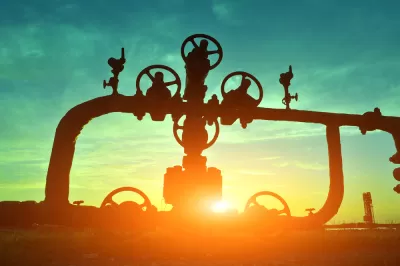
Europe's energy fears since Russia invaded Ukraine over two months ago have been realized. Russian gas has been weaponized.
“Infuriated by the West’s supply of arms and other support to help Ukraine resist invading Russian troops, Moscow on Tuesday took the fight to Europe’s economy, telling Poland and Bulgaria that it was halting supplies of natural gas, on which both countries and Europe in general are heavily dependent,” reports Andrew Higgins, the New York Times bureau chief for East and Central Europe based in Warsaw, on Tuesday.
A decision by Russia’s energy behemoth Gazprom to cut off gas supplies to two countries that are both members of NATO and the European Union marks the first time that Moscow has directly and openly targeted Europe with its energy weapon. The move upends assurances by Moscow since the Soviet era that, no matter what the political climate, Russia could be counted on as a reliable supplier of natural gas.
On Tuesday, Poland’s main importer of Russian gas, the state-owned company PGNiG, said that Gazprom had announced the “complete suspension” of deliveries through the Yamal pipeline, which stretches from northern Siberia to Poland and Germany through Belarus.
“The two countries targeted Tuesday are especially vulnerable: Poland gets more than 45 percent of its natural gas from Russia and Bulgaria more than 70 percent, according to E.U. data,” wrote The Washington Post's breaking news reporter, Reis Thebault.
Russia's move was foreshadowed last month when Russia demanded that natural gas payments be made in rubles, not euros or dollars as the contracts specified, reported The Associated Press on March 31.
“If these payments are not made, we will consider it a failure of the buyer to fulfill its obligations, with all the ensuing consequences,” said President Vladimir Putin.
“The European Union has rejected the move in principle but now payment deadlines are starting to fall due, governments across Europe need to decide whether to accept Putin’s terms or lose crucial supplies -- and face the prospect of energy rationing,” reported Bloomberg News correspondents Maciej Onoszko, Maciej Martewicz, and Slav Okov on April 26.
“This is a turning point that has been accelerated by Russia today,” said Piotr Naimski, Poland’s top official for strategic energy infrastructure.
“European governments now need to deploy all emergency measures they have at their disposal, both on the supply and demand side to ensure security of supply," said Simone Tagliapietra, a senior fellow at Bruegel, the Brussels-based European economic think tank.
Hat tip to Adam Pasick who wrote the Times' Russia-Ukraine War Briefing newsletter on April 26 and referenced Higgin's piece.
FULL STORY: Russia cuts off a major supply of natural gas to Poland, which has offered robust support to Ukraine.

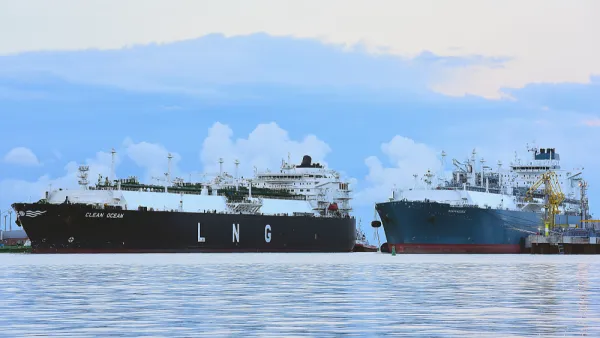
Europe's New Energy Infrastructure Begins to Emerge
When Russia invaded Ukraine on February 24, Russian President Vladimir Putin hoped to quickly redraw national boundary lines in Eastern Europe. The region's energy infrastructure, particularly pipelines carrying natural gas, may change sooner.
Energy War Comes to the European Union
When President Putin ordered Gazprom to turn off the valve on pipelines carrying Russian gas to Poland and Bulgaria, he effectively expanded the Russia-Ukraine war to the European Union, threatening their economic well-being and way of life.
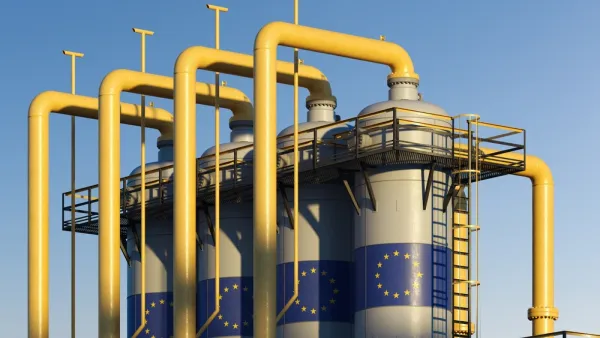
Rationing Energy
American motorists may complain about the 'pain at the pump,' but there is no shortage of gasoline, unlike the availability of natural gas in Europe.

The state-sanctioned urbicide of Austin
People don’t kill cities. Freeways do.

US to reduce Colorado River water deliveries to Mexico
A new Colorado Treaty amendment reduces Mexico’s Colorado River water allocation by 250,000 acre feet.

New Jersey’s second-largest city bans standalone data centers
Jersey City will continue to allow co-location facilities, such as those meant for research institutions that store their own data.

Amtrak not solely to blame for New Jersey commuter rail's unreliability, report finds
A new study from the Garden State Initiative found that NJ Transit’s budget grew 20% across a 4 year period, but reliability declined significantly over the same period.

EPA erases limits on planet-warming pollution from power plants
Under Monday’s plan, power plants would still have some limits on how much mercury, arsenic and other contaminants they can emit.

Phoenix announces new on-demand transit service, more frequent RAPID buses
Both new services will launch in October, and are part of Phoenix's Project Effective Access Solutions for Easing Congestion.

FREE Course: Walkable City 1: Why Walkability?
After describing his path towards focusing on walkability as the essence of good planning, Jeff Speck marches through his five principal reasons for making more walkable places.
Reinventing Malls: Planning Alchemy—Turning Gray Fields Into Gold
The course focuses on the opportunities and imperatives that shape reinvention of mall sites.

Eagle County Government
Harvard University Graduate School of Design
Nashville Planning Department
The Architects Foundation
University of Cincinnati Online
The Pocatello Development Authority
The Urban Renewal Agency of the City of Pocatello
Journal of the American Planning Association