Dr. Joe Lyou, CEO of the Coalition for Clean Air, walks through the legal necessity of South Coast AQMD's proposed Indirect Source Rule, which aims to accelerate the transition to zero-emission technologies and fleet electrification.


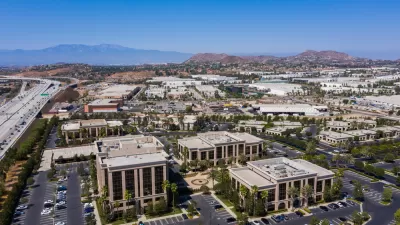
Last week, environmental and community groups reached a $47 million settlement with the developer of a proposed mega-warehouse in Moreno Valley to invest up to $50 million in solutions to electrify the facility. With the exponential rise of e-commerce in the last decade, the resulting increase in diesel truck traffic serving the booming logistics industry is both a growing sector of the economy and a significant contributor to air pollution in the region. To address the disproportionate health impacts of the industry on neighboring communities, on Friday, May 7, the South Coast Air Quality Management District (SCAQMD) will vote on an Indirect Source Rule to require and incentivize the clean-up of warehouses in metropolitan Los Angeles.
To frame this important vote, TPR sat down with Dr. Joe Lyou, CEO of the Coalition for Clean Air, who walks readers through the legal necessity of the first-of-its-kind rule that aims to make better neighbors of industry giants, like Amazon, and accelerate the transition to zero-emission technologies and fleet electrification.
“Southcoast AQMD must adopt all feasible measures in order to achieve the state standards and this [Indirect Source Review Rule] is clearly a feasible measure within its authority. [Note: All feasible measures requirement is in the California Health and Safety Code §40462(a).]"—Joe Lyou
To read the full interview, visit The Planning Report.
FULL STORY: Coalition for Clean Air’s Joe Lyou on SCAQMD’s Indirect Source Rule Vote May 7th

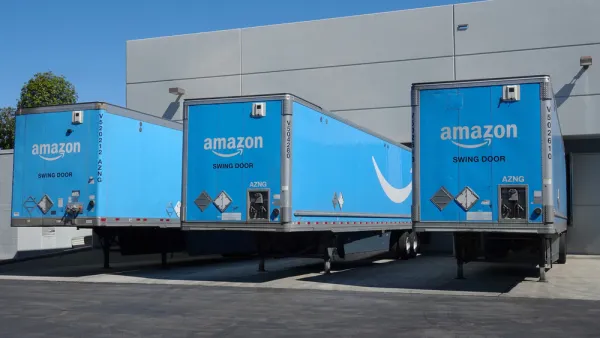
Key Warehouse Centers Challenge Distribution Center Expansion
Communities near major e-commerce distribution centers are increasingly resisting new construction, citing air pollution and other public health impacts.
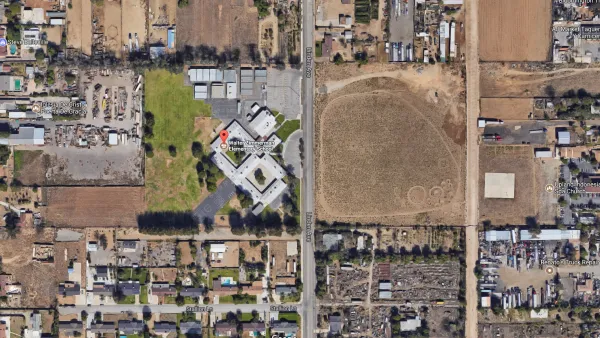
A Logistics Warehouse Near an Elementary School Raises Questions
Some are worried about the truck traffic and air pollution likely to follow after a logistics warehouse gets built within visual distance of a San Bernardino school.
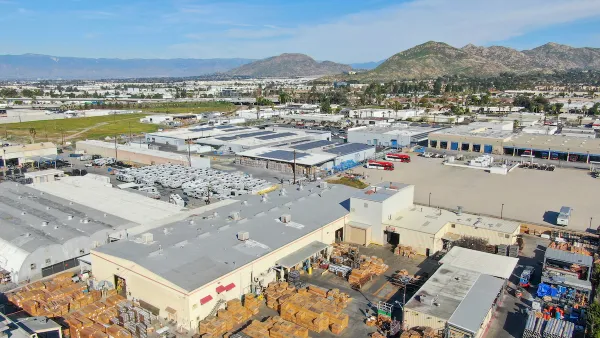
California Air Regulators to Crack Down on Warehouses
Truck traffic to and from Southern California warehouses accounts for as much pollution as refineries, power plants, and other industrial polluters combined.

Planetizen Federal Action Tracker
A weekly monitor of how Trump’s orders and actions are impacting planners and planning in America.

The state-sanctioned urbicide of Austin
People don’t kill cities. Freeways do.

US to reduce Colorado River water deliveries to Mexico
A new Colorado Treaty amendment reduces Mexico’s Colorado River water allocation by 250,000 acre feet.

Mamdani overhauls NYC's Vision Zero plan with 100 new policy goals
The overhaul aims to reduce traffic deaths and make streets safer for pedestrians, cyclists and drivers through lower speed limits, new safety infrastructure and more.

Amtrak not solely to blame for New Jersey commuter rail's unreliability, report finds
A new study from the Garden State Initiative found that NJ Transit’s budget grew 20% across a 4 year period, but reliability declined significantly over the same period.

EPA erases limits on planet-warming pollution from power plants
Under Monday’s plan, power plants would still have some limits on how much mercury, arsenic and other contaminants they can emit.

FREE Course: Walkable City 1: Why Walkability?
After describing his path towards focusing on walkability as the essence of good planning, Jeff Speck marches through his five principal reasons for making more walkable places.
Reinventing Malls: Planning Alchemy—Turning Gray Fields Into Gold
The course focuses on the opportunities and imperatives that shape reinvention of mall sites.

Eagle County Government
Harvard University Graduate School of Design
Nashville Planning Department
The Architects Foundation
University of Cincinnati Online
The Pocatello Development Authority
The Urban Renewal Agency of the City of Pocatello
Journal of the American Planning Association