Truck traffic to and from Southern California warehouses accounts for as much pollution as refineries, power plants, and other industrial polluters combined.


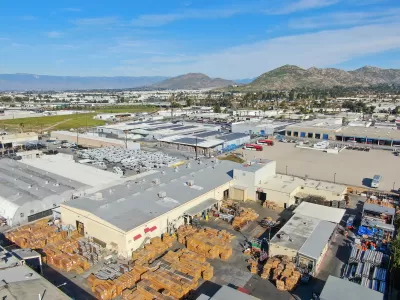
“In 2021, the South Coast Air Quality Management District adopted a first-of-its-kind rule that requires large warehouses to offset pollution from the truck traffic they attract,” writes Tony Briscoe in the Los Angeles Times.
Since then, only 45 percent of warehouses have submitted a compliance report. “The warehouse compliance reports submitted to the air district included annual truck traffic, warehouse size and how these facilities chose to offset emissions.” Of the warehouses that submitted reports, 25 percent chose to pay mitigation fees instead of implementing any changes.
Now, regulators plan to launch a “sweeping enforcement initiative.” According to Briscoe, “Warehouses that fail to register with the agency could face financial penalties as high as $11,710 for each day they fail to come into compliance. The enforcement action will begin with warehouses operating in disadvantaged communities.”
The initiative targets the thousands of massive distribution warehouses that dot Southern California’s Inland Empire, contributing “nearly as much smog-forming emissions as refineries, power plants and other heavy polluters combined, according to air district officials.”
FULL STORY: Air regulators threaten Southern California warehouses with fines

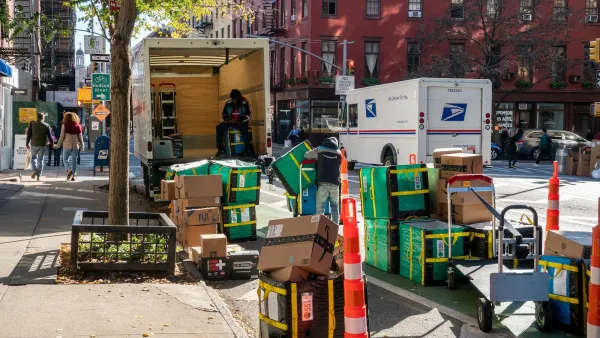
Report: 75% of NYC warehouses are in 'disadvantaged communities'
Low-income New Yorkers are 1.2 times more likely to live within half a mile of a warehouse.
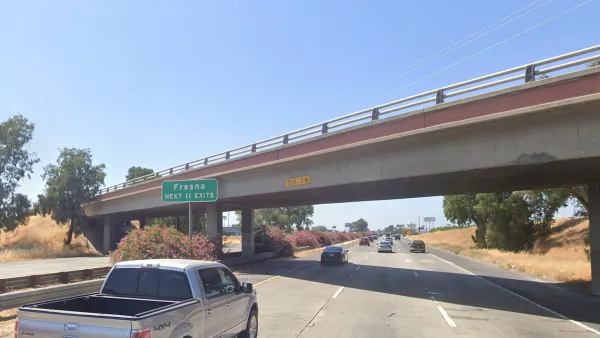
Transportation Secretary Orders Review of Fresno Highway Project
The decision follows a lawsuit by local groups who say Caltrans should not have exempted two interchange expansions from environmental review.
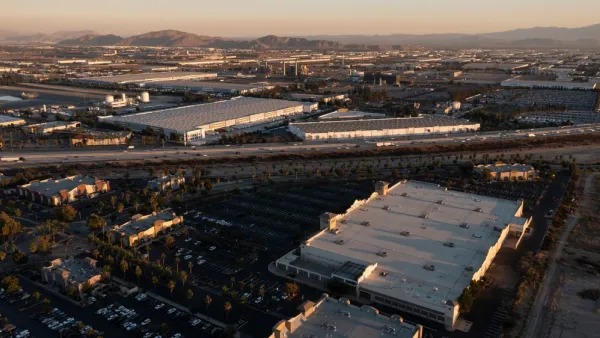
Communities Near Warehouses Unprotected by Outdated Zoning Codes
Today’s massive modern distribution centers have outsized impacts on adjacent neighborhoods. But outdated zoning codes often let them slip through the cracks with no environmental review.

Planetizen Federal Action Tracker
A weekly monitor of how Trump’s orders and actions are impacting planners and planning in America.

The state-sanctioned urbicide of Austin
People don’t kill cities. Freeways do.

US to reduce Colorado River water deliveries to Mexico
A new Colorado Treaty amendment reduces Mexico’s Colorado River water allocation by 250,000 acre feet.

5 New England states march closer to 800 megawatt wind energy project
Securing federal approval for the project may be complicated under the Trump administration, which has historically been hostile towards domestic wind power.

Baltimore to break ground on $50 million Transit Priority Project
The project will bring faster bus trips, safer streets and better bike connections to Baltimore.

Airbnb launches $250 million 'last-dollar financing' housing accelerator, makes first investment in Austin
The company will put $6.4 million towards affordable housing development in Texas’ capital.

FREE Course: Walkable City 1: Why Walkability?
After describing his path towards focusing on walkability as the essence of good planning, Jeff Speck marches through his five principal reasons for making more walkable places.
Reinventing Malls: Planning Alchemy—Turning Gray Fields Into Gold
The course focuses on the opportunities and imperatives that shape reinvention of mall sites.

Eagle County Government
Harvard University Graduate School of Design
Nashville Planning Department
The Architects Foundation
University of Cincinnati Online
The Pocatello Development Authority
The Urban Renewal Agency of the City of Pocatello
Journal of the American Planning Association