Some are worried about the truck traffic and air pollution likely to follow after a logistics warehouse gets built within visual distance of a San Bernardino school.


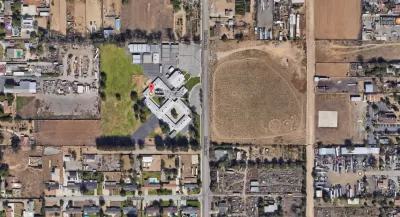
A planned logistics center in the Inland Empire in Southern California has been cause for complaints in the area. "For years, warehouses have faced little opposition from elected leaders. Local officials typically greenlight the projects, heralding the logistics industry as a vital driver of the economy that employs tens of thousands of local blue-collar workers," Andrea Bernstein reports for SCPR. But, some residents, like community organizer Ericka Flores worry that idling trucks will mean air pollution and after the warehouse is built there will be no one to enforce air pollution standards.
"Flores said it's unlikely that the parents will be able to stop the warehouse from being built near Zimmerman since it's already been approved, but she believes school board support could stop future warehouses from being built near schools," Bernstein writes.
Read the full story: Should logistics warehouses and schools be neighbors?

'Indirect Source Rule' Would Clean Up Warehouses in Southern California
Dr. Joe Lyou, CEO of the Coalition for Clean Air, walks through the legal necessity of South Coast AQMD's proposed Indirect Source Rule, which aims to accelerate the transition to zero-emission technologies and fleet electrification.
Inland Empire Community Looking for Ways to Meet Environmental Standards
Those who live in Bloomington, east of L.A., face factories on all sides and a high incidence of asthma. Some feel polluters should be made to 'clean up their messes' with punishments rather than government funds.
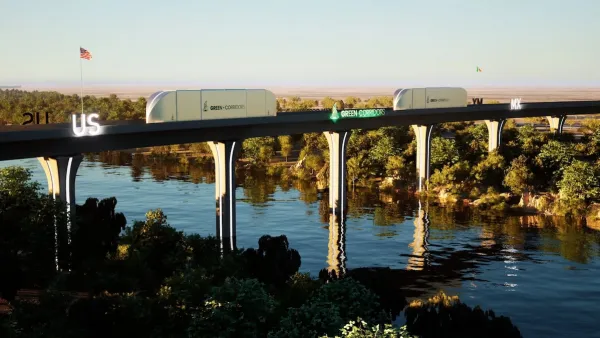
Trump Approves Futuristic Automated Texas-Mexico Cargo Corridor
The project could remove tens of thousands of commercial trucks from roadways.

Planetizen Federal Action Tracker
A weekly monitor of how Trump’s orders and actions are impacting planners and planning in America.

Amtrak, CN end decades-long dispute with eight-year agreement
The new operating agreement establishes an updated framework for the companies to work together, including processes to resolve disputes.

Northwest rail fans eager for Sept. 30 debut of Amtrak’s Airo fleet
Get ready for that new train smell and more seats. But they won’t go faster or run more frequently on the Cascades route in Washington and Oregon.

Brightline Florida files for bankruptcy
The transit company is over $5 billion in debt.

St. Louis Metro to test if single-car trains can reduce operating costs, maintain rider satisfaction
The pilot program will run from October to spring 2027, and begin with one single-car train operating on Metrolink’s Red and Blue lines.

Pennsylvania is building data centers in abandoned mines
Housing data centers in mines provides an alternative to destroying local forests and may spare residents from data centers’ noise and air pollution.

FREE Course: Walkable City 1: Why Walkability?
After describing his path towards focusing on walkability as the essence of good planning, Jeff Speck marches through his five principal reasons for making more walkable places.
Reinventing Malls: Planning Alchemy—Turning Gray Fields Into Gold
The course focuses on the opportunities and imperatives that shape reinvention of mall sites.

City of Thousand Oaks
City of Wisconsin Rapids
Harvard University Graduate School of Design
The Architects Foundation
University of Cincinnati Online
The Pocatello Development Authority
The Urban Renewal Agency of the City of Pocatello