A program championed by Chicago Mayor Lori Lightfoot to speed up bus service has new monentum from funding provided by Chicago's new fee on ride-hailing trips.


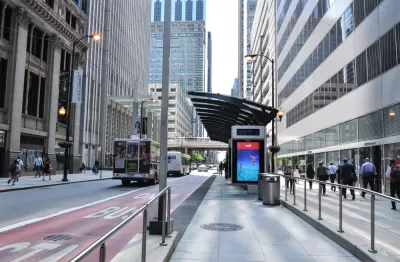
"In recent months the city has started to follow through on that promise with the CTA and the Chicago Department of Transportation’s $20 million Bus Priority Zones program, which seeks to eliminate bus “slow zones” caused by bottlenecks along the city’s busiest corridors," reports John Greenfield.
The program will eventually pull from a suite of options for improving bus priority on Chicago streets, like "red bus-only lanes, overhead signage, special signals at intersections that give buses a head start before private vehicles get a green light, and/or pedestrian improvements like sidewalk bump-outs."
One such street design feature is already in place on the downtown Loop Link corridor, but Greenfield says modest speed improvements are the fault of lax enforcement. "[Mayor Lori] Lightfoot hopes to help pass state legislation to legalize camera enforcement of bus lanes, which already exists in New York City.
The program is funded with a portion of the revenue generated by Chicago's new ride-hailing fee, approved by the City Council last week.
FULL STORY: Chicago’s Bus Priority Zone program shifts into high gear

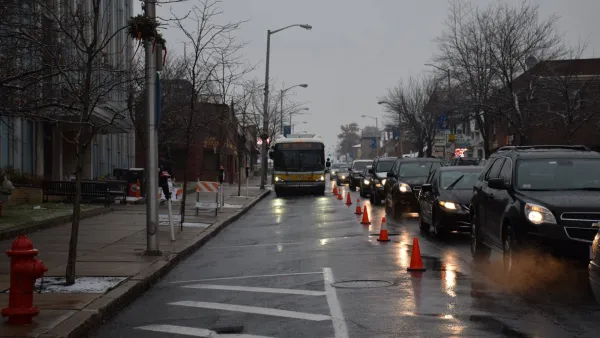
How to Improve Bus Service and Performance on Busy Corridors
A new report collects the lessons and best practices of several years of bus priority projects in the Boston region.
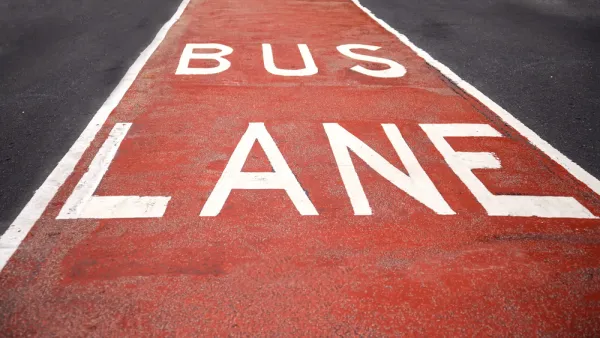
Moment of Zen: Watch L.A.'s New Bus Lane Outperform Car Traffic in Real Time
A pilot bus-only lane, originally intended to replace temporarily closed light rail service, has produced some big wins for transit advocates on social media.
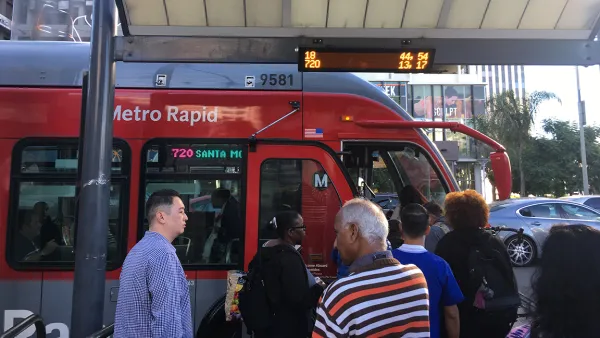
The Environmental Costs of Slow, Empty Buses
Flagging ridership on Metro buses in Los Angeles redoubles the need to speed buses up with dedicated lanes, hopefully recovering lost riders and finding some news ones along the way, too.

Planetizen Federal Action Tracker
A weekly monitor of how Trump’s orders and actions are impacting planners and planning in America.

The state-sanctioned urbicide of Austin
People don’t kill cities. Freeways do.

US to reduce Colorado River water deliveries to Mexico
A new Colorado Treaty amendment reduces Mexico’s Colorado River water allocation by 250,000 acre feet.

Mamdani overhauls NYC's Vision Zero plan with 100 new policy goals
The overhaul aims to reduce traffic deaths and make streets safer for pedestrians, cyclists and drivers through lower speed limits, new safety infrastructure and more.

Amtrak not solely to blame for New Jersey commuter rail's unreliability, report finds
A new study from the Garden State Initiative found that NJ Transit’s budget grew 20% across a 4 year period, but reliability declined significantly over the same period.

EPA erases limits on planet-warming pollution from power plants
Under Monday’s plan, power plants would still have some limits on how much mercury, arsenic and other contaminants they can emit.

FREE Course: Walkable City 1: Why Walkability?
After describing his path towards focusing on walkability as the essence of good planning, Jeff Speck marches through his five principal reasons for making more walkable places.
Reinventing Malls: Planning Alchemy—Turning Gray Fields Into Gold
The course focuses on the opportunities and imperatives that shape reinvention of mall sites.

Eagle County Government
Harvard University Graduate School of Design
Nashville Planning Department
The Architects Foundation
University of Cincinnati Online
The Pocatello Development Authority
The Urban Renewal Agency of the City of Pocatello
Journal of the American Planning Association