The Los Angeles City Council has approved a motion to improve signal prioritization for the sake of light rail transit on the Expo Line where it operates in city streets.


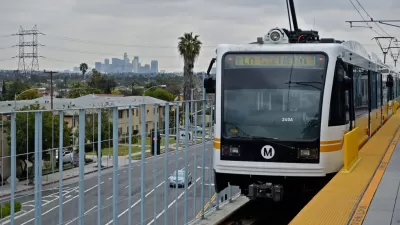
"The lack of prioritization for L.A.’s light rail lines has long been an issue for Metro’s Blue, Gold, and Expo Lines – and also on the Metro Orange and Silver Bus Rapid Transit (BRT) lines," explains an article by Joe Linton. (All of those train lines are in the process of being renamed; the Expo Line will soon be known as the E Line.)
The decision to prioritize Expo Line trains over cars at intersections moved quickly from speculation to reality. Councilmember Mike Bonin proposed the motion to reform the city's traffic priorities in October.
As noted by Linton in the article, the Los Angeles City Council also approved the long-awaited Exposition Corridor Transit Neighborhood Plan during the same hearing. The plan is designed to "[foster] affordable housing, jobs, and walkability within a half-mile walking distance of five Westside Metro Expo Line stations: Bundy, Sepulveda, Westwood, Palms, and Culver City."
FULL STORY: City Council Approves Expo Line Signal Prioritization and Final Expo Line Neighborhood Plans

L.A. Metro Plans for an Equitable Recovery
The pandemic has forced difficult confrontations with inequities that existed long before the novel coronavirus. L.A. Metro planners are responding by charting a path toward a transportation system that reverses and improves those previous realities.
Light Rail Could Finally Get Priority Over Cars at Intersections in Los Angeles
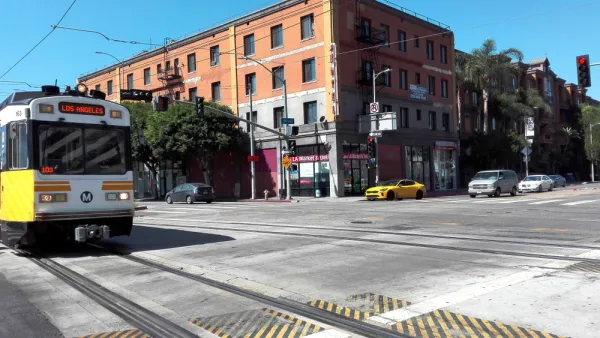
The city of Los Angeles controls the streets and the intersections crossed by the Expo Line as its connects Downtown Los Angeles to Santa Monic and the beach. The city has made its first progress toward prioritizing trains. at those intersections
Opinion: LA Should Reject ‘Misguided’ Car-Centric Policies
Even as the city highlights clean energy and transportation for the 2028 Olympics, Metro and Caltrans move forward with plans to expand highways.

Planetizen Federal Action Tracker
A weekly monitor of how Trump’s orders and actions are impacting planners and planning in America.

The state-sanctioned urbicide of Austin
People don’t kill cities. Freeways do.

US to reduce Colorado River water deliveries to Mexico
A new Colorado Treaty amendment reduces Mexico’s Colorado River water allocation by 250,000 acre feet.

Mamdani overhauls NYC's Vision Zero plan with 100 new policy goals
The overhaul aims to reduce traffic deaths and make streets safer for pedestrians, cyclists and drivers through lower speed limits, new safety infrastructure and more.

Amtrak not solely to blame for New Jersey commuter rail's unreliability, report finds
A new study from the Garden State Initiative found that NJ Transit’s budget grew 20% across a 4 year period, but reliability declined significantly over the same period.

EPA erases limits on planet-warming pollution from power plants
Under Monday’s plan, power plants would still have some limits on how much mercury, arsenic and other contaminants they can emit.

FREE Course: Walkable City 1: Why Walkability?
After describing his path towards focusing on walkability as the essence of good planning, Jeff Speck marches through his five principal reasons for making more walkable places.
Reinventing Malls: Planning Alchemy—Turning Gray Fields Into Gold
The course focuses on the opportunities and imperatives that shape reinvention of mall sites.

Eagle County Government
Harvard University Graduate School of Design
Nashville Planning Department
The Architects Foundation
University of Cincinnati Online
The Pocatello Development Authority
The Urban Renewal Agency of the City of Pocatello
Journal of the American Planning Association