Los Angeles' proposed transit neighborhood plan for the Expo Line corridor includes minor changes, but nothing earth-shattering. Many of the line's stations remain underutilized.


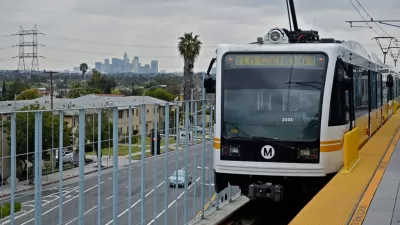
It's been nearly a year since L.A.'s Expo Line extension to Santa Monica opened. Here, Steven Sharp goes through a newly-proposed set of zoning and development rules [pdf] for the area surrounding the line, specifically its newest portion.
Overall, the plan allows for intensified land use in certain places, but does relatively little to impact the low-rise neighborhoods surrounding much of the corridor. However, Sharp writes, "the proposed urban design standards call for street-facing entrances, limited use of fencing and uniform building setbacks, among other items. In short, the regulations would mandate pedestrian-oriented buildings along commercial boulevards."
In short, density fans will have some things to like in the plan, but many will feel it doesn't go far enough. "The proposed Expo TNP walks a fine line between maintaining the status quo and creating the transit-oriented communities implied by the project's name [...] The question remains how to build around transit in a region that still considers its single family neighborhoods to be sacrosanct."
Read the full story: Breaking Down the Draft Expo Corridor Transit Neighborhood Plan

LA Times: City Council Should Take Responsibility for Lack of Transit Oriented Development
The Los Angeles Times editorial board has strong words for the Los Angeles City Council about planning for transit oriented development.
Designing a Multi-Modal, User-Focused TOD Vision for Los Angeles' Expo Line
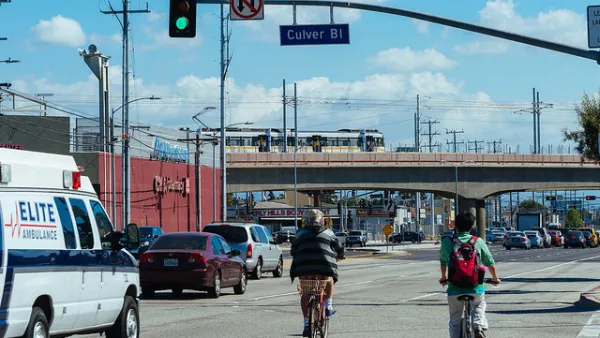
Facing explosive development interest around its Metro station, the small city of Culver on L.A.’s Westside is taking steps to shape its mobility future.
LA delays state housing mandate with 'low-rise ordinance'
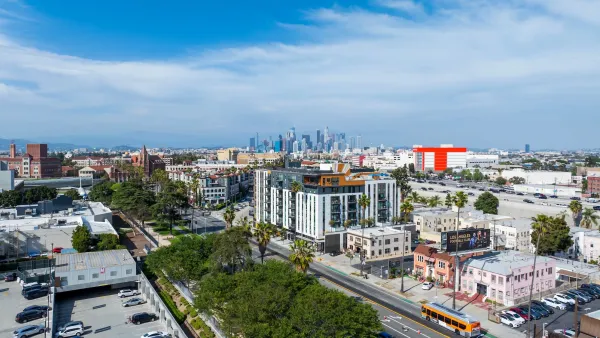
The new ordinance allows the city to delay implementing SB 79, a state law requiring more density near transit.

Planetizen Federal Action Tracker
A weekly monitor of how Trump’s orders and actions are impacting planners and planning in America.

California plans to bury El Niño’s downpour
If the state plays its cards right, it may be able to store a billion acre-feet of El Niño’s water in aquifers.

Chicago breaks ground on $3 billion megadevelopment
The new neighborhood, titled Foundry Park, will one day host 3,700 residences.

Satanic Place Names
From streams and lakes to valleys and canyons, I mapped more than 1,000 places named after the Devil.

California High-Speed Rail Authority CEO resigns after $600,000 scandal
Under Ian Choudri, the authority used taxpayer dollars to fund first class flights and trips to nightclubs.

Want to study the Missouri River? Soon, you may need unanimous approval from 10 states
Legislation would require 10 governors’ permission to study or build projects moving water outside the basin.

FREE Course: Walkable City 1: Why Walkability?
After describing his path towards focusing on walkability as the essence of good planning, Jeff Speck marches through his five principal reasons for making more walkable places.
Reinventing Malls: Planning Alchemy—Turning Gray Fields Into Gold
The course focuses on the opportunities and imperatives that shape reinvention of mall sites.

City of Rosemead
Rutgers University, Edward J. Bloustein School of Planning and Public Policy
One Hundred Miles
Hunter College, City University of New York (CUNY)
The Architects Foundation
University of Cincinnati Online
City of Cambridge
Montrose County
The Pocatello Development Authority