Global SUV ownership is skyrocketing, with consequences for carbon emissions and traffic safety. A few voices are now calling for bans on the large vehicles.


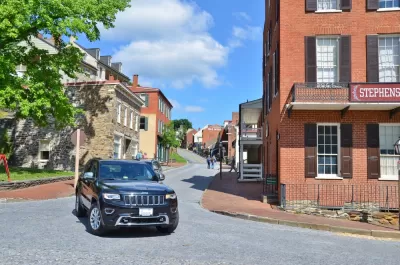
More and more drivers around the world are opting for SUVs. Over the last decade, an analysis by the International Energy Agency found that the vehicles "contributed more to the increase in global CO2 emissions than airlines, trucks, or heavy industry," Adele Peters reports.
On top of the carbon costs, SUVs are also more likely than smaller vehicles to kill pedestrians and other drivers. "When an SUV hits a pedestrian, that person is more than twice as likely to die than if they had been hit with a smaller car. An investigation last year found that SUVs are a leading reason why pedestrian deaths in the U.S. increased 46% between 2009 and 2018," Peters writes.
The downsides of the worldwide SUV craze came into bitter relief this September when a collision in Berlin killed four people, sparking protests at the Frankfurt Auto Show. The outcry led a local district mayor to argue against allowing SUVs in cities, and the theme was taken up by a German parliamentary leader who argued for size restrictions.
Peters notes that transitioning to electric SUV fleets might solve the immediate emissions problem, but only partially offsets the carbon impact unless power grids are fully renewable. She also points out the following: "California—and several other localities—technically have a law on the book that allows cities to set a weight limit for vehicles on its roads, which many newer, larger SUVs exceed. The laws are largely unenforced, but could that change?"
Read the full story: Should we outlaw SUVs?

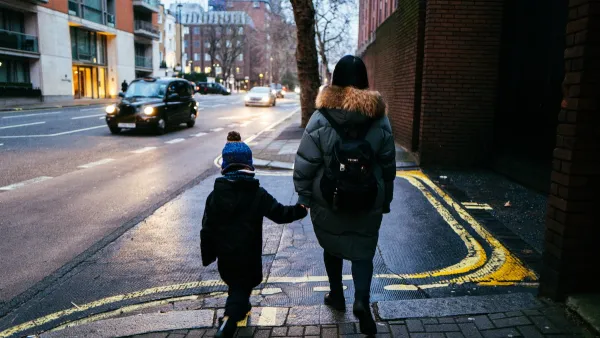
Study: Large SUVs Double Risk of Death for Children Under 10
New research from the United Kingdom reveals the higher risk of larger vehicles for pedestrians and cyclists.
Analysis: Bigger cars are responsible for 10% of increase in pedestrian deaths
The New York Times offers a visual explanation of how larger vehicles make US roads more dangerous.
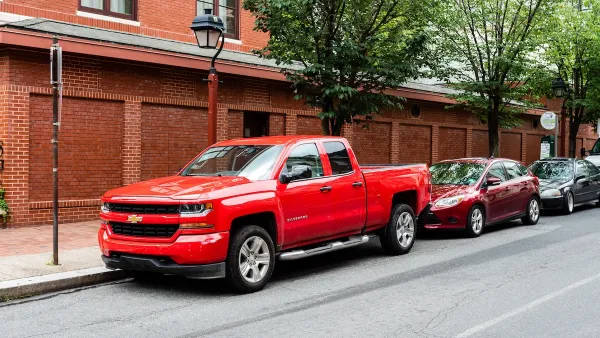
Heavier Vehicles Don’t Keep Passengers Safer
A new study shows that modern safety features are more important than size and weight once vehicles weigh over 4,000 pounds.

Planetizen Federal Action Tracker
A weekly monitor of how Trump’s orders and actions are impacting planners and planning in America.

Amtrak, CN end decades-long dispute with eight-year agreement
The new operating agreement establishes an updated framework for the companies to work together, including processes to resolve disputes.

Northwest rail fans eager for Sept. 30 debut of Amtrak’s Airo fleet
Get ready for that new train smell and more seats. But they won’t go faster or run more frequently on the Cascades route in Washington and Oregon.

Brightline Florida files for bankruptcy
The transit company is over $5 billion in debt.

St. Louis Metro to test if single-car trains can reduce operating costs, maintain rider satisfaction
The pilot program will run from October to spring 2027, and begin with one single-car train operating on Metrolink’s Red and Blue lines.

Pennsylvania is building data centers in abandoned mines
Housing data centers in mines provides an alternative to destroying local forests and may spare residents from data centers’ noise and air pollution.

FREE Course: Walkable City 1: Why Walkability?
After describing his path towards focusing on walkability as the essence of good planning, Jeff Speck marches through his five principal reasons for making more walkable places.
Reinventing Malls: Planning Alchemy—Turning Gray Fields Into Gold
The course focuses on the opportunities and imperatives that shape reinvention of mall sites.

City of Thousand Oaks
City of Wisconsin Rapids
Harvard University Graduate School of Design
The Architects Foundation
University of Cincinnati Online
The Pocatello Development Authority
The Urban Renewal Agency of the City of Pocatello