Clearly, the American love affair with the automobile is far from over, despite lessons from the recession, dire environmental warnings, plummeting traffic safety, or the wishful thinking of tech companies.


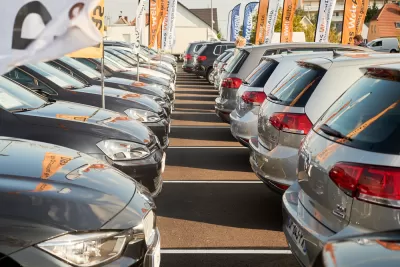
Aarian Marshall pumps the break on a politically useful narrative about the demise of car ownership in the United States. Ride-hailing companies and car sharing companies claim private ownership of cars is an outdated concept, cities block streets to cars partly from the assumption that there's growing demand for car-free places, and Census data have shown a growing number of households without cars.
Still, there's an elephant in the room, according to Marshall: "Personal car ownership in the US has actually increased in the past 10 years, even in the frenzied urban places where Uber and car-share have become verbs."
There's more. "According to research from former New York City transportation official Bruce Schaller, the number of vehicles has grown faster than the population in some of the cities where ride-hail is most popular: Boston, Los Angeles, New York, Philadelphia, and Chicago."
Companies that were built on the assumption that fewer people would want to own cars in the future have also "hit the skids," according to Marshall, like Car2Go.
The reversion to the car-centric mean could be traced to post-recession austerity, according to experts cited by Marshall in the article. Unmentioned, however, is the kind of cars are buying. Consumer trends in the United States have shifted back to large vehicles, as full-size SUVs and pick-up trucks again are best sellers in the United States, despite evidence that they are unsafe for everyone inside the car and out.
Read the full story: The Death of Cars Was Greatly Exaggerated

Americans Would Prefer to Drive Themselves After the Pandemic, Survey Says
A massive survey on the sentiments of Americans during the COVID-19 pandemic reports that many people are less likely to ride public transit, or rely on Uber and Lyft, in the future.
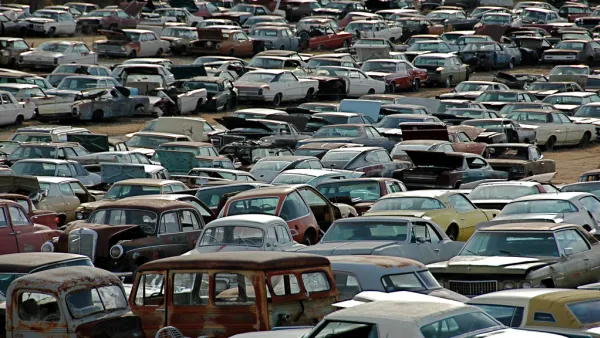
More 'Car-Rich' Households Mean More Car Ownership
More people are buying cars, even while more people are choosing to go without cars.
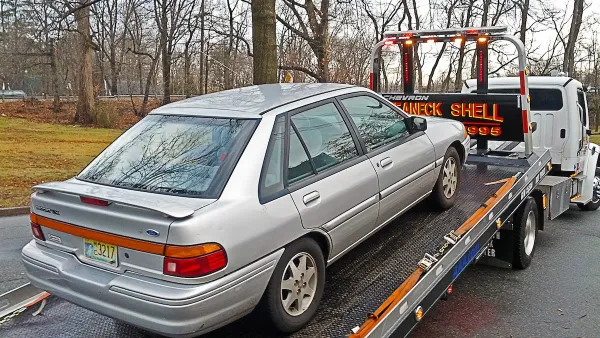
Car Loan Defaults Have Spiked 50%. With Repossession Rates Rising, How Will Americans Get to Work?
In 2024, 1.7 million cars were repossessed in the United States, the highest number since 2009.

Planetizen Federal Action Tracker
A weekly monitor of how Trump’s orders and actions are impacting planners and planning in America.

The state-sanctioned urbicide of Austin
People don’t kill cities. Freeways do.

US to reduce Colorado River water deliveries to Mexico
A new Colorado Treaty amendment reduces Mexico’s Colorado River water allocation by 250,000 acre feet.

Nation's most wind-powered state turns to coal as data centers increase energy demand
For the first time in decades, Iowa has increased its generation of coal power.

NYC cools commuters with city's first rain garden above a bus stop
New York City officials say the plants in the rain garden can absorb 16 gallons of rainwater during heavy storms.

Brightline West’s future may rely on $6 billion federal loan
The company has until Nov. 2 to make a $400 million equity investment into its proposed high-speed rail line.

FREE Course: Walkable City 1: Why Walkability?
After describing his path towards focusing on walkability as the essence of good planning, Jeff Speck marches through his five principal reasons for making more walkable places.
Reinventing Malls: Planning Alchemy—Turning Gray Fields Into Gold
The course focuses on the opportunities and imperatives that shape reinvention of mall sites.

Eagle County Government
Harvard University Graduate School of Design
Nashville Planning Department
The Architects Foundation
University of Cincinnati Online
The Pocatello Development Authority
The Urban Renewal Agency of the City of Pocatello
Journal of the American Planning Association