The city of Los Angeles controls the streets and the intersections crossed by the Expo Line as its connects Downtown Los Angeles to Santa Monic and the beach. The city has made its first progress toward prioritizing trains. at those intersections


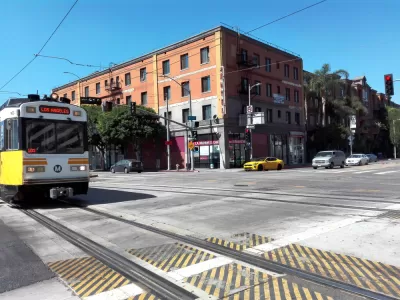
Steven Sharp reports on changes proposed to service on the Metro Expo Line, one of the Los Angeles region's few transit ridership success stories of recent years.
An ordinance proposed by City Councilmember Mike Bonin "would instruct the Los Angeles Department of Transportation to maximize signal priority for the Expo Line at street crossings and report back to the City Council within 60 days on strategies to speed end-to-end travel times and improve on-time reliability by 90 percent," reports Sharp.
Currently, "the light rail line, which runs predominantly at-grade between Downtown Los Angeles and Santa Monica, is frequently forced to stop for cross traffic at 22 ungated intersections along its route," according to Sharp.
The trains are under the control of the Los Angeles County Metropolitan Transportation Authority, but those intersections are the responsibility of the city of Los Angeles. The lack of signal priority for Expo Line trains has been a popular talking point for transit advocates in the city pushing the city to live up to its promises about transitioning to a less car-centric transportation system. A bus route near Downtown Los Angeles, recently liberated from cars in a temporary bus-only lane, provided visual evidence of the benefits of prioritizing high-capacity modes of transportation.
The Expo Line recently gained attention when Metro cut service on the line and many other routes in the system, including bus routes. The public outcry was enough to convince metro to restore previous headways during peak travel times.
FULL STORY: L.A. City Councilman Wants to Speed Up the Expo Line

Traffic Signals Will Finally Prioritize Expo Line Trains in Los Angeles
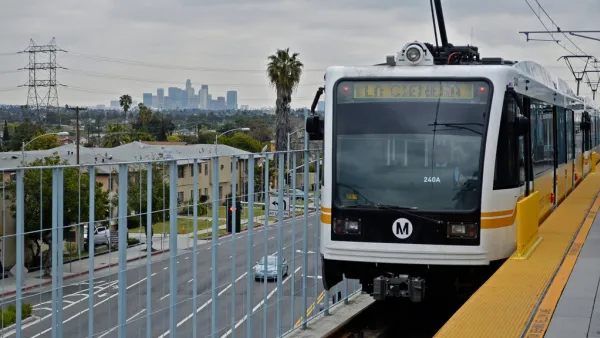
The Los Angeles City Council has approved a motion to improve signal prioritization for the sake of light rail transit on the Expo Line where it operates in city streets.
LA to Replace Inglewood Light Rail Project With Bus Shuttles
LA Metro says the change is in response to community engagement and that the new design will be ready before the 2028 Olympic Games.

LA Metro Celebrates Bike Month With Free Rides, Discounted Bike Share
Skeptical about riding a bike in Los Angeles? Its transit agency wants to change your mind this May.

Planetizen Federal Action Tracker
A weekly monitor of how Trump’s orders and actions are impacting planners and planning in America.

The state-sanctioned urbicide of Austin
People don’t kill cities. Freeways do.

US to reduce Colorado River water deliveries to Mexico
A new Colorado Treaty amendment reduces Mexico’s Colorado River water allocation by 250,000 acre feet.

Mamdani overhauls NYC's Vision Zero plan with 100 new policy goals
The overhaul aims to reduce traffic deaths and make streets safer for pedestrians, cyclists and drivers through lower speed limits, new safety infrastructure and more.

Amtrak not solely to blame for New Jersey commuter rail's unreliability, report finds
A new study from the Garden State Initiative found that NJ Transit’s budget grew 20% across a 4 year period, but reliability declined significantly over the same period.

EPA erases limits on planet-warming pollution from power plants
Under Monday’s plan, power plants would still have some limits on how much mercury, arsenic and other contaminants they can emit.

FREE Course: Walkable City 1: Why Walkability?
After describing his path towards focusing on walkability as the essence of good planning, Jeff Speck marches through his five principal reasons for making more walkable places.
Reinventing Malls: Planning Alchemy—Turning Gray Fields Into Gold
The course focuses on the opportunities and imperatives that shape reinvention of mall sites.

Eagle County Government
Harvard University Graduate School of Design
Nashville Planning Department
The Architects Foundation
University of Cincinnati Online
The Pocatello Development Authority
The Urban Renewal Agency of the City of Pocatello
Journal of the American Planning Association