A change in federal law on Monday meant that over 16,000 Virginia motorists must double or triple-up when using carpool lanes in Virginia. Next month, electric vehicles will need three occupants to drive free on I-395 when HOV lanes become HOT.


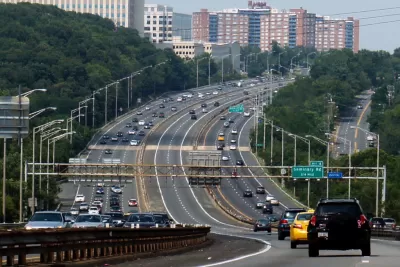
Last month, the Virginia Department of Motor Vehicles and Virginia Department of Transportation (VDOT) informed over 16,000 Virginia motorists whose gas/electric hybrid vehicles display clean special fuel plates that effective Sept. 30, they would lose access to high occupancy vehicle (HOV or carpool) lanes unless they qualified as a carpool, i.e., transport two or three or more people. The change did not affect hybrid vehicles with plugs for electric charging, aka plug-in hybrid electric vehicles, e.g., Prius Prime.
The Virginia Department of Transportation did not make this change arbitrarily. They did it as a result of a change in federal law (Title 23 / Chapter 1 / § 166) that dropped gas/electric hybrid vehicles from being classified as an "alternative fuel vehicle."
The loss of that privilege nationwide may bring back memories for Californians who owned early model Priuses, Honda Civic Hybrids and Honda Insights with yellow stickers on their front and rear bumpers. They lost solo-driving access to HOV lanes in July 2011, as did over 220,000 electric vehicle drivers this year.
HOT lane privileges don't apply to "clean special fuel" vehicles
"Hybrid-vehicle drivers, even those who have the plug-ins, should also take note that HOV privileges don’t apply to any high-occupancy toll lanes (HOT) lanes such as the ones on interstates 66, 495 and 95 or those opening in November on Interstate 395," writes Gridlock reporter Luz Lazo for The Washington Post (source article.) The only solo-drivers allowed free access on these lanes are motorcyclists, otherwise drivers need to help reduce congestion by carpooling, or use the bus to avoid paying a toll.
On I-66, cars must have at least two people aboard to ride free. The 495, 95 and the future 395 express lanes have an HOV-3 rule.
Conversion of HOV to HOT Lanes on Interstate 395
Next month, the "commutes of thousands of Washington-area residents will change when tolling begins on an eight-mile stretch of Interstate 395 in Northern Virginia, one of the busiest gateways into the nation’s capital," reported Lazo last month in the Post.
The reversible, high-occupancy toll (HOT) lanes set to open in November will be the latest addition to the region’s growing network of toll roads.
The 395 Express Lanes will replace today’s high-occupancy-vehicle (HOV) lanes, which stretch from near Edsall Road in Fairfax County to the 14th Street Bridge in the District. The lanes will be an extension of the 95 Express Lanes, which operate 24 hours a day, seven days a week and stretch 31 miles between Fairfax and Stafford counties. The non-HOV lanes will remain and will continue to be free.
Lane conversions can be controversial, particularly when they involve going from unpriced to tolled. Cities in Southern California are resisting a proposal to convert an HOV lane to a HOT lane. In southeastern Virginia, a proposal to convert HOV lanes to HOT lanes is being received better.
Transit funding
What's particularly noteworthy in the I-395 HOV-to-HOT lanes conversion is that it triggers payments from single-occupant vehicles to transit vehicles, as noted in the section, "Transurban to subsidize public transit," in an August 2017 post:
"The project includes a long-term investment in transit for the corridor, through a yearly payment of $15 million (to be escalated annually) that will be paid by Transurban to the Commonwealth, " according to VDOT. "This annual transit payment will support transit and multimodal initiatives benefitting the corridor."
According to the March 1 agreement [pdf] between VDOT and Transurban, the transit investment will increase "by 2.5 percent each year for the term of the concession."
Related in Planetizen:
-
Converting a Carpool Lane to a High Occupancy Toll Lane No Easy Task (in Riverside County, California), September 19, 2019
-
220,000 EV Drivers in California to Lose Carpool Lane Perk in 2019, September 21, 2018
-
I-66 High Occupancy Toll Lanes Open in Northern Virginia in December [clean special fuel vehicles lose perk], October 10, 2017
-
Virginia's New 395 Express Lanes Guaranteed to Fund Public Transit, August 14, 2017
-
Last Month For Hybrids In CA Carpool Lanes, June 3, 2011
Hat tip to Sam Mintz, POLITICO Morning Transportation.
FULL STORY: Those Virginia clean special fuel tags are no longer a free pass to ride solo in HOV lanes

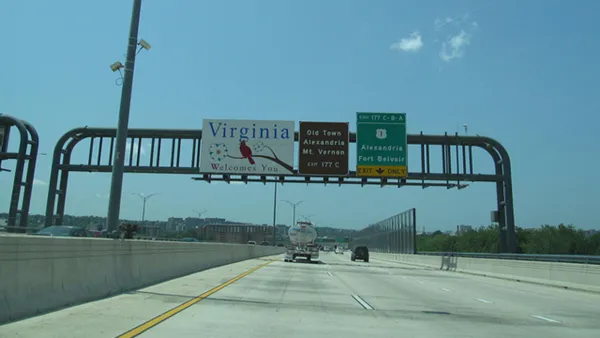
Virginia's New 395 Express Lanes Guaranteed to Fund Public Transit
The $500 million, eight-mile extension, mostly paid by private funds and express lane tolls, broke ground August 9. Transurban, the private company in the public-private partnership, will pay $15 million annually for public transit improvements.
Popularity of Express Lanes Spreads Beyond Virginia
Dan Vock of Governing takes a broad look at congestion pricing, beginning with the success of Virginia's 66 Express Lanes, the ones where tolls initially topped $40. Notwithstanding complaints, managed lanes are spreading, but challenges remain.
In Final Days in Office, Virginia Governor Extends Express Lanes at No Cost to Taxpayers
The Australian toll road company, Transurban, will build two, 10-mile reversible express lanes for Virginia Department of Transportation and provide $277 million for a new bridge in the corridor. Free for carpools, others will pay a variable toll.

The state-sanctioned urbicide of Austin
People don’t kill cities. Freeways do.

US to reduce Colorado River water deliveries to Mexico
A new Colorado Treaty amendment reduces Mexico’s Colorado River water allocation by 250,000 acre feet.

New Jersey’s second-largest city bans standalone data centers
Jersey City will continue to allow co-location facilities, such as those meant for research institutions that store their own data.

Amtrak not solely to blame for New Jersey commuter rail's unreliability, report finds
A new study from the Garden State Initiative found that NJ Transit’s budget grew 20% across a 4 year period, but reliability declined significantly over the same period.

EPA erases limits on planet-warming pollution from power plants
Under Monday’s plan, power plants would still have some limits on how much mercury, arsenic and other contaminants they can emit.

Phoenix announces new on-demand transit service, more frequent RAPID buses
Both new services will launch in October, and are part of Phoenix's Project Effective Access Solutions for Easing Congestion.

FREE Course: Walkable City 1: Why Walkability?
After describing his path towards focusing on walkability as the essence of good planning, Jeff Speck marches through his five principal reasons for making more walkable places.
Reinventing Malls: Planning Alchemy—Turning Gray Fields Into Gold
The course focuses on the opportunities and imperatives that shape reinvention of mall sites.


Eagle County Government
Harvard University Graduate School of Design
Nashville Planning Department
The Architects Foundation
University of Cincinnati Online
The Pocatello Development Authority
The Urban Renewal Agency of the City of Pocatello
Journal of the American Planning Association