The Regional Transportation Commission is looking for ways to reverse ridership figures that have plummeted since the advent of transportation network companies.


"As the use of ride-hailing increases around the Las Vegas Valley, especially along the Strip, bus use in the area continues to fall," reports Mick Akers.
The Regional Transportation Commission used to generate its most revenue in fares from bus routes running along the Las Vegas Strip—not so much anymore. "Bus revenue on the Strip fell 18 percent between October 2015 and December 2018," according to RTC data shared by Akers. According to a source quoted in the article, the RTC used to make $6 million in profit operating buses on what it calls the resort corridor.
Faced with the economic realities of a post ride-hailing world, the RTC is looking to reinvent itself. Included among the plans are a new on-demand micromobility shuttle pilot project.
For more context on transportation planning in Las Vegas, here is a list of previous coverage on the subject from the Planetizen archives.
- New Traffic Management Tech Coming to Downtown Las Vegas (December 2018)
- In Las Vegas, Ridesharing and Transit Complement and Compete (October 2018)
- Brightline, Florida's High-Speed Rail Company, Goes All in on Vegas (September 2018)
- A New Fleet of AVs Operating in Las Vegas (May 2018)
- Elevated Expressway Proposal Goes Bust in Las Vegas(December 2017)
- Las Vegas Light Rail Plans Take a Big Step Forward (March 2017)
- RTC Bike Share Shows Las Vegas' Bike-Friendly Side (October 2016)
- Vanishing Act for Free Parking on the Las Vegas Strip (January 2016)
-
Could the Las Vegas Strip Go Multi-Modal?(August 2014)
FULL STORY: Dwindling Las Vegas Strip bus ridership concerns officials

Study: Uber and Lyft Have Been Catastrophic for Public Transit Ridership
The most damning evidence yet of how ride hailing is making urban transportation less efficient, not more.
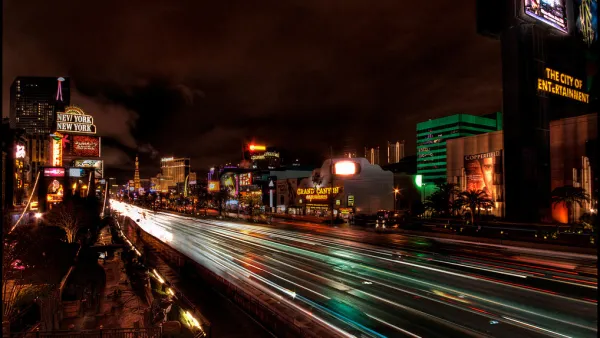
Las Vegas Transit Plan Includes Light Rail
To alleviate tourist traffic and serve residents, the Regional Transportation Commission of Southern Nevada has unveiled a long-term plan to invest billions in transit improvements including light rail and an expanded monorail.
This Toronto Suburb Has More Bus Riders Than Columbus, Ohio
Brampton, Ontario used gradual improvements in service to prove that if you build it, they will ride.

Planetizen Federal Action Tracker
A weekly monitor of how Trump’s orders and actions are impacting planners and planning in America.

The state-sanctioned urbicide of Austin
People don’t kill cities. Freeways do.

US to reduce Colorado River water deliveries to Mexico
A new Colorado Treaty amendment reduces Mexico’s Colorado River water allocation by 250,000 acre feet.

5 New England states march closer to 800 megawatt wind energy project
Securing federal approval for the project may be complicated under the Trump administration, which has historically been hostile towards domestic wind power.

Baltimore to break ground on $50 million Transit Priority Project
The project will bring faster bus trips, safer streets and better bike connections to Baltimore.

Airbnb launches $250 million 'last-dollar financing' housing accelerator, makes first investment in Austin
The company will put $6.4 million towards affordable housing development in Texas’ capital.

FREE Course: Walkable City 1: Why Walkability?
After describing his path towards focusing on walkability as the essence of good planning, Jeff Speck marches through his five principal reasons for making more walkable places.
Reinventing Malls: Planning Alchemy—Turning Gray Fields Into Gold
The course focuses on the opportunities and imperatives that shape reinvention of mall sites.


Eagle County Government
Harvard University Graduate School of Design
Nashville Planning Department
The Architects Foundation
University of Cincinnati Online
The Pocatello Development Authority
The Urban Renewal Agency of the City of Pocatello
Journal of the American Planning Association