Cupertino Mayor Steven Scharf, a fervent opponent of a new Bay Area housing initiative, opened his Jan. 29 state-of-the-city address with a short joke about "building a wall around Cupertino and making San Jose pay for it" that didn't go over well.


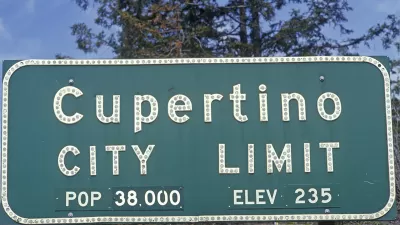
“You’ve heard about the wall along our southern border,” Mayor Scharf said near the beginning of his State of the City address, showing a picture of the city surrounded by a black border, reports Emily DeRuy of the Bay Area News Group.
“This is the wall around Cupertino. We have a big problem with all these Teslas coming through our city from Saratoga, and other people from other cities, so we came up with this proposal. San Jose will be mainly paying for it. It’s not going to come out of our own taxes.”
The apparent joke drew some chuckles when it was delivered. But the comments have drawn ire online, particularly from those who have criticized the city and other wealthy suburban towns for failing to add enough affordable housing. Plans to build housing at the old, almost-vacant Vallco Mall site have been met with intense pushback from some city residents.
For example, San Jose City Councilman Lan Diep, "the only remaining Republican on the council," tweeted after reading DeRuy's piece on Feb. 5:
“Congrats to Cupertino Mayor Steven Scharf for out-Trumping Trump on the night of the (State of the Union) by declaring Cupertino will build a wall and make San Jose pay for it. We are not amused."
While the tweets were heavily focused on housing, a sensitive subject with affluent South Bay suburbs that have resisted new, denser developments, the opening 25-second joke appeared to be more about traffic than housing as the next two minutes of his address was about ensuring safety for children who bike and walk to school and praising a police officer for the number of traffic citations he had written.
Scharf is also a major opponent of a new group known as CASA – The Committee to House the Bay Area, that received regional approval of its initiative, known as the CASA Compact [pdf], last month.
“It’s called the Committee to House the Bay Area but I really call it the Committee to Destroy the Bay Area,” the mayor said during his address.
The funding scheme, Scharf added, is “very scary,” with the group wanting to take property tax revenue away from smaller cities. He also suggested that building high-density housing would drive up house prices.
On that last note, Scharf referenced an MIT study from Yonah Freemark, known for his blog, The Transport Politic (frequently posted here), now a doctoral candidate in the Department of Urban Studies and Planning at the Massachusetts Institute of Technology (M.I.T.). "Yimby narrative on housing is wrong according to MIT study," writes Tim Redmond for the San Francisco Tenants Union Freemark's research released Jan. 29.
Hat tip to MTC Transportation Headlines
FULL STORY: Cupertino mayor: City will build wall and San Jose will pay for it


Regional Attempt to Address Housing Crisis Advances in Bay Area
A regional, comprehensive, and controversial approach to tackling the housing affordability crisis in the nine-county Bay Area, including strategies to render renter protections and new housing production, has cleared three major hurdles.

Legislation Introduced to Enable the Bay Area to Tackle Housing Crisis as a Region
A new bill would grant the Housing Alliance for the Bay Area taxing authority to raise revenue in the nine-county region to find solutions to the housing crisis. Another bill would reduce the voter threshold below two-thirds for eligible taxes.
Housing Politics: Think Regionally, Lose Locally
Two Bay Area city council members serving on a regional commission suffered the political consequences of supporting a controversial regional housing initiative, not from their constituents, but from their colleagues.

Planetizen Federal Action Tracker
A weekly monitor of how Trump’s orders and actions are impacting planners and planning in America.

The state-sanctioned urbicide of Austin
People don’t kill cities. Freeways do.

US to reduce Colorado River water deliveries to Mexico
A new Colorado Treaty amendment reduces Mexico’s Colorado River water allocation by 250,000 acre feet.

Mamdani overhauls NYC's Vision Zero plan with 100 new policy goals
The overhaul aims to reduce traffic deaths and make streets safer for pedestrians, cyclists and drivers through lower speed limits, new safety infrastructure and more.

Amtrak not solely to blame for New Jersey commuter rail's unreliability, report finds
A new study from the Garden State Initiative found that NJ Transit’s budget grew 20% across a 4 year period, but reliability declined significantly over the same period.

EPA erases limits on planet-warming pollution from power plants
Under Monday’s plan, power plants would still have some limits on how much mercury, arsenic and other contaminants they can emit.

FREE Course: Walkable City 1: Why Walkability?
After describing his path towards focusing on walkability as the essence of good planning, Jeff Speck marches through his five principal reasons for making more walkable places.
Reinventing Malls: Planning Alchemy—Turning Gray Fields Into Gold
The course focuses on the opportunities and imperatives that shape reinvention of mall sites.

Eagle County Government
Harvard University Graduate School of Design
Nashville Planning Department
The Architects Foundation
University of Cincinnati Online
The Pocatello Development Authority
The Urban Renewal Agency of the City of Pocatello
Journal of the American Planning Association