The new buses can charge at either end of their route in minutes without returning to garages for charging.



A new fleet of electric buses managed by Transport for London (TfL) and operated by Go-Ahead London, is hitting London streets, reports Liz Jackson for the BBC.
The zero-emission buses can be charged in under six minutes at each end of their route, eliminating the need to return them to a central charging center. The buses charge using pantograph technology and mechanical arms attached to the roof. “The transport authority said the changes would bring financial benefits because fewer buses are required on the route, so money could be reinvested into other parts of the network.”
The buses also include new safety features such as speed-limiting technology, audible warnings for people outside the bus, and camera monitoring. The front end of the train is designed for better visibility, while the interior uses improved seat and flooring designs to reduce injuries.
FULL STORY: London's new tram-like buses come into service


Yes, another thing that car dependency makes worse: DUIs
In the land of the free (and the cars), design incites drinking and driving.
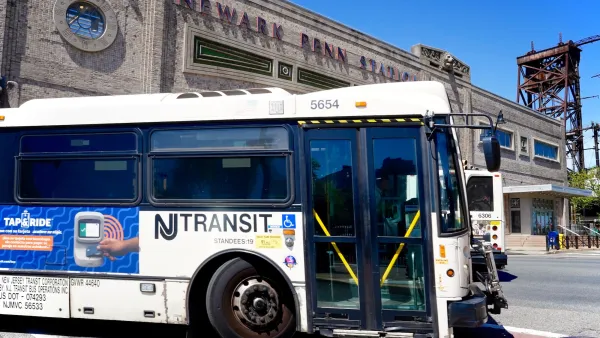
Facing Federal Funding Freeze, NJ Transit Revises Zero-emission Plan
The agency is retooling a plan to modernize its aging bus depots after the Trump administration decided to freeze nearly $324 million in grants.
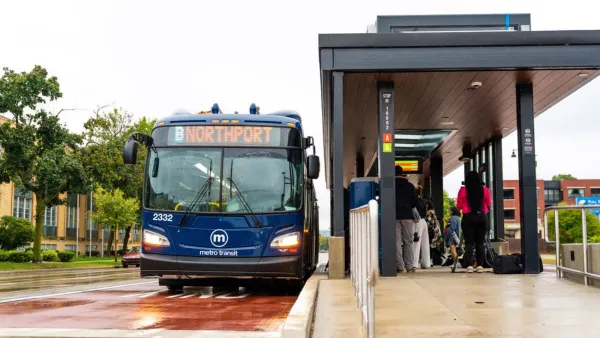
Madison’s Electric Buses Keep Running Through Brutal Freeze
A late January winter storm offered a key test for electric buses that often falter in cold temperatures.

Planetizen Federal Action Tracker
A weekly monitor of how Trump’s orders and actions are impacting planners and planning in America.

The state-sanctioned urbicide of Austin
People don’t kill cities. Freeways do.

US to reduce Colorado River water deliveries to Mexico
A new Colorado Treaty amendment reduces Mexico’s Colorado River water allocation by 250,000 acre feet.

Guerilla urbanists are building DIY bus stop benches in Chicago
A before-and-after of one of the bus stops with a new bench. The new benches are not officially sanctioned or permitted, but the residents who placed them hope they will be the start of a network of DIY benches across the city.

Mamdani overhauls NYC's Vision Zero plan with 100 new policy goals
The overhaul aims to reduce traffic deaths and make streets safer for pedestrians, cyclists and drivers through lower speed limits, new safety infrastructure and more.

Amtrak not solely to blame for New Jersey commuter rail's unreliability, report finds
A new study from the Garden State Initiative found that NJ Transit’s budget grew 20% across a 4 year period, but reliability declined significantly over the same period.

FREE Course: Walkable City 1: Why Walkability?
After describing his path towards focusing on walkability as the essence of good planning, Jeff Speck marches through his five principal reasons for making more walkable places.
Reinventing Malls: Planning Alchemy—Turning Gray Fields Into Gold
The course focuses on the opportunities and imperatives that shape reinvention of mall sites.

Eagle County Government
Harvard University Graduate School of Design
Nashville Planning Department
The Architects Foundation
University of Cincinnati Online
The Pocatello Development Authority
The Urban Renewal Agency of the City of Pocatello
Journal of the American Planning Association