The project is part of the city’s broader plan to improve bike and pedestrian infrastructure and road safety.


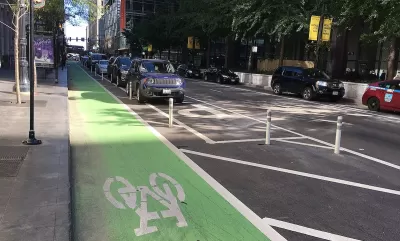
Oklahoma City began construction on its first parking-protected bike lane, a 1.8-mile stretch of Lottie Avenue and Madison Street that connects some of the city’s key destinations, reports Jessie Christopher Smith in The Oklahoman.
“We've implemented a lot of bike lanes now, but this is taking the next step of trying to create a bike lane that adds an extra layer of protection and really reflects the new best practices that have been happening,” said Justin Henry, a city transportation program planner.
According to the article, “The new Lottie bike lane is also expected to connect with the Springlake Bike Project, currently in design. The $800,000 project is being funded through the Association of Central Oklahoma Governments (ACOG) Air Quality Small Grants program and through the Better Streets, Safer City bond package passed by OKC voters in 2017.”
Read the full story: A new kind of bike lane is being built in northeast OKC. Will it increase safety?


Lawsuit Delays DC Bike Lane Closure Until at Least April
Crashes on 15th Street dropped by 46% since the bike lanes were added.
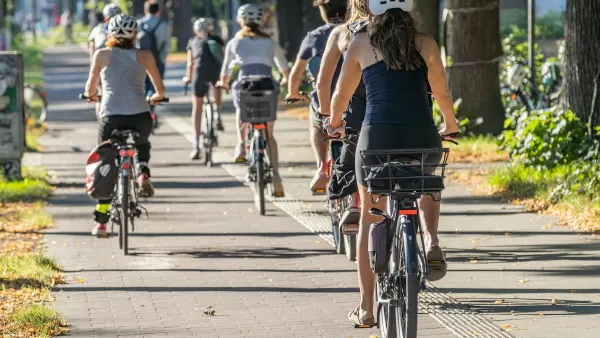
With Protected Lanes, 460% More People Commute by Bike
For those needing more ammo, more data proving what we already knew is here.
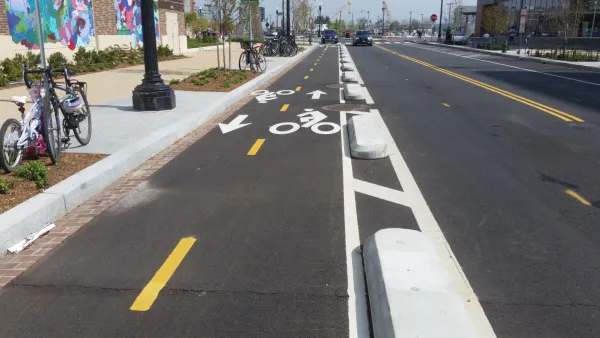
DC Backpedals on Bike Lane Protection, Swaps Barriers for Paint
Citing aesthetic concerns, the city is removing the concrete barriers and flexposts that once separated Arizona Avenue cyclists from motor vehicles.

Planetizen Federal Action Tracker
A weekly monitor of how Trump’s orders and actions are impacting planners and planning in America.

California plans to bury El Niño’s downpour
If the state plays its cards right, it may be able to store a billion acre-feet of El Niño’s water in aquifers.

Desperate measures: Advocates weigh draining Lake Powell to fill Colorado River
Draining the reservoir could reduce evaporation losses by a couple hundred thousand acre-feet.

California High-Speed Rail Authority picks trainset manufacturer
The California High-Speed Rail Authority aims to start servicing passengers by 2033.

LA may place emergency ban on karaoke room permits
If Councilwoman Heather Hutt’s proposal passes, the moratorium would last between 45 days and one year.

City officials are dumping billions of gallons of sewage into the Chicago River
This year, the Racine Avenue sewage pumping station has poured over 10 billion gallons of sewage into the Chicago River.

FREE Course: Walkable City 1: Why Walkability?
After describing his path towards focusing on walkability as the essence of good planning, Jeff Speck marches through his five principal reasons for making more walkable places.
Reinventing Malls: Planning Alchemy—Turning Gray Fields Into Gold
The course focuses on the opportunities and imperatives that shape reinvention of mall sites.


City of Rosemead
Rutgers University, Edward J. Bloustein School of Planning and Public Policy
One Hundred Miles
Hunter College, City University of New York (CUNY)
The Architects Foundation
University of Cincinnati Online
City of Cambridge
Montrose County
The Pocatello Development Authority