The U.S. Army Corps of Engineers was on the verge of proposing a plan to protect New York City from storm surges and sea-level rise. Instead, the city of New York has lost federal support for a path toward climate resilience.


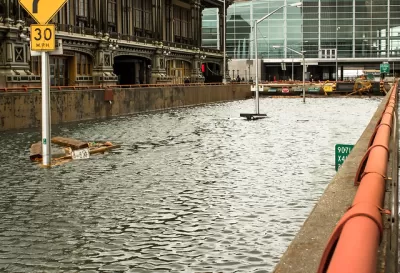
"The federal government has abruptly halted a study of New York City's coastal storm surge preparedness, " reports Jake Offenhartz, "throwing into question the fate of the region's most expansive climate resiliency effort and fueling speculation about politically motivated retribution by the Trump administration."
"The study was launched in 2017 by the U.S. Army Corps of Engineers to evaluate five possible defenses against severe storms and flooding that threaten coastal communities and the New York/New Jersey harbor," according to Offenhartz. After the study was shelved quietly last week, Army Corps officials blamed the decision on a "funding lapse."
Robert Freudenberg, vice president for energy and environment at the Regional Plan Association, is quoted in the article saying the decision is dangerous and unprecedented. Freudenberg also suggests in the article that the decision is motivated by politics. President Trump Tweeted on the subject of the $119 billion stormwall under consideration to protect the city, saying the barrier looks terrible and is "foolish."
A massive 200 Billion Dollar Sea Wall, built around New York to protect it from rare storms, is a costly, foolish & environmentally unfriendly idea that, when needed, probably won’t work anyway. It will also look terrible. Sorry, you’ll just have to get your mops & buckets ready!
— Donald J. Trump (@realDonaldTrump) January 18, 2020
Read the full story: "Unprecedented and Dangerous": Trump Administration Halts NYC's Most Important Climate Resiliency Study


Lower Manhattan Climate Resilience Plan Released
The Financial District and Seaport Climate Resilience Master Plan will extend the shoreline in Lower Manhattan by up to 200 feet.
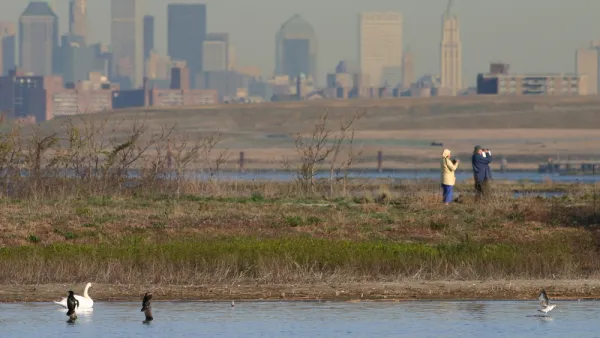
Life With Climate Change: A 100-Year Storm Every Year
The extreme weather events and sea-level rise of the relatively near future will overwhelm storm and flood infrastructure with startling regularity, according to new research.
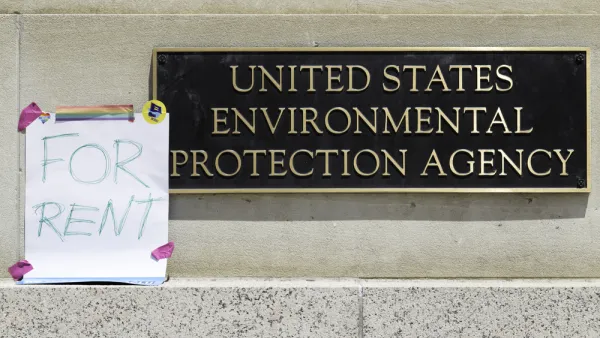
U.S. Officially Withdraws From the Paris Climate Accord
An even set in motion years ago by the Trump administration came to fruition on November 4 while most Americans were paying attention to the election.

Planetizen Federal Action Tracker
A weekly monitor of how Trump’s orders and actions are impacting planners and planning in America.

The state-sanctioned urbicide of Austin
People don’t kill cities. Freeways do.

US to reduce Colorado River water deliveries to Mexico
A new Colorado Treaty amendment reduces Mexico’s Colorado River water allocation by 250,000 acre feet.

Nation's most wind-powered state turns to coal as data centers increase energy demand
For the first time in decades, Iowa has increased its generation of coal power.

NYC cools commuters with city's first rain garden above a bus stop
New York City officials say the plants in the rain garden can absorb 16 gallons of rainwater during heavy storms.

Brightline West’s future may rely on $6 billion federal loan
The company has until Nov. 2 to make a $400 million equity investment into its proposed high-speed rail line.

FREE Course: Walkable City 1: Why Walkability?
After describing his path towards focusing on walkability as the essence of good planning, Jeff Speck marches through his five principal reasons for making more walkable places.
Reinventing Malls: Planning Alchemy—Turning Gray Fields Into Gold
The course focuses on the opportunities and imperatives that shape reinvention of mall sites.

Greater Baltimore Committee
Eagle County Government
Harvard University Graduate School of Design
The Architects Foundation
University of Cincinnati Online
The Pocatello Development Authority
The Urban Renewal Agency of the City of Pocatello
Journal of the American Planning Association