Philadelphia has a busy schedule of complete streets projects in the works. The city has a goal of building 20 miles of protected bike lanes by 2020.


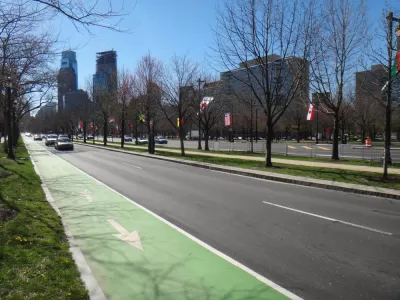
Kelly Cofrancisco, from the Office of Transportation, Infrastructure and Sustainability of the city of Philadelphia, reports the city's progress on building complete streets projects.
The City Council "recently enabled legislation for nine Complete Street projects," according to Cofrancisco, the "highest number of bills passed out of Council for safety improvements on record."
Projects include traffic calming measures, shorter pedestrian crossings, and protected bike lanes.
"Each bicycle lane link moves the City closer to its goal of a high-quality bike network," according to Cofrancisco. "The plan is to have 20 miles of protected bicycle lanes by the end of the 2020 construction season."
The complete streets projects approved by the Philadelphia City Council are illustrated on a map available online [pdf].
Read the full story: Moving Towards 20 Miles of Protected Bike Lanes by 2020
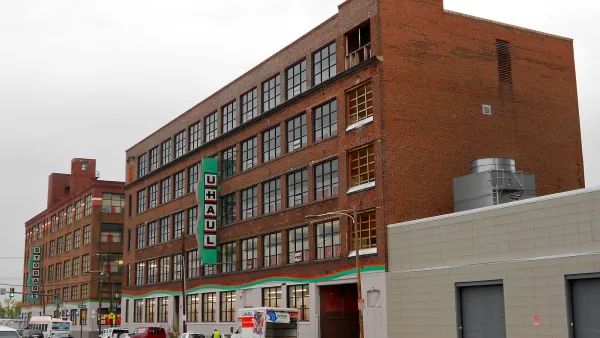
Why a Complete Streets Makeover Went Awry in Philadelphia
The city pulled the plug on a proposed street redesign after community groups criticized the public engagement process for not listening to all local voices.
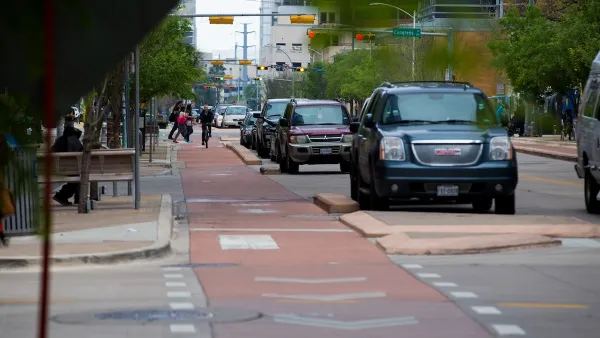
Austin Outlaws Blocking Bike Lanes
Drivers who park in bike lanes will receive citations of up to $300.
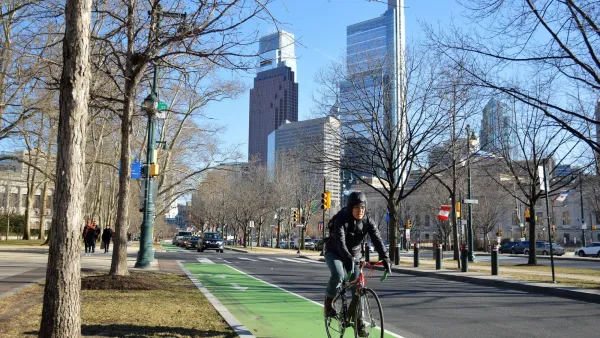
Philly Road Safety Advocates Call for Action From the City
Mayor Parker’s administration is proposing massive cuts to the city’s Vision Zero program while pedestrian and cyclist deaths remain high.

Planetizen Federal Action Tracker
A weekly monitor of how Trump’s orders and actions are impacting planners and planning in America.

California plans to bury El Niño’s downpour
If the state plays its cards right, it may be able to store a billion acre-feet of El Niño’s water in aquifers.

Desperate measures: Advocates weigh draining Lake Powell to fill Colorado River
Draining the reservoir could reduce evaporation losses by a couple hundred thousand acre-feet.

US buildings threatened, destroyed by fires set to triple by 2060
Researchers found a high fire risk for socioeconomically vulnerable neighborhoods in the American West.

LA residents may be allowed to paint their own crosswalks
Councilwoman Katy Yaroslavsky put out a motion instructing the Los Angeles Department of Public Transportation to study the feasibility of allowing volunteers to paint crosswalks.

Dallas moves to overhaul its zoning code
The city's zoning reform will allow more multi-family and mixed-use developments.

FREE Course: Walkable City 1: Why Walkability?
After describing his path towards focusing on walkability as the essence of good planning, Jeff Speck marches through his five principal reasons for making more walkable places.
Reinventing Malls: Planning Alchemy—Turning Gray Fields Into Gold
The course focuses on the opportunities and imperatives that shape reinvention of mall sites.

City of Rosemead
Rutgers University, Edward J. Bloustein School of Planning and Public Policy
One Hundred Miles
Hunter College, City University of New York (CUNY)
The Architects Foundation
University of Cincinnati Online
City of Cambridge
Montrose County
The Pocatello Development Authority