To reach an ambitious net-zero target for transportation emissions in San Francisco, Mayor Breed and two supervisors introduced legislation to require large parking facilities provide electric vehicle charging for 10% of spaces.


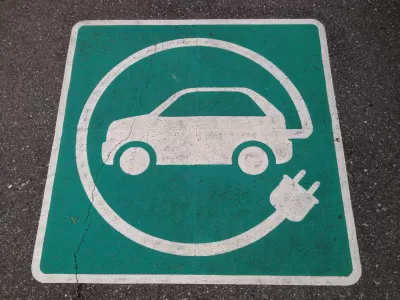
"San Francisco officials want to shrink the city’s carbon footprint by eliminating the greenhouse gases belched from cars, trucks and other vehicles by 2040," reported
The city will take the first step toward that goal Tuesday,, when Mayor London Breed and Supervisors Vallie Brown and Aaron Peskin introduce legislation to install more electric-vehicle charging stations in both public and private parking lots and garages
San Francisco’s pending legislation, which city officials believe to be the first of its kind in the country, would require private parking lots and garages with more than 100 parking spots to install electric-vehicle charging stations next to at least 10% of the spaces. The ordinance would apply to about 300 commercial parking facilities in the city whose owners would have until 2023 to install the new stations.
Daniel Montes reports after the meeting for SF Bay that the legislation was introduced.
Lack of charging stations is one barrier to increasing adoption of electric vehicles. The city will attempt to sweeten the pot with incentives, such as reducing parking rates for EVs and removing barriers to installing chargers at residences, adds Fracassa.
State legislation to reform rebate program
On the state level, Assemblyman Phil Ting of San Francisco announced on July 8 that he amended current legislation to make the state's Clean Vehicle Rebate Project more sustainable and attractive to car consumers. Cap-and-trade revenue is the source of funds for the rebate program.
AB 1046 also requires the state to identify a steady rebate revenue stream so consumers are guaranteed their rebate, instead of being put on a waiting list when funds run out. The program is currently funded year-to-year with no guarantee lawmakers will continue the appropriation, or at what level.
Too often, potential buyers have been discouraged when rebates are not immediately available and postponed their transition to clean cars.
Ting, a strong advocate for increasing sales of electric vehicles, proposed legislation in 2017 to increase the value of the state rebates and authored bills last year and this year to ban sales of light-duty vehicles powered by internal combustion engines by 2040. None have passed.
Related in Planetizen:
-
Funding for Electric Vehicle Rebates Approved in California, September 19, 2017
-
How Much Is Too Much for a State Electric Vehicle Rebate? August 29, 2017
Hat tip to MTC Headline News.
FULL STORY: To cut carbon footprint, SF moves to eliminate vehicle emissions by 2040

California Lawmaker Wants to Triple Electric Vehicle Rebates
Assemblyman Phil Ting seeks to dramatically increase the state electric vehicle sales rebate of $2,500, motivated in part by the phasing-out of the federal EV tax credit of $7,500. The bill rules out significant revenue sources.
California Climate Program Offers Up to $9,500 Toward Purchase of Used EVs
Lawmakers want to ensure that electric vehicles are accessible to all Californians, particularly lower-income motorists in disadvantaged communities. Unlike other incentive programs, participants must also scrap an older, polluting vehicle.
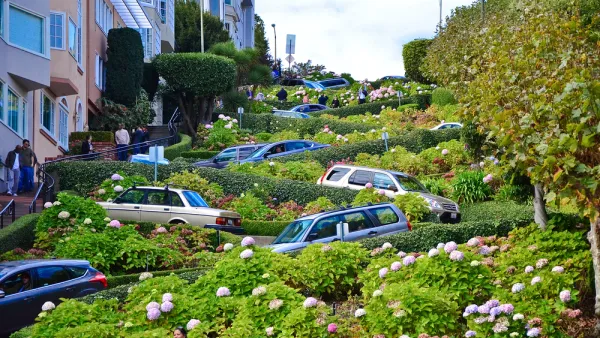
Urban Congestion Pricing Might Finally Come to California
If Gov. Gavin Newsom signs legislation by San Francisco Assemblyman Phil Ting, motorists who want to drive the 'world's most crooked street,' a huge tourist draw, will be forced to participate in a pilot 'reservation and pricing program.'

The state-sanctioned urbicide of Austin
People don’t kill cities. Freeways do.

US to reduce Colorado River water deliveries to Mexico
A new Colorado Treaty amendment reduces Mexico’s Colorado River water allocation by 250,000 acre feet.

New Jersey’s second-largest city bans standalone data centers
Jersey City will continue to allow co-location facilities, such as those meant for research institutions that store their own data.

Amtrak not solely to blame for New Jersey commuter rail's unreliability, report finds
A new study from the Garden State Initiative found that NJ Transit’s budget grew 20% across a 4 year period, but reliability declined significantly over the same period.

EPA erases limits on planet-warming pollution from power plants
Under Monday’s plan, power plants would still have some limits on how much mercury, arsenic and other contaminants they can emit.

Phoenix announces new on-demand transit service, more frequent RAPID buses
Both new services will launch in October, and are part of Phoenix's Project Effective Access Solutions for Easing Congestion.

FREE Course: Walkable City 1: Why Walkability?
After describing his path towards focusing on walkability as the essence of good planning, Jeff Speck marches through his five principal reasons for making more walkable places.
Reinventing Malls: Planning Alchemy—Turning Gray Fields Into Gold
The course focuses on the opportunities and imperatives that shape reinvention of mall sites.

Eagle County Government
Harvard University Graduate School of Design
Nashville Planning Department
The Architects Foundation
University of Cincinnati Online
The Pocatello Development Authority
The Urban Renewal Agency of the City of Pocatello
Journal of the American Planning Association