Critics say transportation officials have failed to address the potential equity and displacement effects of the Southern California streetcar project.


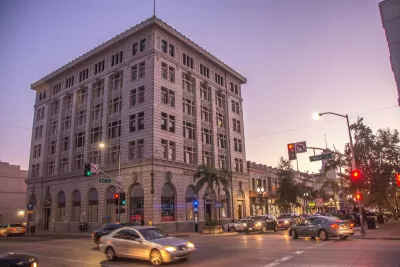
Alejandra Molina writes about equity concerns related to the Orange County Streetcar project in Southern California. It is a $408-million, 4.1-mile project scheduled to start service in 2022 that will link the cities of Santa Ana and Garden Grove. Supporters say the streetcar will improve mobility in the area and boost economic development.
But transportation activists say equity issues, particularly around displacement, have not been addressed and the lead agency, the Orange County Transportation Authority, has focused its outreach largely on design of the streetcar.
OCTA officials argue that land use decisions are made by the county and individual cities and the agency’s role is to lead construction efforts. "Organizers with Santa Ana Active Streets, however, say Orange County transportation officials have been tone-deaf when it comes to issues over equity," writes Molina. And she notes that other cities, such as Los Angeles and Seattle, have put programs in place to address transportation equity.
FULL STORY: Who’s In Charge of Equity for the Orange County Streetcar? It’s Not Clear

OC Streetcar Breaks Ground After Receiving Full Funding Grant Agreement
It's only the third full funding grant administration signed by Transportation Secretary Elaine Chao. The $149 million capital investment grant will help fund the 4-mile modern streetcar line from Santa Ana to Garden Grove in Orange County, Calif.
Plans Advance for Orange County Streetcar
The $289 million streetcar would serve the cities of Santa Ana (population 329,00), county seat and second densest in California after San Francisco, and Garden Grove (population 170,000) on a 4.1-mile route. Service could begin 2020.
Philadelphia Leaders Dream Big With New Transit Plan
The plan, which looks more than two decades into the future, seeks to modernize the city's transit system, address inequities, and improve regional connectivity.

The state-sanctioned urbicide of Austin
People don’t kill cities. Freeways do.

US to reduce Colorado River water deliveries to Mexico
A new Colorado Treaty amendment reduces Mexico’s Colorado River water allocation by 250,000 acre feet.

New Jersey’s second-largest city bans standalone data centers
Jersey City will continue to allow co-location facilities, such as those meant for research institutions that store their own data.

Amtrak not solely to blame for New Jersey commuter rail's unreliability, report finds
A new study from the Garden State Initiative found that NJ Transit’s budget grew 20% across a 4 year period, but reliability declined significantly over the same period.

EPA erases limits on planet-warming pollution from power plants
Under Monday’s plan, power plants would still have some limits on how much mercury, arsenic and other contaminants they can emit.

Phoenix announces new on-demand transit service, more frequent RAPID buses
Both new services will launch in October, and are part of Phoenix's Project Effective Access Solutions for Easing Congestion.

FREE Course: Walkable City 1: Why Walkability?
After describing his path towards focusing on walkability as the essence of good planning, Jeff Speck marches through his five principal reasons for making more walkable places.
Reinventing Malls: Planning Alchemy—Turning Gray Fields Into Gold
The course focuses on the opportunities and imperatives that shape reinvention of mall sites.

Eagle County Government
Harvard University Graduate School of Design
Nashville Planning Department
The Architects Foundation
University of Cincinnati Online
The Pocatello Development Authority
The Urban Renewal Agency of the City of Pocatello
Journal of the American Planning Association