A bill that would toss the helmet requirement for adult e- scooter riders and allow them to ride on roads where the speed limit is 35 mph, up from the current limit of 25 mph, is on Governor Jerry Brown's desk. He has until Sept. 30 to decide.


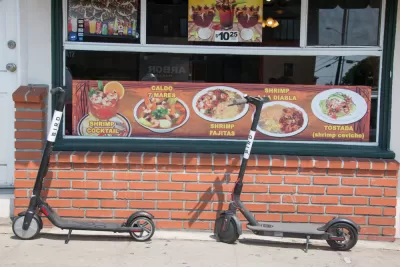
"Assembly Bill 2989 by Assemblyman Heath Flora, R-Ripon (San Joaquin County), passed the state Assembly 73-0 on Wednesday and now heads to Brown," reports Melody Gutierrez for the San Francisco Chronicle. "Brown has not weighed in on the bill."
The bill was sponsored in February by Manhattan Beach, Calif.-based Bird, valued at $2 billion in July, and the "the largest e-scooter rental company in California," reported Dara Kerr for CNET on July 16. In addition to doing away with the helmet requirement, as originally proposed, it would have:
- Eliminated the driver's license requirement for riders
- Raised the maximum speed to 20 mph
- Permitted scooters to ride on sidewalks
What the bill didn't do, as noted on an Aug. 17 blog on Systemic Failure, was lift the street speed limit restriction. The bill's text at that time read:
The operator of a motorized scooter shall not operate a motorized scooter on a highway with a speed limit in excess of 25 miles per hour unless the motorized scooter is operated within a Class II or Class IV bikeway.
The blog continues:
There are a lot of 30 mph streets where it is safe to operate a scooter, even where there are no bike facilities. While the bill does give cities the option to make exceptions to this rule, how likely is that given the reactionary policies we’ve seen from places like Santa Monica?
Well, someone from Flora's office may have read the blog, because here's the new text:
This bill would permit a local authority to authorize the operation of a motorized scooter on a highway with a speed limit of up to 35 miles per hour and would additionally allow for operation of a motorized scooter on a highway with a higher speed limit if the motorized scooter is operated within a Class IV bikeway.
Class IV is a relatively new category of bike lane defined by 2014 legislation, covered by Planetizen: "Legislation Supports Protected Bike Lanes in California." The exemption from the street speed limit restriction for streets with protected bike lanes, shows, in this correspondent's mind, the symbiosis between cycling and scootering.
As for the riding on sidewalks, Melanie Curry reported for Streetsblog California on June 13 that didn't sit well with pedestrian advocates.
“We were quite surprised that the bill included sidewalk riding, as well as an increase in speed to 20 mph. It was shocking to us,” said Cathy DeLuca of Walk San Francisco. “We are definitely strongly opposed to this change.”
Tony Bizjak, reporting for The Sacramento Bee on Aug. 29, made this observation on lifting the helmet requirement for riders 18 and older:
A Senate analysis of the proposed law noted that a study of 6,000 bike-related injuries found riders wearing helmets had a 52 percent lower risk of brain injury and a 44 percent lower risk of death. The analysis notes there is little information yet on the safety issues involved with motorized scooters.
Bizjak shares another example of bikes and scooters helping one another in noting that Bird and other scooter companies "have expressed interest in bringing their scooters to Sacramento."
The city, though, has a scooter and bike ordinance in place that would require scooter companies to install 1.5 scooter or bike racks for every scooter introduced in Sacramento, city transportation planner Jennifer Donlon Wyant said."
Finally, a word, or perhaps no words, on the mystery of the legislator who authored the bill, from CNET's Kerr.
Assemblyman Heath Flora, a Republican who represents part of the Central Valley, introduced AB-2989. No city in his district currently has rentable scooters.
Flora didn't return requests for comment.
More scooter stories accessible from Planetizen's Aug. 30 "Weekly Electric Scooter Media Brief."
FULL STORY: Adults on scooters could ride helmet-free under bill sent to Gov. Jerry Brown’s desk

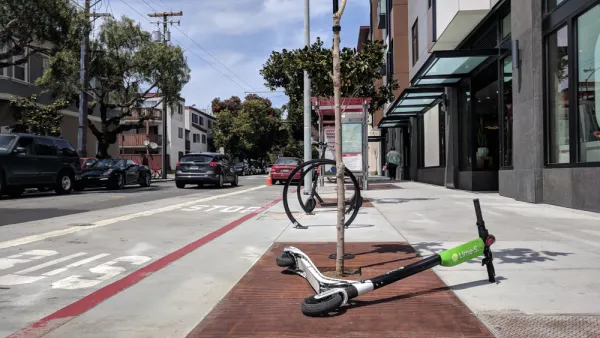
Scooter War Now a Scooter Competition
Three scooter companies, Lime, Bird and Spin, removed their scooters from the sidewalks of San Francisco earlier this month and applied, with nine other companies, for five permits to operate up to 2,500 scooters in a tightly regulated pilot program.
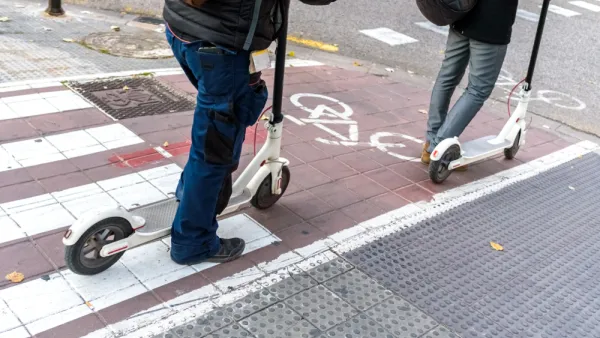
E-Scooter Helmet Laws Could Harm Ridership
Transportation experts warn that mandatory helmet laws for shared e-scooters could cripple the nascent industry and discourage casual rides.
Miami Funds Protected Bike Lanes With E-Scooter Fees
The city, which has some of the nation's most dangerous streets for pedestrians and cyclists, is installing 3 miles of new bike lanes and pedestrian ramps on some of its busiest downtown corridors.

The state-sanctioned urbicide of Austin
People don’t kill cities. Freeways do.

US to reduce Colorado River water deliveries to Mexico
A new Colorado Treaty amendment reduces Mexico’s Colorado River water allocation by 250,000 acre feet.

New Jersey’s second-largest city bans standalone data centers
Jersey City will continue to allow co-location facilities, such as those meant for research institutions that store their own data.

Amtrak not solely to blame for New Jersey commuter rail's unreliability, report finds
A new study from the Garden State Initiative found that NJ Transit’s budget grew 20% across a 4 year period, but reliability declined significantly over the same period.

EPA erases limits on planet-warming pollution from power plants
Under Monday’s plan, power plants would still have some limits on how much mercury, arsenic and other contaminants they can emit.

Phoenix announces new on-demand transit service, more frequent RAPID buses
Both new services will launch in October, and are part of Phoenix's Project Effective Access Solutions for Easing Congestion.

FREE Course: Walkable City 1: Why Walkability?
After describing his path towards focusing on walkability as the essence of good planning, Jeff Speck marches through his five principal reasons for making more walkable places.
Reinventing Malls: Planning Alchemy—Turning Gray Fields Into Gold
The course focuses on the opportunities and imperatives that shape reinvention of mall sites.

Eagle County Government
Harvard University Graduate School of Design
Nashville Planning Department
The Architects Foundation
University of Cincinnati Online
The Pocatello Development Authority
The Urban Renewal Agency of the City of Pocatello
Journal of the American Planning Association