The streetcar planned for the central business district and historic core of Los Angeles would cost nearly $300 million and move an estimated 4,181 riders a day.


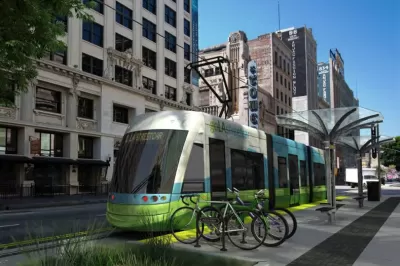
The city of Los Angeles released the environmental assessment (EA) for its planned downtown streetcar earlier this week, as necessary under the National Environmental Policy Act.
Jon Regardie reports on the details of the EA, which estimates the projects cost at nearly $291 million, with another $15.6 million on the table if the project includes an extension to Grand Avenue.
The assessment reveals a 3.8-mile route that would be shaped like a pipe standing up, with a main southbound spine on Broadway from First to 11th streets. It would proceed west on 11th, turn north on Figueroa, then roll east on Seventh Street. At Hill Street it would again turn north, and go up to First Street. A right turn would bring it to Broadway, allowing for a continuous loop.
If the Grand Avenue leg is included, a streetcar at First and Hill would turn left on First Street, proceed two blocks and go south on Grand to a stop in front of Walt Disney Concert Hall.
Regardie also notes that the line would have 23 stops, one on each block for much of the route, on raised concrete platforms. The article also includes proposed headways and ridership projections.
FULL STORY: Downtown Streetcar Would Have 23 Stops, Cost Up to $306 Million


New Bus Priority Lane Under Construction in Los Angeles
La Brea Avenue will soon gain a new bus priority lane, with plans for more to come still gathering community feedback.
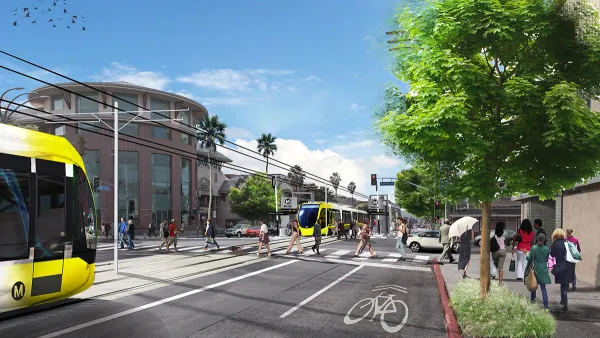
L.A.'s San Fernando Valley $909 Million Closer to Light Rail
The last time rail transit crossed L.A.'s San Fernando Valley was in the early 1950s.
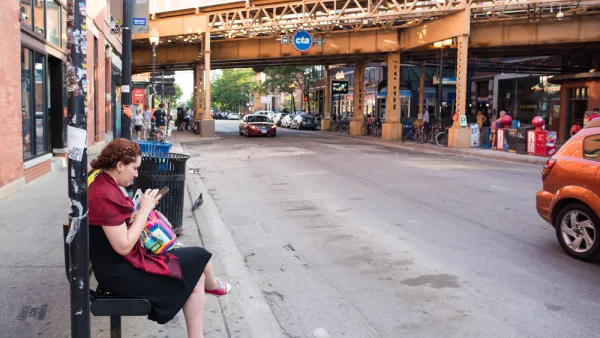
One Big Step Forward, One Small Step Back for Chicago Red Line Extension
A big approval and a significant delay—but otherwise 2020 has been a positive year for plans to extend the Chicago Transit Authority's Red Line by 5.6 miles to the south.

Planetizen Federal Action Tracker
A weekly monitor of how Trump’s orders and actions are impacting planners and planning in America.

The state-sanctioned urbicide of Austin
People don’t kill cities. Freeways do.

US to reduce Colorado River water deliveries to Mexico
A new Colorado Treaty amendment reduces Mexico’s Colorado River water allocation by 250,000 acre feet.

Guerilla urbanists are building DIY bus stop benches in Chicago
A before-and-after of one of the bus stops with a new bench. The new benches are not officially sanctioned or permitted, but the residents who placed them hope they will be the start of a network of DIY benches across the city.

Mamdani overhauls NYC's Vision Zero plan with 100 new policy goals
The overhaul aims to reduce traffic deaths and make streets safer for pedestrians, cyclists and drivers through lower speed limits, new safety infrastructure and more.

Amtrak not solely to blame for New Jersey commuter rail's unreliability, report finds
A new study from the Garden State Initiative found that NJ Transit’s budget grew 20% across a 4 year period, but reliability declined significantly over the same period.

FREE Course: Walkable City 1: Why Walkability?
After describing his path towards focusing on walkability as the essence of good planning, Jeff Speck marches through his five principal reasons for making more walkable places.
Reinventing Malls: Planning Alchemy—Turning Gray Fields Into Gold
The course focuses on the opportunities and imperatives that shape reinvention of mall sites.

Eagle County Government
Harvard University Graduate School of Design
Nashville Planning Department
The Architects Foundation
University of Cincinnati Online
The Pocatello Development Authority
The Urban Renewal Agency of the City of Pocatello
Journal of the American Planning Association