The last time rail transit crossed L.A.'s San Fernando Valley was in the early 1950s.


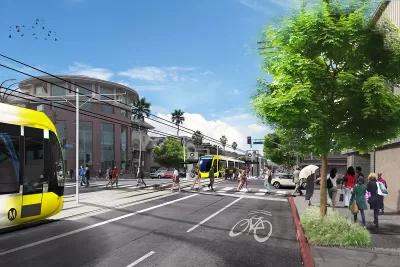
The proposed East San Fernando Valley Light Rail Transit Project is making progress toward the estimated $2.8 billion to $3.6 billion needed for completion, according to an article by Steve Scauzillo published by the Los Angeles Daily News.
The Federal Transit Administration (FTA) announced $909 billion for the project early in May, then allocated an initial $100 million of that total a few weeks later. The funding was awarded through the FTA’s Expedited Project Delivery Pilot Program.
“The project’s 9.2-mile route will connect the LA Metro’s east-west G Line (Orange) at the Van Nuys Station with the Metrolink Station in Sylmar/San Fernando. The first phase will travel 6.7 miles along the center median of Van Nuys Boulevard to San Fernando Road. A second phase continues northwest another 2.5 miles along the Metrolink rail line,” writes Scauzillo.
“A total of 14 new stations are planned as are nine traction power substations, on overhead contact system, 34 vehicles and a maintenance and storage facility planned for Keswick Street. Once completed, it is estimated to carry 35,000 riders per day, according to LA Metro.”
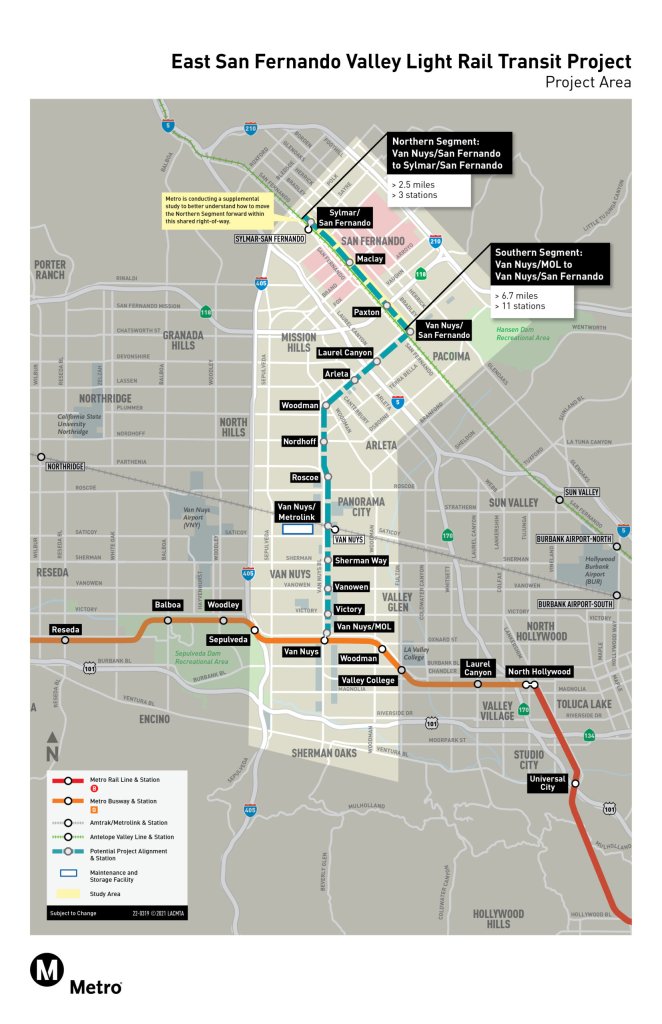
The proposed project could eventually become the first rail transit project built completely in the San Fernando Valley since Pacific Red Cars stopped operating in 1952, according to Scauzillo. (The B Line, formerly the Red Line, has two stations located in the Valley. The Los Angeles County Metropolitan Transportation Authority's Board of Directors also approved a bus rapid transit route that would connect North Hollywood to Pasadena in the adjacent San Gabriel Valley earlier in March.)
The Metro Board of Directors approved the preferred alternative for the East San Fernando Valley Light Rail Transit Project in July 2018, and approved the environmental impact report for the project in December 2020.
FULL STORY: East San Fernando Valley rail line project gets $909 million boost from Feds

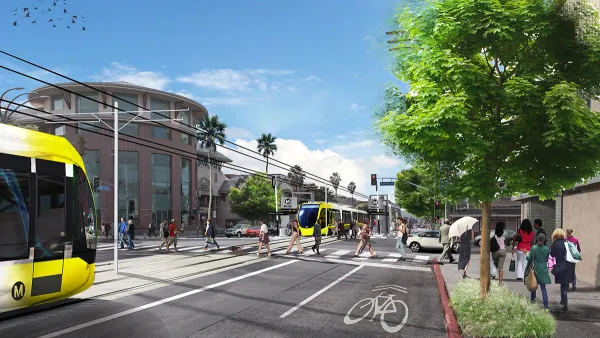
Environmental Review for Light Rail Through The Valley Approved
The B Line subway includes two stops in the San Fernando Valley in Los Angeles, but other than that, commuter rail and buses are the only options for transit. New light rail plans could change that.
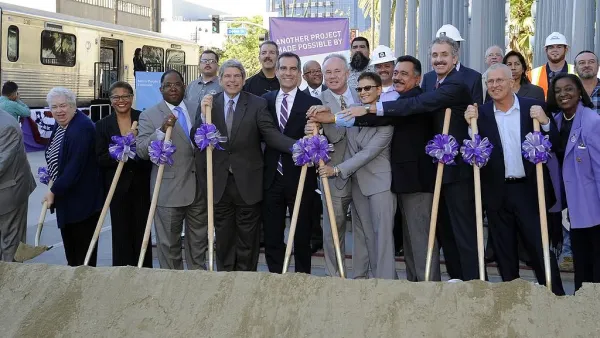
Tardy Transit Funding Arrives in Los Angeles, Twin Cities
They had to wait the better part of a year, but two major transit projects finally have the funding Congress allocated in March.
Light Rail Proposal for L.A.'s San Fernando Valley Wins Key Approval
Light rail could come to "The Valley" for the first time, under a plan approved this week by the Los Angeles County Metropolitan Transportation Authority's Board of Directors.

The state-sanctioned urbicide of Austin
People don’t kill cities. Freeways do.

US to reduce Colorado River water deliveries to Mexico
A new Colorado Treaty amendment reduces Mexico’s Colorado River water allocation by 250,000 acre feet.

New Jersey’s second-largest city bans standalone data centers
Jersey City will continue to allow co-location facilities, such as those meant for research institutions that store their own data.

Amtrak not solely to blame for New Jersey commuter rail's unreliability, report finds
A new study from the Garden State Initiative found that NJ Transit’s budget grew 20% across a 4 year period, but reliability declined significantly over the same period.

EPA erases limits on planet-warming pollution from power plants
Under Monday’s plan, power plants would still have some limits on how much mercury, arsenic and other contaminants they can emit.

Phoenix announces new on-demand transit service, more frequent RAPID buses
Both new services will launch in October, and are part of Phoenix's Project Effective Access Solutions for Easing Congestion.

FREE Course: Walkable City 1: Why Walkability?
After describing his path towards focusing on walkability as the essence of good planning, Jeff Speck marches through his five principal reasons for making more walkable places.
Reinventing Malls: Planning Alchemy—Turning Gray Fields Into Gold
The course focuses on the opportunities and imperatives that shape reinvention of mall sites.

Eagle County Government
Harvard University Graduate School of Design
Nashville Planning Department
The Architects Foundation
University of Cincinnati Online
The Pocatello Development Authority
The Urban Renewal Agency of the City of Pocatello
Journal of the American Planning Association